
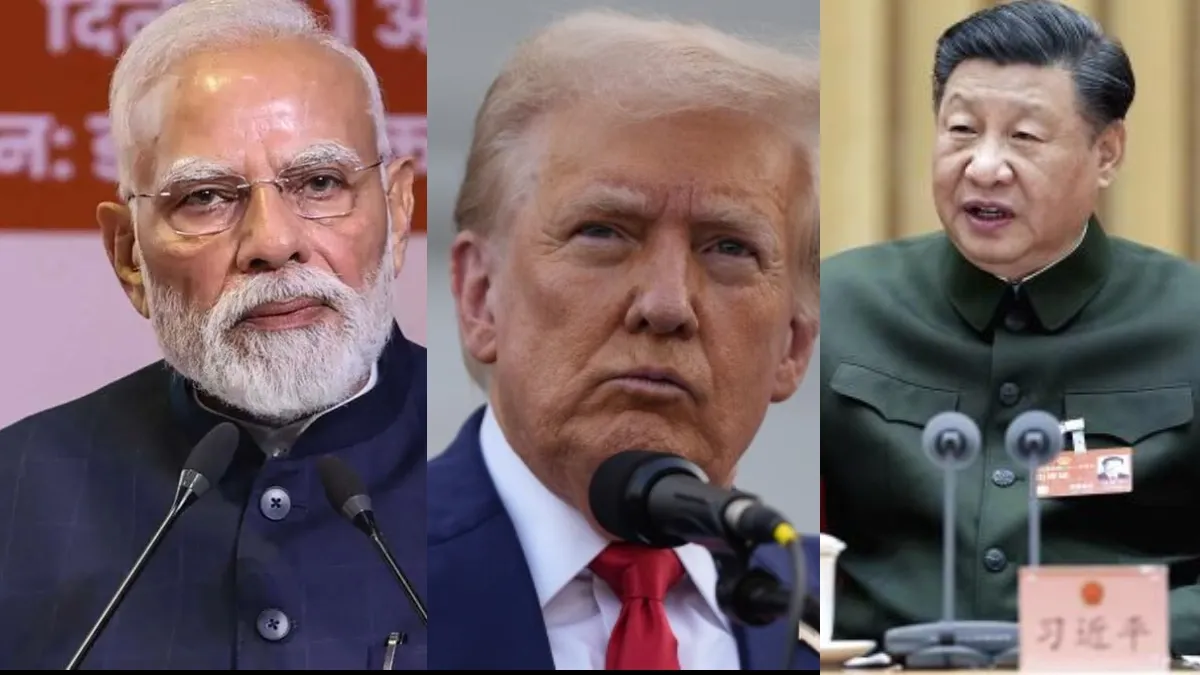
The United States may soon impose sharply higher tariffs on countries buying Russian oil, a move that could hit India hard. US President Donald Trump has greenlit a bipartisan Russia Sanctions Bill that would allow Washington to raise tariffs by as much as 500 per cent on nations that "knowingly" continue energy trade with Moscow. The bill is aimed at cutting off revenue streams that, according to its sponsors, are 'fueling Vladimir Putin's war machine'.
India, China, and Brazil are among the key countries in the crosshairs due to their continued purchase of Russian crude. However, despite being named in the same bracket, the US has adopted strikingly different approaches towards New Delhi and Beijing, maintaining a relatively soft line with China while turning up the heat on India.
Why Trump has gone soft on China?
Despite long-standing rivalry and trade tensions, the Trump administration has exercised caution in dealing with China. A major reason lies in Beijing's dominance over rare earth minerals, critical components used in electric vehicles, semiconductors, defence equipment and renewable energy technologies.
Even though China remains the world's largest buyer of Russian oil, it has not faced additional tariffs. Instead, on August 12, President Trump deferred new duties on Chinese imports, keeping tariffs at 30 per cent, significantly lower than the rates imposed on Indian goods.
In April, China imposed licensing restrictions on the export of rare earth elements and magnets to the US, triggering alarm across American industries, especially auto manufacturers and technology firms. These sectors rely heavily on Chinese supplies, and even a short disruption threatens production slowdowns and supply chain chaos.
Under pressure from domestic manufacturers, Washington has been compelled to favour negotiations over escalation. The rare earth standoff highlighted China's capacity to retaliate in ways that could directly undermine US industrial output, making a hardline tariff strategy against Beijing a high-risk option.
Why India faces a tougher line?
India, by contrast, does not enjoy the same strategic leverage. While New Delhi has become a major buyer of discounted Russian oil since the Ukraine war began, it lacks the kind of chokehold China has over critical supply chains. Trump has repeatedly signalled his dissatisfaction with India's trade policies, accusing New Delhi of maintaining high tariffs and barriers against US goods.
The tariffs, totalling 50%, were imposed due to India's significant purchases of Russian oil, which the US sees as supporting Russia's economy amid the Ukraine conflict.
Earlier, US President Donald Trump had claimed that PM Modi was unhappy over high tariffs imposed on India for purchasing Russian oil. At the House GOP Member Retreat, Trump suggested that although relations remain cordial, the tariff issue has created tension. "I have a very good relationship with PM Modi, but he is not happy with me as India is paying high tariffs. But now they have reduced it very substantially, buying oil from Russia," Donald Trump said.
"They wanted to make me happy, basically. Modi is a very good man; he is a good guy. He knew I was not happy, and it was important to make me happy," he said.
He also warned that the US could raise tariffs further if India does not "help on the Russian oil issue," directly connecting the pressure to the Russia-Ukraine war.
He has accused India of strengthening Moscow by buying discounted Russian crude and has cited this as the basis for sharply higher duties on Indian goods. Trump has also used tariff pressure to influence India's actions, suggesting that New Delhi was aware of his dissatisfaction and sought to maintain stable trade relations.
India has earlier rejected Trump's assertion that PM Narendra Modi had assured him New Delhi would stop purchasing Russian oil, clarifying that no such conversation or assurance had taken place.
Also Read: US to impose 500% tariff on India and China for Russian oil purchase? Bill gets Trump's nod
Also Read: Trump proposes USD 1.5 trillion defence budget for 2027: 'This will allow to build dream military'
