
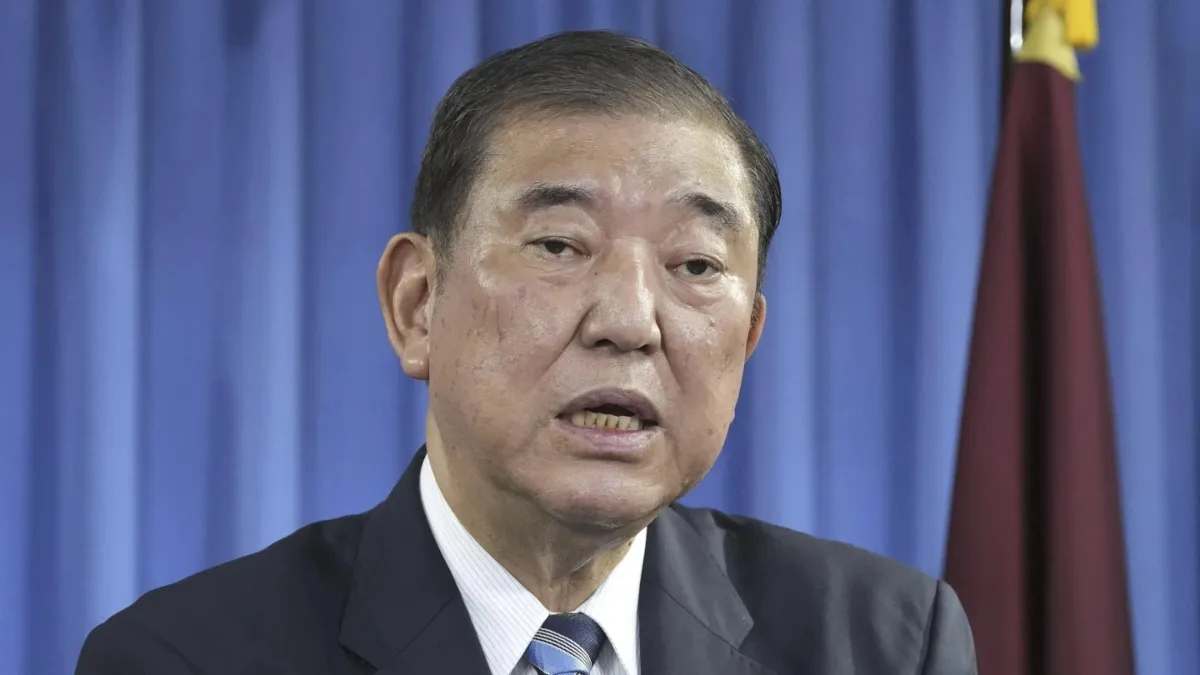
Japanese Prime Minister Shigeru Ishiba's ruling coalition faced a significant setback in Sunday's crucial parliamentary election, failing to secure a majority in the 248-seat upper house. The result has exacerbated political instability in Japan, marking the first time since the Liberal Democratic Party (LDP) was founded in 1955 that the party has lost a majority in both houses of parliament.
Ishiba's LDP, along with its junior coalition partner, the Buddhist-backed Komeito party, needed to win at least 50 seats to reach the 125-seat threshold for a simple majority. However, with just two seats still undecided, the coalition secured only 46 seats, far below the necessary number. Despite the disappointing result, Ishiba, who has been under growing pressure from both within his party and the public, expressed determination to stay on as leader, citing the need to address critical challenges, including U.S. tariff threats and economic concerns.
"I will fulfil my responsibility as head of the No. 1 party and work for the country," Ishiba told NHK, the state-run public television network. The loss is seen as a continuation of his struggles following his coalition's defeat in the October lower house election, and it further entrenches the minority status of his government.
The poor performance in the upper house election signals increasing frustration among voters, many of whom are grappling with soaring prices, stagnant wages, and high social security costs. These economic concerns were central to the campaign, as voters sought urgent solutions to Japan's rising cost of living, particularly with food staples such as rice becoming increasingly expensive.
Meanwhile, rising populism has gained traction, with emerging right-wing parties capitalising on voters' dissatisfaction. The populist Sanseito party, known for its staunch anti-foreign stance and advocacy for traditional gender roles, made significant gains, with exit polls showing it could win up to 16 seats, up from just one previously.
On the international front, Ishiba's government faces additional challenges, including ongoing trade talks with the U.S. President Donald Trump's administration, which has expressed dissatisfaction over the lack of progress in trade negotiations. The imposition of a 25% tariff on Japanese imports, set to take effect in August, has added further pressure on the government.
Despite the loss, the LDP remains the largest party in the upper house, securing 38 seats. However, the road ahead looks uncertain as Ishiba struggles to maintain a fragile coalition in the face of mounting economic and political challenges. The opposition, including the Constitutional Democratic Party of Japan (CDPJ) and the Democratic Party for the People (DPP), has gained ground. However, the fragmented opposition remains unable to present a united alternative to the government.
(AP inputs)
