
Hamas has released all 20 hostages as part of a ceasefire that pauses two years of devastating war in Gaza. Over the course of the day, over 1,900 Palestinian prisoners are expected to be exchanged. The released hostages were taken from Gaza to a military facility near Re'im, where they will receive initial physical and psychological evaluations before reuniting with their families.
1. Hostage release begins
Hamas freed the 20 hostages on Monday. They are expected to be reunited with families in Israel and undergo medical checks. The Red Cross coordinated the transfer to ensure the safety of the captives.
2. Remaining hostages and prisoners
A total of 20 living hostages were set to be released, along with more than 1,900 Palestinian prisoners held in Israel. The bodies of 28 deceased hostages are also part of the deal, though their exact return time remains uncertain.
3. Public reaction in Israel
Families and friends gathered in Tel Aviv broke into cheers as Israeli TV announced the hostages’ safe transfer to the Red Cross. Tens of thousands watched public screenings nationwide.
4. Palestinian response
Palestinians in Gaza awaited the release of hundreds of prisoners held by Israel. Buses lined up in Khan Younis for their transfer, though exact timings were not announced.
5. Humanitarian concerns in Gaza
The war has devastated Gaza, displacing around 90% of its 2 million residents and leaving many hungry. A surge of humanitarian aid, including hundreds of trucks of food, fuel, and medical supplies, is expected as part of the ceasefire.
6. US diplomatic involvement
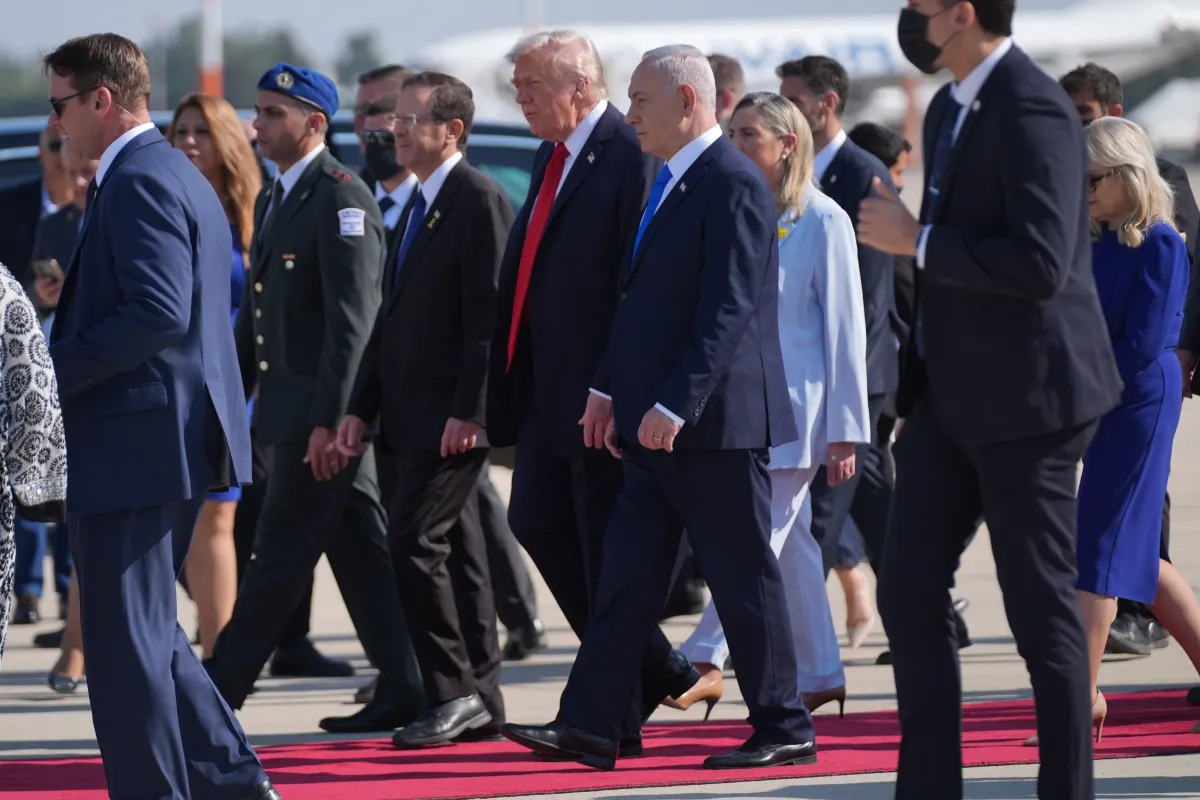
President Donald Trump arrived in Israel to oversee the ceasefire implementation, meet hostages’ families, and discuss postwar plans. He later traveled to Egypt to lead a summit with leaders from over 20 countries on Gaza’s future.
7. Background of the conflict
The war began on October 7, 2023, when Hamas militants launched a surprise attack on southern Israel, killing around 1,200 civilians and taking 251 hostages. Israel’s subsequent military operations killed over 67,000 Palestinians, half of them women and children, according to Gaza’s Health Ministry.
8. Security and military movements
Israel has withdrawn from parts of Gaza City and Khan Younis, but troops remain in Rafah, northern towns, and along the border. The ceasefire includes plans for an Arab-led security force and Palestinian police trained by Egypt and Jordan.
9. Future of Gaza
Under the US-proposed plan, Gaza may be temporarily governed by an international body overseeing Palestinian technocrats. Mahmoud Abbas and the Palestinian Authority could play a role, though reforms would be required.
10. Challenges ahead
Despite the exchange, the long-term future of Hamas, Gaza governance, and a potential Palestinian state remain unresolved. The ceasefire offers relief and humanitarian aid but leaves major political questions open.
