
As negotiations over a potential deal to end the war in Ukraine intensify, much of the focus has turned to the country’s east, a region long central to Russia’s ambitions. The Ukrainian regions of Donetsk and Luhansk, collectively known as the Donbas, were once an industrial powerhouse of the Soviet Union, rich in coal mines and steel mills, with fertile farmland, key rivers, and a coastline on the Sea of Azov.
The most Russian part of Ukraine
Historically, the Donbas has been the most Russian-leaning part of Ukraine, with a large Russian-speaking population. A decade ago, resentment towards the distant government in Kyiv was widespread in the region. It was here, in 2014, that President Vladimir Putin first launched efforts to destabilise Ukraine after annexing Crimea, with pro-Russian militias seizing Luhansk and Donetsk from an unprepared Ukrainian military.
Today, Luhansk is almost entirely under Russian control, while Moscow holds about 70 per cent of Donetsk. Together, the Donbas remains Russia’s biggest military prize. For nearly eight years, fighting between Russian-backed separatists and Ukrainian forces claimed more than 14,000 lives, forcing at least 1.5 million residents to flee. Moscow also distributed hundreds of thousands of Russian passports to residents in separatist-held areas, entrenching its influence.
Putin's pretext for invasion
On the eve of Russia’s full-scale invasion in February 2022, Putin recognised Donetsk and Luhansk as independent states, accusing the West of ignoring what he called genocide against nearly four million people in the region. This move set the stage for the war that followed, cementing the Donbas as the focal point of Russia’s aggression.
The cost of concession for Ukraine
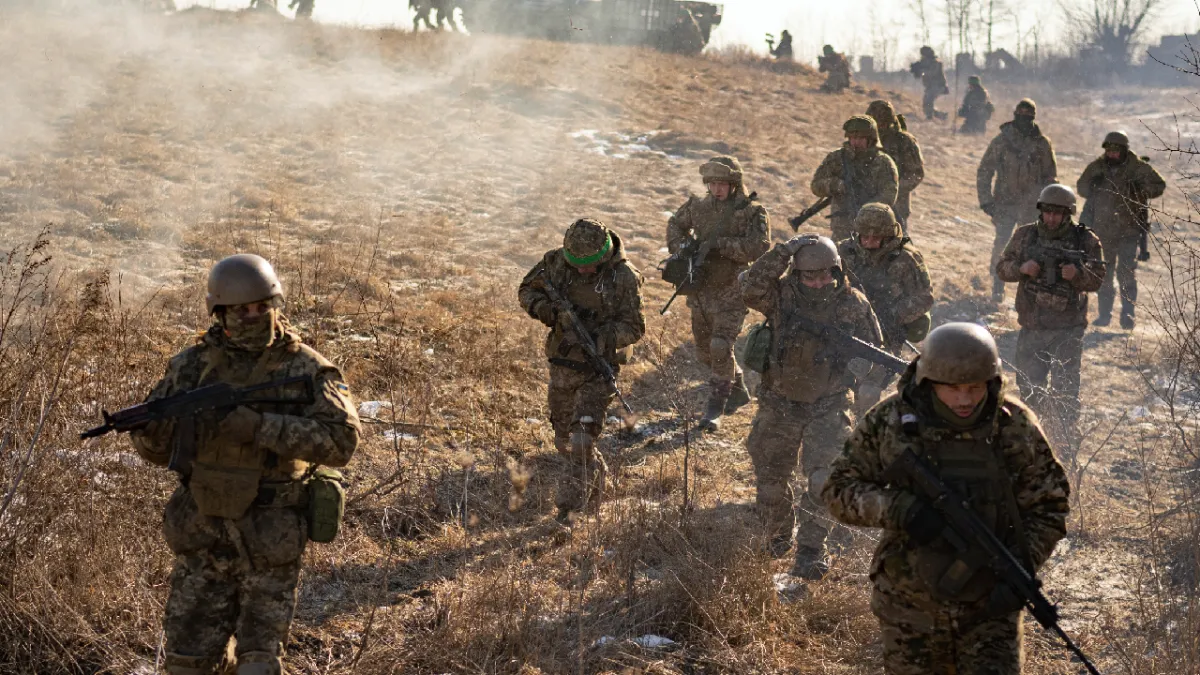
For President Volodymyr Zelensky, conceding the rest of Donetsk would be politically impossible. Many Ukrainian soldiers have died defending the region, and surveys show that around three-quarters of Ukrainians reject giving up any territory to Russia. Retreat would not only undermine Ukraine’s constitution but also expose the open plains of central Ukraine to future Russian offensives.
Europe’s dilemma
Zelensky’s allies in Europe also see the issue as a matter of principle: rewarding aggression with territory would set a dangerous precedent, undermining the very foundations of international law.
As in 2014, the Donbas remains both the centrepiece of Putin’s ambitions and the toughest test for Europe as it struggles to uphold a rules-based international order in the face of Russian aggression.
