
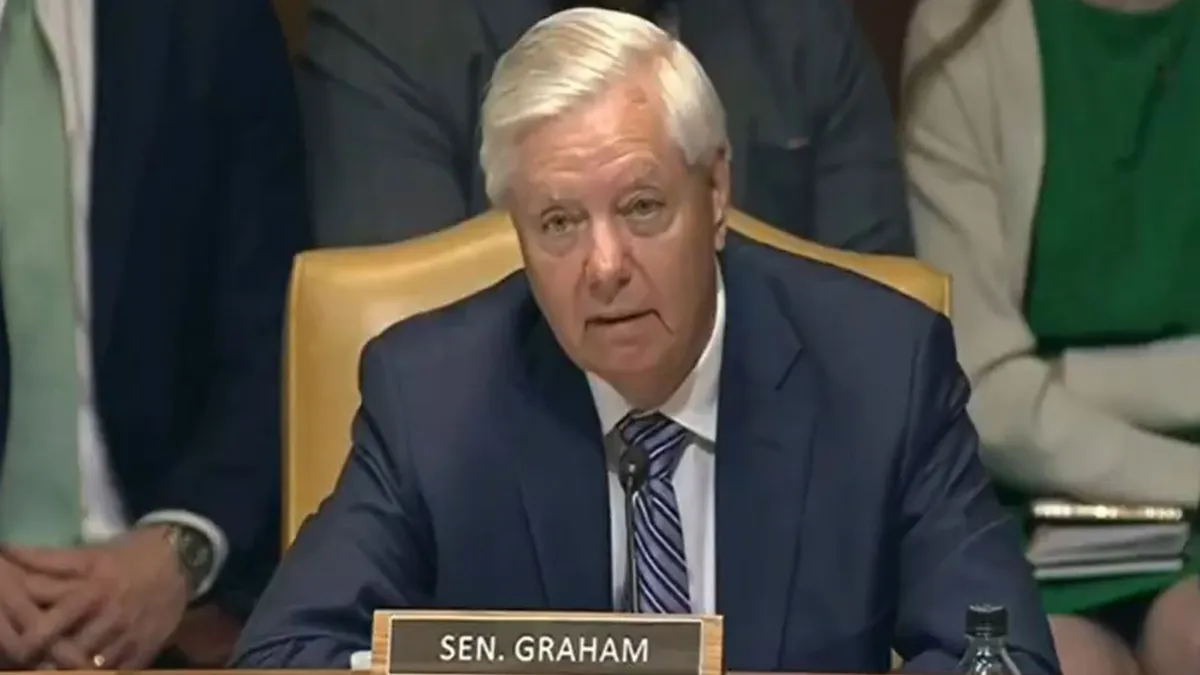
Republican Senator Lindsey Graham raised questions over Pakistan's neutrality as a mediator in the ongoing ceasefire negotiations between the United States and Iran, citing Islamabad's perceived "animosity" towards Israel and calling its role in the talks "problematic."
Graham's remarks came as Pakistan's Defence Minister Khwaja Asif said he is not in favour of Islamabad joining the Abraham Accords, which deal with establishing diplomatic, economic, and security ties between Israel and Arab nations.
Pakistan give an answer now: Lindsey Graham
Graham accused Islamabad of "housing" Iranian military aircraft in their air bases, while also terming Pakistan's leadership's remarks as "disturbing", raising serious doubts on its impartiality to conduct the mediation talks. "It has been apparent to me for quite a while that Pakistan as a mediator is more than problematic. Their animosity towards Israel is long-standing. It is undeniable that Iranian military aircraft are being housed on Pakistani air bases, and past rhetoric from the highest Pakistani officials against Israel is disturbing," he said in a post on X.
He asked Pakistan to respond to US President Donald Trump's call to mediators in the US-Iran war to join the Accords. "As to the defense minister's comments about the Abraham Accords, saying that Pakistan would never join because they don't trust Israel: The clip may be a year old, but I fear the sentiment is fresh. In that regard, it is imperative that Pakistan give an answer now to President Trump's call to join the Abraham Accords," he said.
Pakistan rejects Trump's Abraham Accords push
Pakistan has become the first country to openly reject Trump's proposal to join the Abraham Accords as part of a larger peace effort linked to Iran and the Middle East. Trump wanted several Muslim-majority countries, including Pakistan, Saudi Arabia, Qatar, Turkey, and Jordan, to formally recognise Israel under the Abraham Accords framework. But Islamabad made it clear that Pakistan is not ready to do that.
The Abraham Accords are agreements first introduced by Trump in 2020 to improve relations between Israel and Arab countries. Under these accords, countries agree to establish diplomatic ties, business relations, and security cooperation with Israel.
The United Arab Emirates and Bahrain were the first to sign the agreements, followed later by Morocco and Sudan. Trump now wants more countries to join the bloc, saying it could bring long-term peace and stability to the Middle East.
Asif said joining such an agreement would clash with the country's "fundamental ideologies". He also questioned whether Israel could be trusted diplomatically, making Islamabad’s stand even more direct.
For more than 75 years, Pakistan has supported the Palestinian cause and refused to formally recognise Israel. Pakistan says it can only recognise Israel if an independent Palestinian state is created with East Jerusalem as its capital.
Also Read: Marco Rubio, US Secretary of State in India, says agreement with Iran is possible within a few days
Also Read: Why did Pakistan reject Trump's Abraham Accords push over Iran peace deal?
