
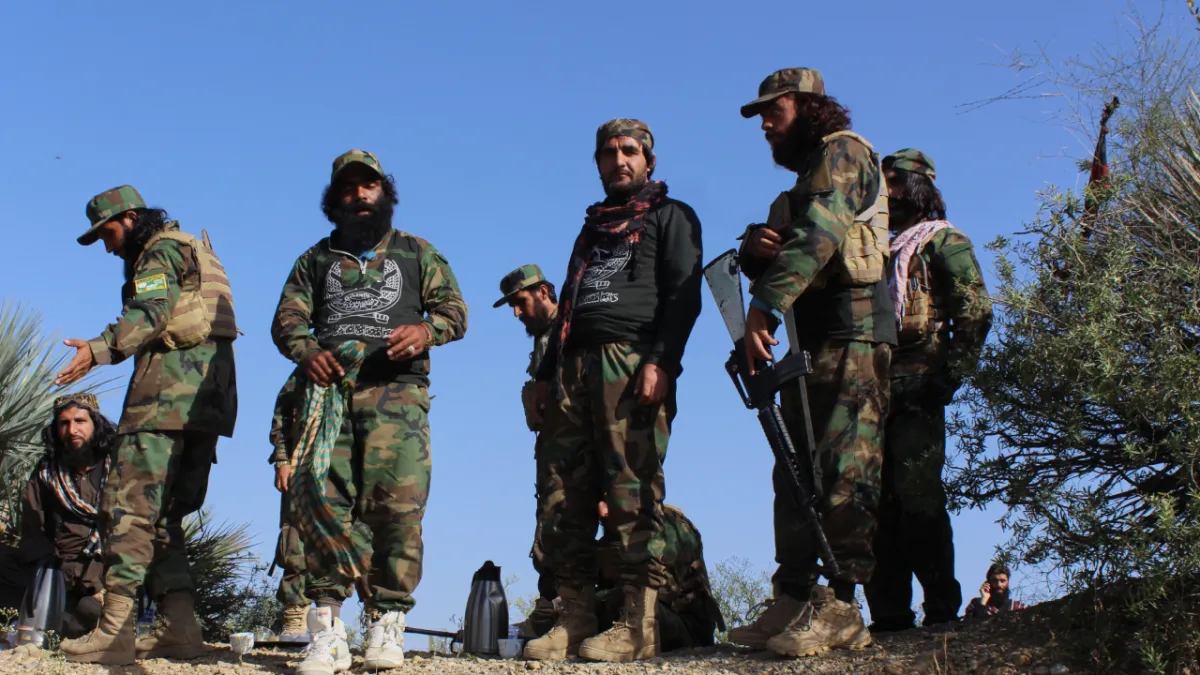
Peace talks between Pakistan and Afghanistan ended without any success in Istanbul after four days of negotiations, Pakistan’s Information Minister said early Wednesday, accusing the Taliban government in Kabul of refusing to act against militants responsible for deadly cross-border attacks. The talks followed an earlier round in Doha, which had resulted in a ceasefire on October 19 after intense border clashes between the two sides left dozens dead, including soldiers, civilians, and militants.
Pakistan accuses the Taliban of sheltering militants involved in a surge of attacks, while Kabul denies that its territory is being used against Pakistan. Before dawn on Wednesday, Pakistan’s Information Minister Attaullah Tarar announced on social media platform X that the dialogue “failed to bring about any workable solution,” despite mediation efforts by Qatar and Turkey.
There was no immediate response from Kabul to Tarar’s remarks.
Blame game ensues between Kabul, Islamabad
The latest development came just hours after state media in both countries reported an impasse in the talks, with each side blaming the other for the failure to reach an agreement. Tarar said Pakistan, at the request of “brotherly countries” Qatar and Turkey, gave peace a chance by engaging with the Afghan Taliban government first in Doha and then in Istanbul.
He accused the Taliban of being “indifferent to Pakistan's losses" even though “Pakistan has always desired, advocated and immensely sacrificed for peace and prosperity for the people of Afghanistan.”
Tarar expressed gratitude to Qatar and Turkey for facilitating the talks, which were part of a wider diplomatic effort to reduce months of escalating tension between Islamabad and Kabul over cross-border attacks and militant safe havens — longstanding issues that have strained relations since the Taliban’s return to power in Afghanistan four years ago.
He said that “since the Taliban regime bears no responsibility towards the people of Afghanistan and thrives on war economy, it desires to drag and mire the Afghan people into a needless war.”
Pakistan minister warns Taliban
Tarar added that "Pakistan's patience has run its course,” warning that Islamabad would “continue to take all possible measures necessary to protect our people from the menace of terrorism.”
On Tuesday, three Pakistani security officials with direct knowledge of the negotiations told The Associated Press that the talks in Istanbul had reached a deadlock over Kabul’s reluctance to accept Pakistan’s demand for assurances that Afghan soil would not be used against Pakistan.
The officials, who spoke on condition of anonymity because they were not authorised to speak to the media, said Turkey was attempting to resolve the deadlock so that the final round of talks could resume soon. According to the Pakistani officials, the Taliban delegation was "not fully willing" to accept Pakistan’s proposals and continued to seek direction from Kabul before making decisions.
Afghanistan-controlled media outlet RTA made similar accusations against Pakistan, reporting that Kabul “made every effort to hold constructive talks,” but that the “Pakistani side does not seem to have this intention.” While the latest round of talks was underway in Turkey, US President Donald Trump on Sunday pledged to help resolve the crisis between the two neighbours "very quickly."
The recent fighting had prompted Qatar to host the initial round of negotiations, which produced a ceasefire that both sides maintain is still in effect despite the stalemate in Istanbul.
Afghanistan-Pakistan conflict
Pakistan has witnessed a sharp rise in militant attacks in recent years, mostly attributed to the Pakistani Taliban, or Tehrik-e-Taliban Pakistan (TTP), a group closely linked to the Taliban in Afghanistan. Islamabad maintains that the group has been operating from sanctuaries in Afghanistan since the Taliban took power in 2021.
Officials in Pakistan said the country’s military targeted TTP hideouts in Afghanistan earlier this month, sparking deadly clashes between the two sides until Qatar mediated a ceasefire.
All border crossings between the two countries have remained closed for more than two weeks, leaving trucks carrying goods stranded as key trade routes await reopening.
With inputs from AP
