
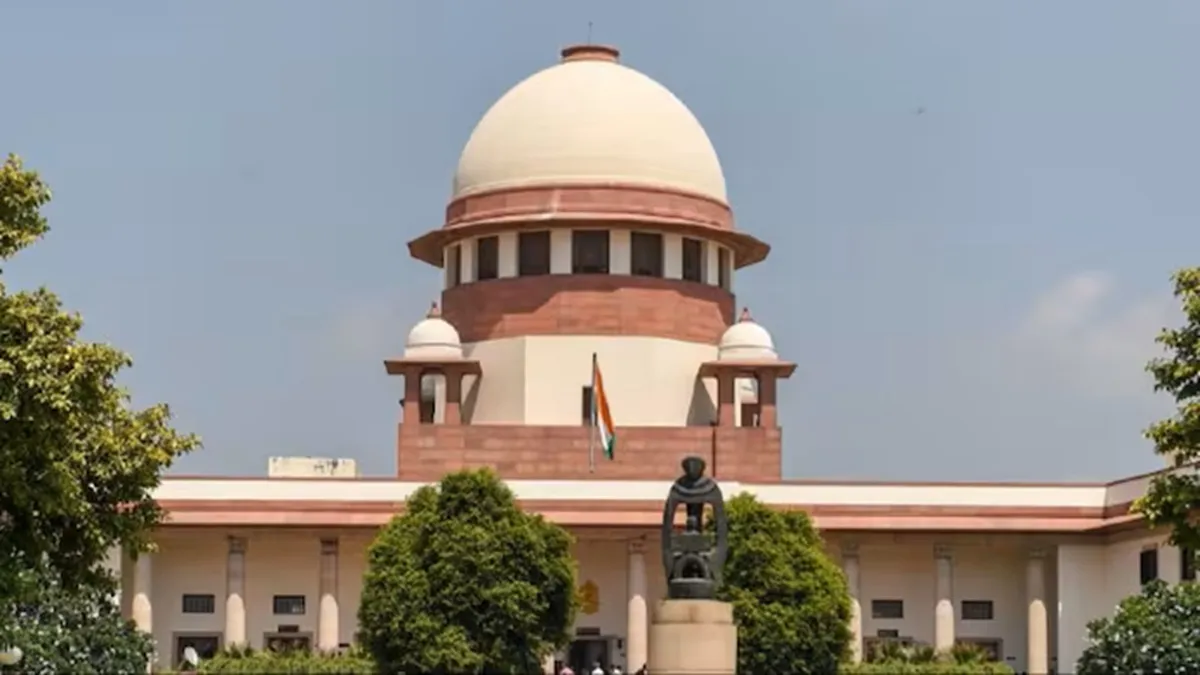
The Supreme Court of India on Monday highlighted the growing problem of delayed bail hearings across various High Courts, noting that mounting pendency and irregular listing patterns are slowing the justice process. A bench led by Chief Justice Surya Kant and Justice Joymalya Bagchi was reviewing the case of Sunny Chouhan versus the State of Punjab, during which it had earlier sought detailed data on pending bail pleas from High Courts nationwide.
While acknowledging that many courts have provided the required information and introduced steps to speed up hearings, the bench drew attention to worrying pendency levels in specific states, particularly within the Allahabad High Court.
Court calls for robust mechanisms in high courts
The Supreme Court recommended that the Chief Justice and the Administrative Committee of the Allahabad High Court create a system where every bail application receives a fixed date of hearing. It further suggested the use of "judicial resource aggregation" and asked that bail matters be prioritised when preparing daily cause lists.
The bench further noted that a similar structure is required in the Patna High Court, where bail hearings are often pushed back for extended periods. The Court also recalled that the Madhya Pradesh High Court had more than 63,000 pending bail pleas around a year ago, describing it as "an alarming situation," although it expressed optimism that many applications may have since been resolved. The bench clarified that these observations should not be mistaken as criticism of any court, emphasising that the intention is solely to enhance judicial efficiency.
Key suggestions given to high courts
The Court also took note of multiple recommendations that aim to streamline bail proceedings across High Courts. These include:
- Bail pleas should be scheduled automatically through software on a weekly or fortnightly cycle.
- Status reports must be filed before the first hearing of the bail application.
- A copy of the bail plea should be mandatorily served on the Advocate General.
- New bail applications should be listed within one week of filing.
- Bail matters that are not taken up must be automatically relisted.
- High Courts should set outer timelines to ensure quicker disposal of bail cases.
CJI announces 'One Case One Data' initiative
Earlier on Monday, CJI Surya Kant also announced the launch of a major digital initiative aimed at strengthening judicial data integration and improving public access to court services across the country. Making the announcement at the outset of the day's proceedings, the CJI said the judiciary is commencing the "One Case One Data" initiative, which will integrate multi-level information from all the high courts, district courts and taluka courts into a unified system. "We are commencing the 'one case one data' initiative with multi-level information of all high courts, district and taluka court details embedded. We look forward to developing an efficient case management system," the CJI said.
ALSO READ: Cabinet approves proposal to increase number of Supreme Court judges from 34 to 38
