
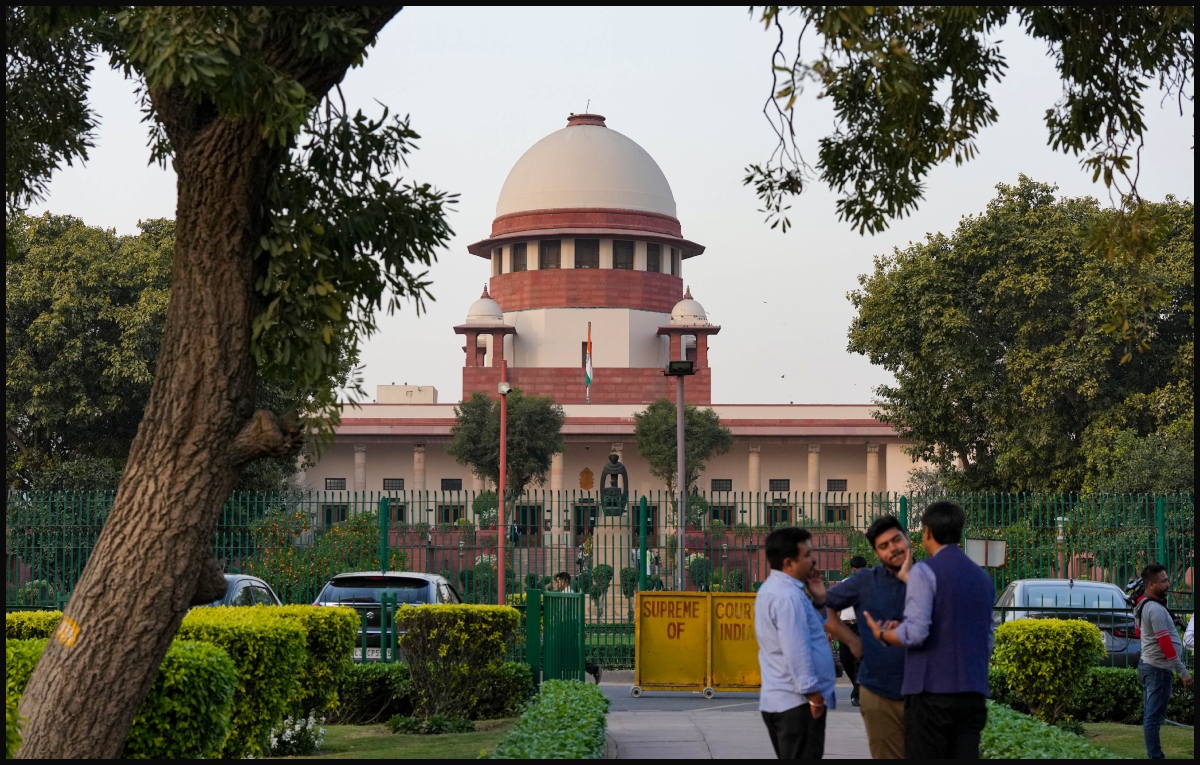
The Supreme Court on Monday, while refusing to stay the entire Waqf Amendment Act, stayed some provisions of it and put on hold the provision that mandated a person should be a practitioner of Islam for 5 years to create a Waqf. During the hearing of the matter, the apex court added that the number of non-Muslims in state Waqf boards and central Waqf councils cannot exceed three. The Supreme Court said that the provision on limiting who can create a Waqf will be stayed till rules are framed on determining whether a person is a practitioner of Islam.
SC stays certain provisions of Waqf Act
The apex court stayed the provision of the Waqf Act which empowered a district collector to determine whether a property declared as Waqf is a government property and pass orders.
While hearing the case, Chief Justice of India Justice BR Gavai noted that collectors "cannot be permitted to adjudicate rights of personal citizens, and this will violate separation of powers."
Collectors not allowed to adjudicate rights of personal citizens: SC
"Till adjudication happens by the tribunal, no third-party rights can be created against any parties. The provision dealing with such powers to the collector shall remain stayed. We also hold that there are not more than 3 non-Muslim members in the Waqf board and in total not more than 4 non-Muslim members," the top court said.
Advocate Anas Tanweer (petitioner who filed a plea challenging the Waqf Act) said, "The Supreme Court has first found that there is a prima facie case for a stay on certain provisions. They have not stayed all the provisions, or the complete act, but certain provisions have been stayed, like the provision that said that you have to be a Muslim for five years, which has been stayed because there is no mechanism to determine whether someone has been a Muslim for five years or not... As far as non-Muslim members are concerned, the court has said that in the Waqf Board, it cannot be more than 3 and not more than 4 in Section 9, and on the registration, the court has apparently extended the time limit but has not stayed the provision..."
On the other side, Congress MP Imran Pratapgarhi said, "This is a really good decision. The Supreme Court has reined in the conspiracy and intentions of the government. People who donated their land were fearful that the government would attempt to grab their land. This is a relief to them. How will the government decide who has been a practising Muslim for 5 years? This is a matter of faith. The government took note of all these aspects. We will continue the fight."
President Murmu on April 5 had given assent to Waqf Act
It should be noted that President Murmu on April 5 had given her assent to the Waqf (Amendment) Bill, 2025, which Parliament earlier passed after heated debates in both Houses.
The central government had earlier urged the court not to stay any provisions of the Act, saying that it is a settled position in law that constitutional courts would not stay a statutory provision, either directly or indirectly, and would decide the matter finally.
The Centre, in its affidavit, had said the amendments are only for the regulation of the secular aspect regarding the management of the properties, and hence, there was no violation of the religious freedoms guaranteed under Articles 25 and 26 of the Constitution.
About the provision of barring non-Muslims from creating Waqf, Solicitor General Tushar Mehta, representing the Centre, had said that only in the 2013 amendment were non-Muslims given such rights, but in the 1923 law, they were not allowed to create Waqfs, as there were concerns that this could be used as a device to defraud creditors.
Also Read:
