
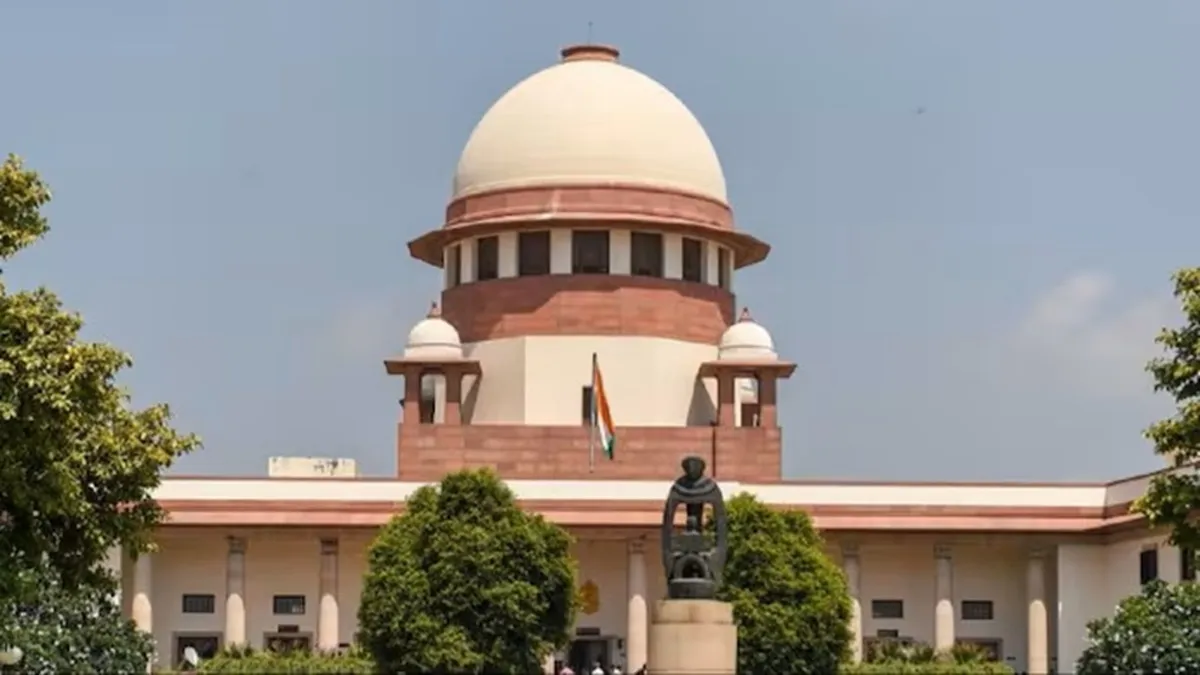
As Delhi continues to grapple with hazardous air pollution, the Supreme Court on Sunday issued an advisory encouraging the use of hybrid hearings in courts. The notification was released as the national capital's air quality deteriorated to the 'Severe' category. In its order, the apex court advised members of the Bar and parties appearing in person to opt for virtual participation wherever feasible. The move is aimed at reducing physical presence in court premises amid adverse weather and health concerns caused by rising pollution levels.
"In view of the prevailing weather conditions, the Hon’ble Chief Justice of India has advised, if convenient, the Members of the Bar/Parties-in-Person to avail hybrid mode of appearance through video conferencing facility in their matters listed before the Hon'ble Courts."
Delhi AQI sets record for second-worst December day
On Sunday, the Air Quality Index (AQI) in Delhi climbed to 461 and marked the city's most polluted day this winter and the second-worst December air quality day on record, as weak winds and low temperatures trapped pollutants close to the surface. The air quality monitoring station at Wazirpur recorded the maximum possible AQI value of 500 during the day, beyond which the Central Pollution Control Board (CPCB) does not register data. By 4 pm, 38 of Delhi's 39 active air quality monitoring stations reported 'severe' pollution levels, according to the CPCB's Sameer app, with only Shadipur remaining in the 'very poor' category.

What health experts have to say?
Health experts warned of serious public health risks due to the prolonged exposure to hazardous air. Shila Yadav, a health expert, told news agency PTI that with the AQI hovering between 300 and 400 and even breaching the 450 mark, people should avoid outdoor walking or exercise, particularly in the morning hours. She said while physical activity should not be stopped, it must be shifted indoors, as exposure to polluted air can cause fine particulate matter such as PM2.5 to penetrate deep into the lungs. Yadav advised people to step out only when necessary, preferably later in the day when sunlight improves dispersion, and said wearing masks was essential for those who must go out for work. She also cautioned against strenuous activities that involve heavy breathing and stressed the importance of a healthy diet, adequate hydration and consumption of seasonal fruits to help the body flush out toxins.
GRAP-IV invoked in Delhi
The Commission for Air Quality Management (CAQM) on Saturday invoked the strictest measures (Stage IV) under its air pollution control plan, Graded Response Action Plan (GRAP), including a ban on all construction and demolition activities in Delhi-NCR after pollution levels rose sharply amid unfavourable meteorological conditions. The Sub-Committee on GRAP decided to invoke Stage III of the GRAP earlier on Saturday across the entire NCR with immediate effect as air quality continued to worsen. As per the Central Pollution Control Board (CPCB), an AQI between zero and 50 is considered 'good', 51 and 100 'satisfactory', 101 and 200 'moderate', 201 and 300 'poor', 301 and 400 'very poor' and 401 and 500 'severe'.
ALSO READ: Are Delhi-NCR schools closed tomorrow due to GRAP 4? Details here