
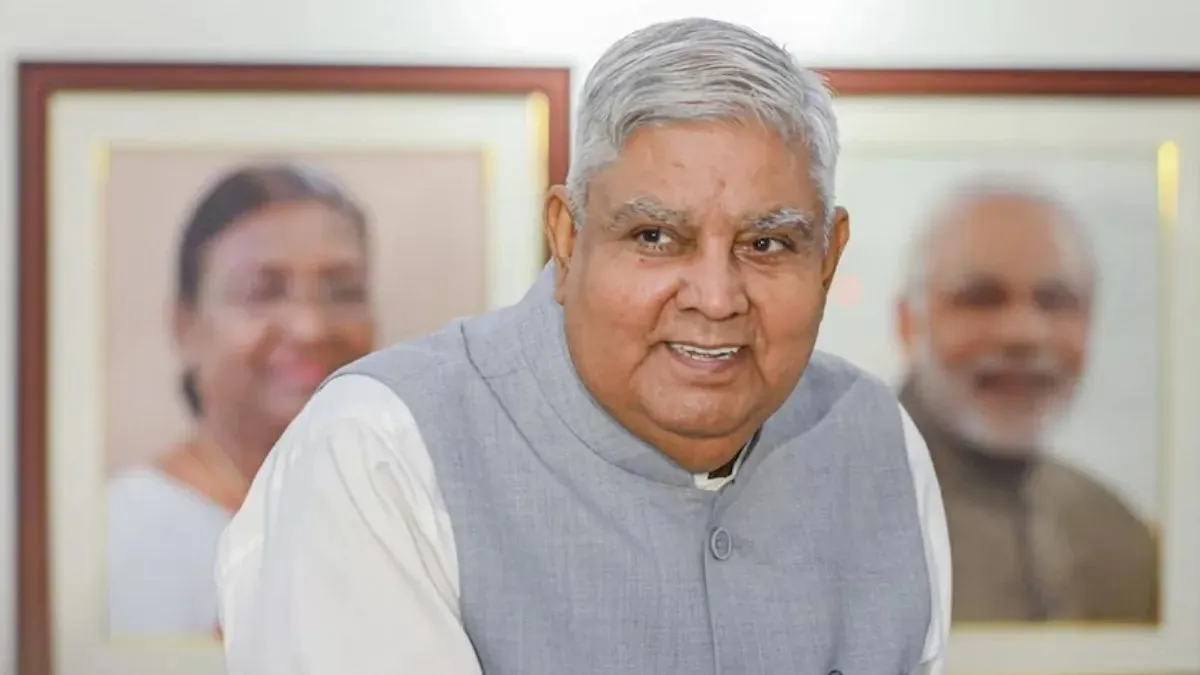
Vice President Jagdeep Dhankhar' abrupt resignation has mandated an immediate election to choose his replacement. As per Clause 2 of Article 68, the election will have to be held 's soon as possible' in case of the death, resignation or removal of the Vice President.
VP Dhankhar on Monday wrote to President Droupadi Murmu, apprising her about his decision. He cited health ailments as the reason for his move.
What constitution says
As per the Indian constitution, the person elected to fill the vacancy created after Dhankhar's resignation will be entitled to hold office for a full term of five years, unlike by elections of MP and MLAs.
However, the Constitution does not mention who will discharge the duties of the Vice President in the event of his death or resignation before the expiry of the term or when the Vice President acts as the President of India.
The Vice President can continue even after completion of his five-year term till his successor gets appointed.
Since the Vice President is also the chairman of Rajya Sabha, either Deputy Chairman or any other member of the Rajya Sabha authorised by the President may perform his duty in case of his resignation.
Facts about Vice President post
The Vice President can resign from his office by tendering his resignation to the President. The resignation becomes effective from the date of its acceptance. The Vice President can also discharge the duties of the President in the latter’s absence. In such conditions, he does not perform his duties as Rajya Sabha Chairman and is also not entitled to avail salary or allowance payable to the upper house Chairman.
As per Article 66 of the Constitution, the Vice President is elected by the members of the electoral college consisting of the members of both Houses of Parliament by means of the single transferable vote in accordance with the system of proportional representation.
Here are related stories
