
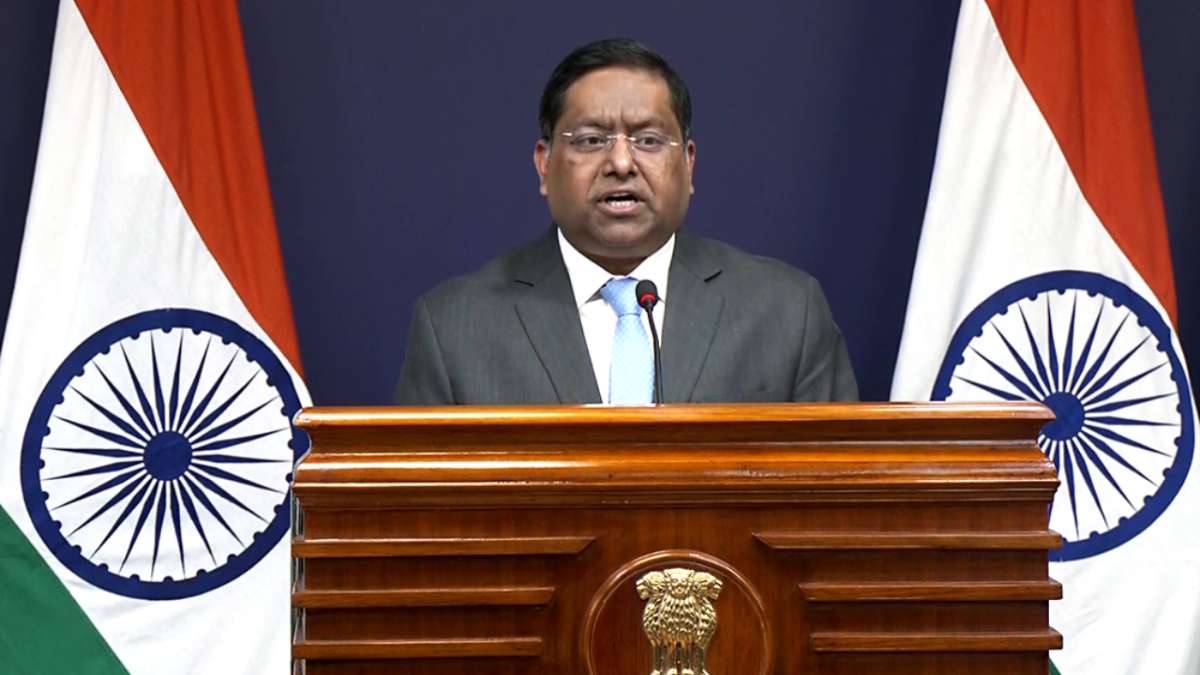
The Ministry of External Affairs (MEA) has welcomed the recent ceasefire agreement between the United States and Iran, describing it as a positive step towards de-escalation in the Middle East. The Foreign Ministry expressed hope that the understanding would pave the way for lasting peace and stability in the region.
The MEA also underscored the importance of ensuring uninterrupted and secure maritime traffic through the Strait of Hormuz, a vital global energy corridor, and voiced optimism that normalcy in shipping routes would prevail.
“We welcome the ceasefire reached and hope that it will lead to a lasting peace in West Asia. As we have continuously advocated earlier, de-escalation, dialogue and diplomacy are essential to bring an early end to the ongoing conflict,” the statement read.
“The conflict has already caused immense suffering to people and disrupted global energy supply and trade networks. We expect that unimpeded freedom of navigation and global flow of commerce would prevail through the Strait of Hormuz,” it added.
US delays planned Iran strikes for two weeks
US President Donald Trump on Wednesday announced a temporary pause in planned military action against Iran, saying the strikes will be delayed for two weeks. The decision was shared on his Truth Social platform shortly before a previously indicated deadline, easing immediate concerns of rising tensions.
Trump described the move as a “double-sided ceasefire”, indicating that both the United States and Iran are expected to avoid hostile actions during this period. The pause is being seen as an effort to create space for diplomacy.
According to the President, the decision followed Iran’s agreement to reopen the Strait of Hormuz, a key route for global oil transport. The waterway is considered crucial for international energy supplies.
Trump also stated that the United States had already met its primary military objectives in Iran. He added that Washington had received a 10-point proposal from Tehran, which he claimed addressed the main issues that had previously led to tensions between the two countries.
The development signals a possible shift towards negotiation, though it remains unclear how the situation will progress after the two-week pause.
