
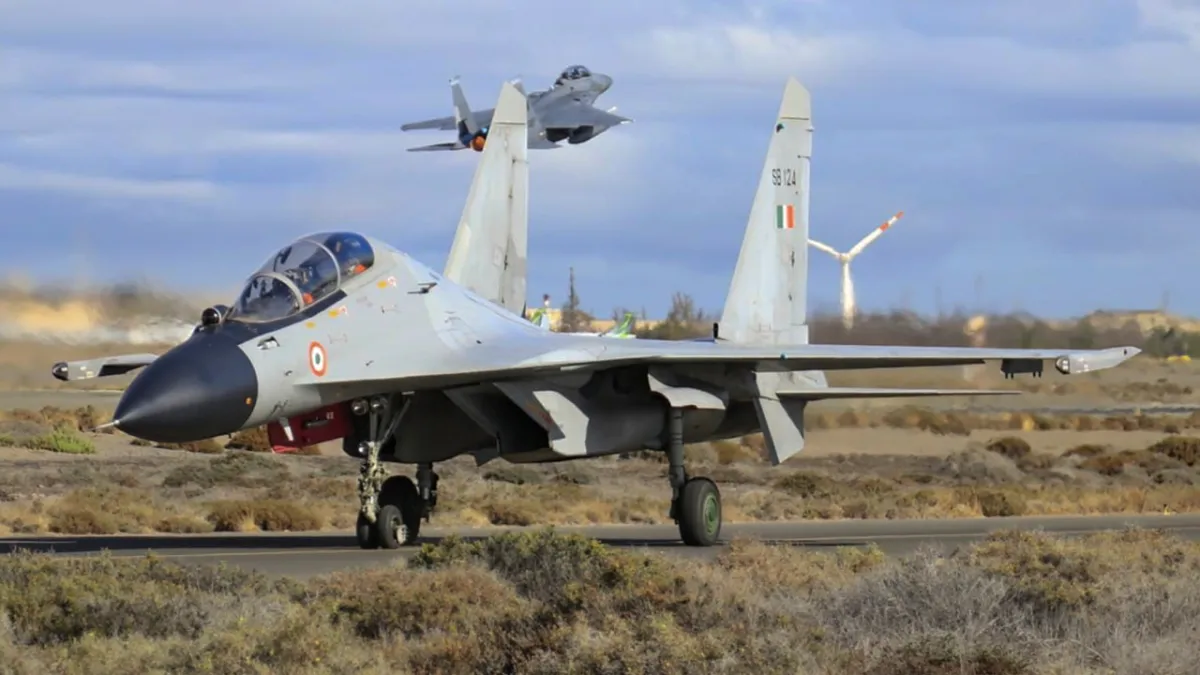
India has vacated the Ayni airbase in Tajikistan, marking the end of its nearly 25-year strategic presence from a location close to Pakistan. Although India had proposed deploying Sukhoi fighter jets to sustain its presence, the plan could not be finalised with Tajikistan. The Ayni Airbase historically has been an important centre for Indian military operations in the region.
India began developing strategic military cooperation with Tajikistan in the late 1990s during the civil conflict in Afghanistan. At that time, India supported the Northern Alliance against the Taliban. Tajikistan, sharing a border with Afghanistan, became an important location for logistical support, intelligence cooperation, and humanitarian assistance.
India began using facilities in Tajikistan to support the Northern Alliance. No formal base was set up then, but Indian medical and technical teams were active in the region. In 2002, India and Tajikistan finalised an agreement that allowed India to refurbish and use the Farkhor air base.
This became the first overseas military facility operated by India. Work continued on upgrading both the Farkhor air base and the air base near Ayni village. India invested in extending runways, constructing hangars, and improving communication facilities.
The Ayni airbase was formally inaugurated in 2010 after major reconstruction funded and completed by India. Tajikistan retained sovereignty, but India gained access along with ongoing joint use with Tajik forces. Although India does not permanently station aircraft there, the bases remain strategically important. They continue to serve as logistical and training links between India and Central Asia.
Strategic significance
The bases enabled India to maintain contact with anti-Taliban forces before 2001 and later provided a route for humanitarian aid to Afghanistan. The airbases gave India a direct strategic presence in Central Asia, a region otherwise hard to access by land due to Pakistan blocking overland routes.
The location provided India with a valuable strategic asset north of Pakistan, allowing monitoring and potential rapid response capability in the wider region.
Partnership with Tajikistan and Russia
The development of the bases strengthened India's defence relationship with Tajikistan. Russia also cooperates at Ayni, making it a location where Indian and Russian interests align.
Currently, India does not maintain a permanent fighter squadron at either Farkhor or Ayni but retains the capability to use both when required. With withdrawal from Ayni, Farkhor remains the sole airbase for India in the country.
Personnel, engineers, and security teams are periodically rotated. The base serves as an important point for training, logistics, and diplomatic cooperation.
|
President Droupadi Murmu takes sortie in Rafale fighter jet at Ambala Air Force base | Video |
