
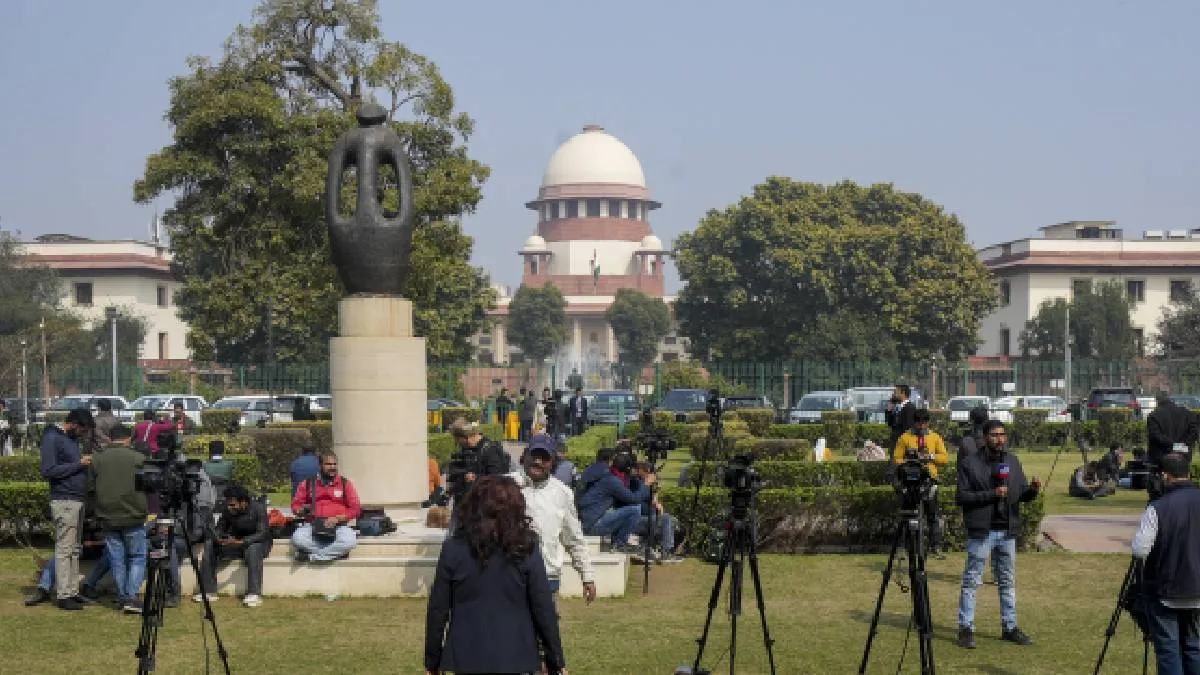
In a bid to crack down on the rising menace of “digital arrests”, the Ministry of Home Affairs (MHA) has informed the Supreme Court that it has constituted a high-level inter-departmental committee (IDC) to eliminate systemic gaps and ensure real-time protection for victims of cybercrime.
Supreme Court directions and oversight
A bench headed by Chief Justice Surya Kant, on December 16, 2025, ordered inter-departmental ministerial consultations under the guidance of Attorney General R Venkataramani on the issue and sought to be apprised of the outcome.
The bench also directed that the recommendations made by the court-appointed amicus curiae be considered alongside the directions already issued on December 1 last year.
Multi-agency crackdown on digital arrest scams
In a status report filed on January 12, the MHA detailed a multi-agency offensive involving the Central Bureau of Investigation (CBI), Reserve Bank of India (RBI), Department of Telecommunications (DoT), and key IT ministries to dismantle transnational syndicates using forged documents and “digital arrest” tactics to defraud citizens.
CBI takes over high-profile Delhi case
Acting on the court’s directions, the report said the CBI has taken over the investigation into a high-profile fraud case in Delhi, where a 76-year-old widowed pensioner was allegedly duped of Rs 1.64 crore through a “digital arrest” scam involving impersonators using forged documents.
The CBI informed the court that such scams are often perpetrated by organised and transnational cybercrime syndicates and that the agency is now utilising INTERPOL channels to dismantle international modules.
Composition and mandate of the IDC
The MHA has established the inter-departmental committee under the chairmanship of the Special Secretary (Internal Security).
The panel includes joint secretary-level officers from the Ministry of Electronics and Information Technology (MeitY), Department of Telecommunications (DoT), Reserve Bank of India (RBI), Ministry of External Affairs (MEA), and the Indian Cyber Crime Coordination Centre.
The committee has been mandated to identify legislative gaps, suggest corrective measures, and ensure time-bound compliance across the banking and telecom sectors.
Progress on telecom and SIM card regulations
The DoT reported significant progress in curbing “spoofed” calls—calls originating from foreign locations but appearing as Indian numbers.
Through the Central International Out Roamer (CIOR) mechanism, approximately 1.35 crore spoofed calls were blocked in October 2024 alone, reducing the current volume to around 1.5 lakh calls.
The DoT is also finalising rules under the Telecommunications Act, 2023, to address negligent issuance of SIM cards by point-of-sale agents, enforce the nine-SIM-per-person cap, and regulate the use of ‘SIM Boxes’ by fraudsters.
Banking measures and AI tools
The RBI informed the committee that 23 banks have already implemented “MuleHunter AI”, a specialised tool designed to detect mule accounts used by criminals to launder stolen funds.
The panel also discussed banking reforms such as mandatory cooling-off periods and delay mechanisms for suspicious transactions to preserve the “golden hour” for law enforcement intervention.
Freezing funds and standardised bank procedures
The report referred to the proactive freezing of defrauded amounts using Section 12AA of the Prevention of Money Laundering Act (PMLA) before funds can be moved.
It also discussed the formulation of standard operating procedures to ensure uniform guidelines for banks to identify and close dormant accounts.
Amicus Curiae’s recommendations
Court-appointed amicus curiae and senior advocate N S Nappinai proposed a significant shift in victim relief mechanisms, suggesting that frozen proceeds be released to victims based on portal complaints and indemnity bonds, without mandating formal FIR registration in all cases.
The amicus also recommended that platforms such as WhatsApp and Telegram limit the duration of video calls from unknown numbers to prevent prolonged coercion.
Government seeks time extension
The government has sought a one-month extension from the Supreme Court to consolidate inputs from all stakeholders.
The committee’s next focus areas include strengthening the adjudication mechanism under Section 46 of the Information Technology Act and finalising a national online portal for cybercrime adjudication.
“In view of the foregoing facts and circumstances, it is most respectfully prayed that this Hon’ble Court may be pleased to grant a period of at least one month to enable the respondents to obtain inputs from the remaining members of the Inter-Departmental Committee and to undertake further deliberations thereon, so as to place a consolidated and considered outcome before this Hon’ble Court,” the MHA said in its status report.
ALSO READ: Railway ministry approves major rail infrastructure projects to boost capacity and safety
