
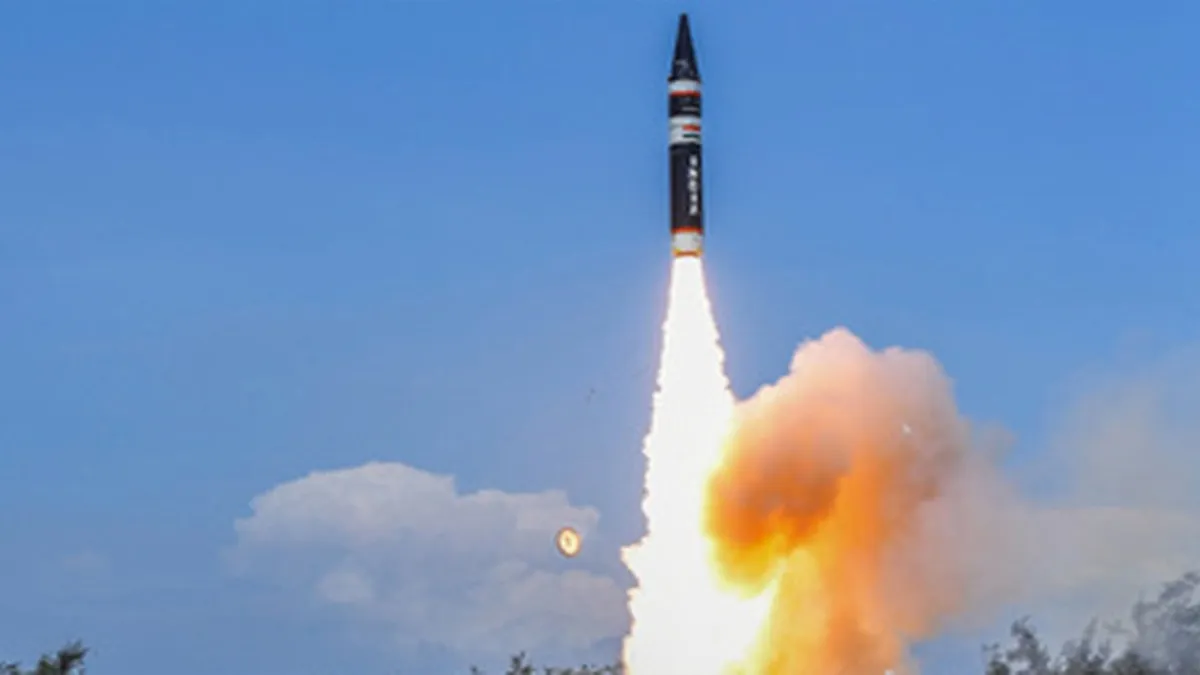
In a powerful display of India's strategic capabilities, the country successfully test-fired the K-4 intermediate-range ballistic missile from the nuclear-powered submarine INS Arighaat in the Bay of Bengal on Tuesday. As per reports, the launch took place off the coast of Vishakhapatnam and marked another major milestone in strengthening India's sea-based nuclear deterrence.
What the K-4 missile brings to India's strategic arsenal
The K-4 submarine-launched ballistic missile is designed to strike targets up to 3,500 km away. This capability represents a huge leap for India's naval forces, significantly enhancing their ability to conduct nuclear strikes from underwater platforms. The missile, which was officially inducted into the Navy on August 29, 2024, places India among a select group of nations capable of launching nuclear weapons from land, air and sea.
Developed as a derivative of the Agni-III land-based missile, the K-4 has been specially engineered for underwater launch. It can be expelled from a submarine's silo, rise through the ocean, emerge at the surface and then ignite its motors for flight. The missile can carry a nuclear warhead weighing up to 2.5 tons and is deployable from India's Arihant-class submarines.
The stealthy backbone of India's nuclear triad
The K-4 forms the most concealed and survivable part of India's nuclear triad. Ballistic missile submarines are designed to operate silently in remote ocean regions for long durations during deterrence patrols. These submarines ensure that even in the event of a first-strike attack on land-based assets, India retains a credible second-strike capability.
Tribute to Dr APJ Abdul Kalam
The 'K' in the K-series missiles honours Dr APJ Abdul Kalam, who was instrumental in shaping India's Integrated Guided Missile Development Program. His legacy continues through missile systems that form the core of India’s strategic defence.
ALSO READ: India successfully conducts user trials of Akash Next Generation air defence missile | Video
