
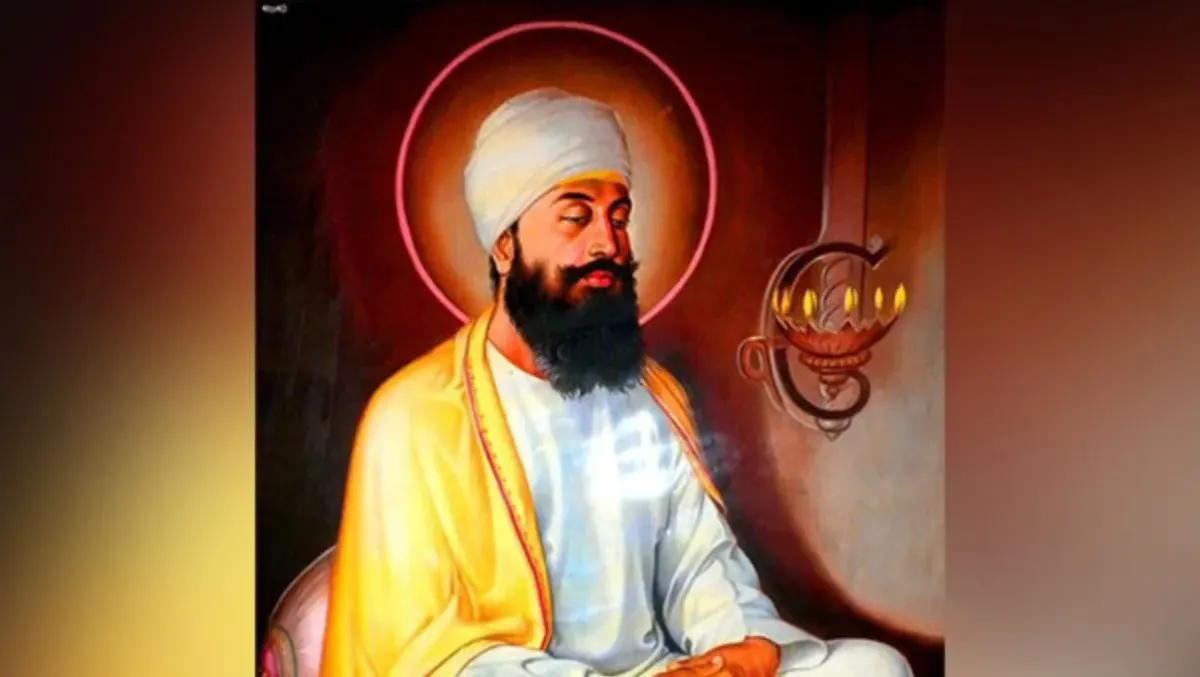
Guru Tegh Bahadur, the ninth Sikh Guru, was beheaded on November 24, 1675, in Delhi's Chandni Chowk on the orders of Mughal emperor Aurangzeb. Revered as Hind di Chadar (Protector of India), Guru Tegh Bahadur is remembered for his courageous stand against the forced religious conversions of Kashmiri Pandits. His sacrifice is honoured not only in Sikhism but is deeply respected across Hindu society as well.
Ninth Sikh Guru and Guru Tegh Bahadur's early life
After the death of the eighth Sikh Guru, Guru Har Krishan, the Sikh community awaited the declaration of his successor. Before passing, Guru Har Krishan uttered the words "Baba Bakale", indicating that the next Guru would be found in the town of Bakala.
Many residents of Bakala claimed to be the next Guru. To resolve the confusion, Sikh congregations assembled there, and after due deliberation, Tegh Bahadur was unanimously recognised and declared the Ninth Guru.
Guru Teg Bahadur was born in 1621. He was the youngest son of the sixth Sikh Guru, Guru Hargobind. Guru Tegh Bahadur's childhood name was Tyagmal. He was fearless and brave from childhood. He grew up in a spiritual environment and received training in Sikh scriptures (Guruvani), meditation, ethics, and martial skills under the guidance of his parents.
At the age of 14, he fought alongside his father during a Mughal attack. His display of extraordinary skill and bravery in battle moved Guru Hargobind to give him the name Tegh Bahadur, meaning "Brave Master of the Sword."
Guru Tegh Bahadur's sacrifice, the Kashmiri Pandits and Aurangzeb
On 25 May 1675, while Guru Tegh Bahadur was addressing devotees in Anandpur Sahib, a delegation of Kashmiri Pandits approached him. They told him that Iftekhar Khan, the Mughal governor of Kashmir, was forcing them to convert to Islam or face death under Aurangzeb's orders. They begged the Guru for help.
According to Guru Tegh Bahadur's biography, written by Hari Ram Gupta, he advised the delegation to tell Aurangzeb's officials: "If Guru Tegh Bahadur accepts Islam, we too will accept it."
This put the moral challenge directly before Aurangzeb, who then ordered the Guru to be presented before him in Delhi and asked him to convert; otherwise, his life would be taken.
Guru Tegh Bahadur was arrested and subjected to brutal torture in an attempt to break his resolve. Despite immense suffering, he refused to abandon his principles or accept Islam.
Enraged by his firm stance, Aurangzeb ordered his execution. On November 24, 1675, Guru Tegh Bahadur was beheaded publicly in Chandni Chowk, Delhi. The site where he gave his life is now marked by the historic Gurdwara Sis Ganj Sahib.
Guru Tegh Bahadur's martyrdom remains one of the greatest sacrifices in Indian history, an act of defending religious freedom for others. His supreme courage paved the way for the continued growth of Sikhism under Guru Gobind Singh, and his legacy continues to inspire India to this day.
Also Read: Guru Tegh Bahadur Jayanti School Holiday 2025: Are schools in Delhi-NCR closed today?
Also Read: Guru Tegh Bahadur 350th martyrdom anniversary: Delhi govt declares November 25 as public holiday
