
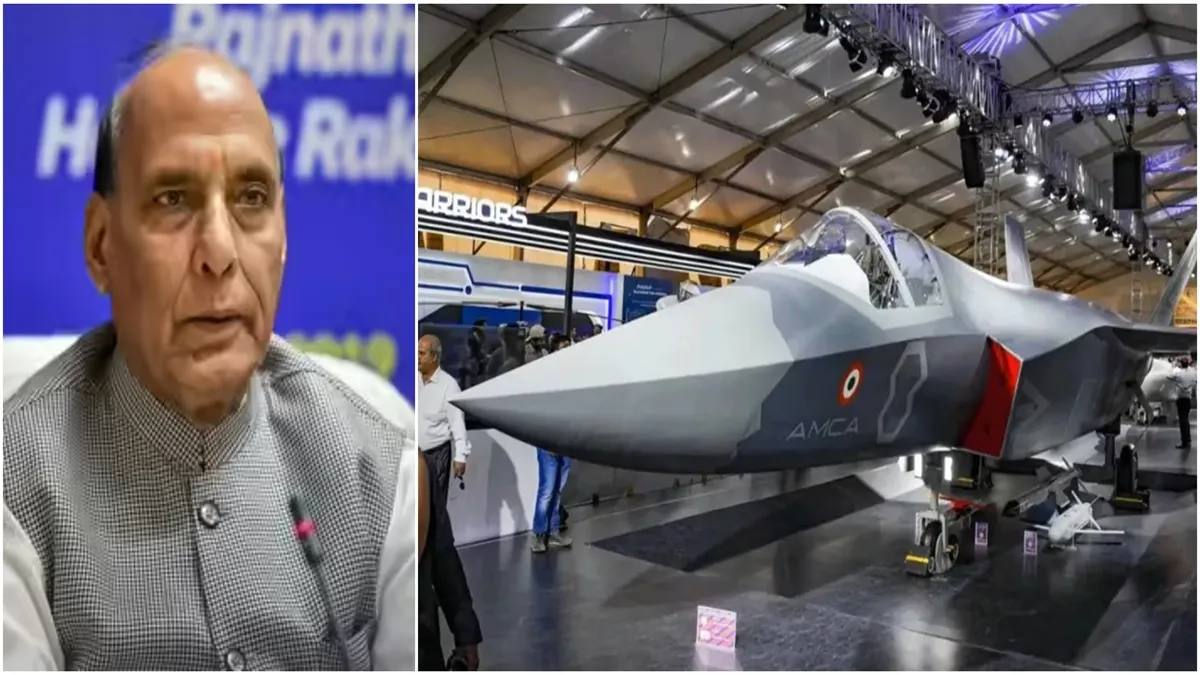
At a time when India is pushing to bolster its air combat capabilities, the Defence Ministry of India has informed the Standing Committee on Defence that it is examining the possibility of joining one of the two European-led global programmes working on sixth-generation fighter jets. According to the Committee's report tabled in the Lok Sabha, one consortium comprises the United Kingdom, Italy and Japan, while the other brings together Germany and France.
The Committee noted that the Air Force intends to align early with one of these international teams to avoid lagging behind in advanced aircraft development. This comes as the Chinese Air Force recently unveiled visuals of its own sixth-generation prototypes. China already operates fifth-generation fighters and is expected to share them with Pakistan in the near future, as per reports.
"The Committee have been informed that two consortia are working on the sixth-generation aircraft. One is a consortium of the UK, Italy, and Japan and the other is a consortium of France and Germany and both are developing aircraft," the Committee said in its report tabled in Lok Sabha on Wednesday.
Indigenous AMCA project progressing
On India's homegrown fifth-generation platform, the Committee said that work on the Advanced Medium Combat Aircraft design is progressing, with discussions underway on its production. The Indian Air Force plans to induct six squadrons of AMCA jets starting from 2035. Notably, India has also partnered a French company to co-develop a 110 to 120 KN engine, which will power the indigenous sixth generation capable fleet.
How sixth-generation fighters may transform aerial warfare?
Experts believe the arrival of sixth-generation fighter jets will significantly reshape modern air combat. These platforms are expected to integrate advanced artificial intelligence for mission support and rapid decision making. Several concepts under development also include the possibility of pilotless operations which may offer greater flexibility and reduced risk during high-intensity missions.
Next-generation weapons and defence technologies
Future fighters are likely to feature cutting edge systems such as directed energy weapons capable of neutralising incoming threats in real time. Designers are also considering intelligent airframe surfaces, enhanced stealth features and robust cyber protection layers to disrupt enemy networks and safeguard onboard systems during operations.
Need for a clear roadmap highlighted
The Standing Committee on Defence has recommended a well-defined strategy and timeline to guide India's entry into next-generation combat aviation. Officials view this as a crucial step towards preparing for emerging security challenges and developing an air force equipped with the advanced technologies needed for future warfare.
