
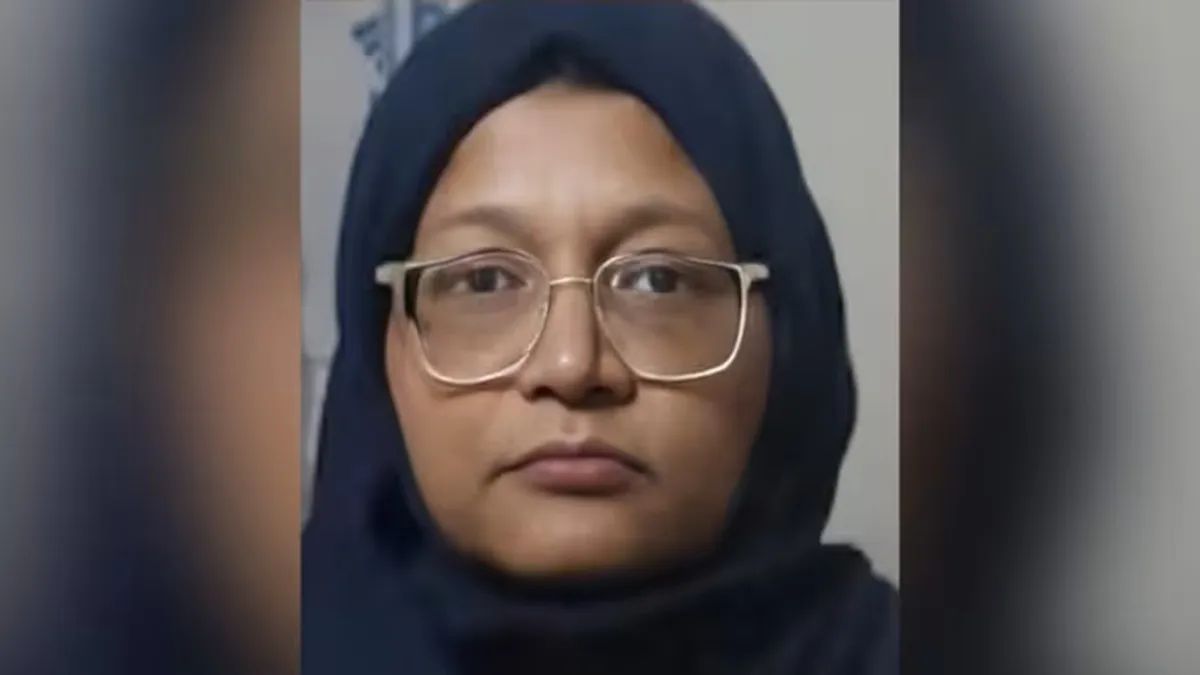
In a major intelligence breakthrough, agencies have uncovered critical details about Jaish-e-Mohammed’s (JeM) top commander, Dr Shaheen, who operated under the code name 'Madam Surgeon.' Shaheen, known for her recruitment operations, was referred to by this alias among her close associates and fellow Jaish operatives involved in the terror outfit’s radicalisation activities across India.
Operation Hamdard: A deceptive recruitment network
Sources reveal that Dr Shaheen was orchestrating a covert radicalisation initiative called 'Operation Hamdard,' designed to lure young Muslim women and girls into extremism under the guise of sympathy and empowerment. The operation used a psychological manipulation model that targeted vulnerable sections of society.
Operation Hamdard was mainly divided into 3 categories-
- Category One: Economically weak women who were offered financial incentives to join militant circles.
- Category Two: Ambitious women who did not regularly wear 'burqas' and aspired to live a luxurious lifestyle. They were shown dreams of foreign travel and a prosperous life to entice them into the network.
- Category Three: Ideologically radical women who were already inclined toward extremist beliefs and could be easily mobilised for jihad.
Operation code language and 'Team D' network
Investigative agencies have decoded several encrypted conversations in which 'Team D,' allegedly led by Dr Shaheen, was actively planning recruitment and logistics for Jaish-e-Mohammed. Members of Team D were mostly medical professionals who used coded terms in their communication to disguise their operations.
For example, ‘specialist’ referred to an operative, while specific medical specialisations were code names for roles-
- Heart Specialist- senior operative coordinating core missions.
- Eye Specialist- surveillance and reconnaissance role.
- Physician- logistics or communication handler.
Terms like 'medicine stock' were used to denote small weapons, whereas 'operation theatre' referred to reconnaissance zones. Similarly, discussions about “preparing for surgery” were actually code for arranging funds or executing specific terror tasks.
ATS zeroes in on Team D's financial trail
The Uttar Pradesh Anti-Terrorism Squad (ATS) has now placed Team D under close surveillance. The agency has been examining the financial transactions of Dr Parvez and Dr Arif, both alleged associates of Dr Shaheen. Dr Arif was detained in Uttar Pradesh's Kanpur on Wednesday (November 12), and his bank statements are being closely scrutinised for links to foreign fund transfers and suspicious deposits.
Network under the radar in Saharanpur and beyond
The ATS has also been investigating several bank accounts in Saharanpur believed to be connected to the wider network managed by Dr Shaheen’s unit. Preliminary findings suggest the group maintained multiple accounts to channel funds for recruiting and training women under Operation Hamdard.
Expanding probe into terror network
Investigators believe Jaish-e-Mohammed’s leadership had directly briefed Dr Shaheen and Team D for executing this operation across parts of Uttar Pradesh. The discovery of encrypted communication and code language is now being described as one of the biggest intelligence breakthroughs in recent months. Security agencies have intensified their probe, anticipating more arrests and disclosures in the coming days as the financial and digital communication trail of 'Madam Surgeon,' unfolds.
CCTV footage traces Dr Umar's movements across 50 locations before reaching Red Fort
The Delhi Police, while investigating the Red Fort blast case that claimed 12 lives, have gathered CCTV footage from nearly 50 locations across the city, tracing the detailed movements of the key accused, Dr Umar. According to official sources, the footage reveals that Dr Umar travelled through several districts of the capital on November 10 before reaching the Red Fort area around 3:19 pm.
Police mapping shows that the accused entered Delhi from the Badarpur border after travelling from Faridabad. He was first spotted in the South-East District, followed by sightings in the East District and later on the Central District’s Ring Road. From there, he moved towards the North District, proceeded to Ashok Vihar in the North-West District for a meal break, and then returned to the Central District, where he was seen visiting a mosque. His last known stop was the Red Fort parking area in the North District.
Night halt on expressway and movement before return
Investigations also revealed that after fleeing from Faridabad, Dr Umar travelled to Firozpur Jhirka via Mewat before returning to Delhi on the Delhi-Mumbai Expressway. Police sources confirmed that he stopped at a bus stop along the expressway, spent the night at a roadside dhaba, and reportedly slept inside his vehicle. CCTV cameras along the expressway captured his car and movements during this period.
Diaries reveal planning and network links
In a parallel development, agencies probing the case recovered diaries belonging to Dr Umar and co-accused Dr Muzammil. The entries, dated between November 8 and 12, reference detailed planning leading up to the blast. The diaries also contain the names of around 25 individuals, most reportedly from Jammu and Kashmir and Faridabad, suggesting the existence of a coordinated terror network.
Earlier today, a joint team of the Delhi Police and the Forensic Science Laboratory (FSL) recovered a body part from near the New Lajpat Rai Market blast site. The remains have been sent for forensic examination to aid in identification and further analysis as part of the continuing investigation.
Here are some related stories of Delhi blast:
