
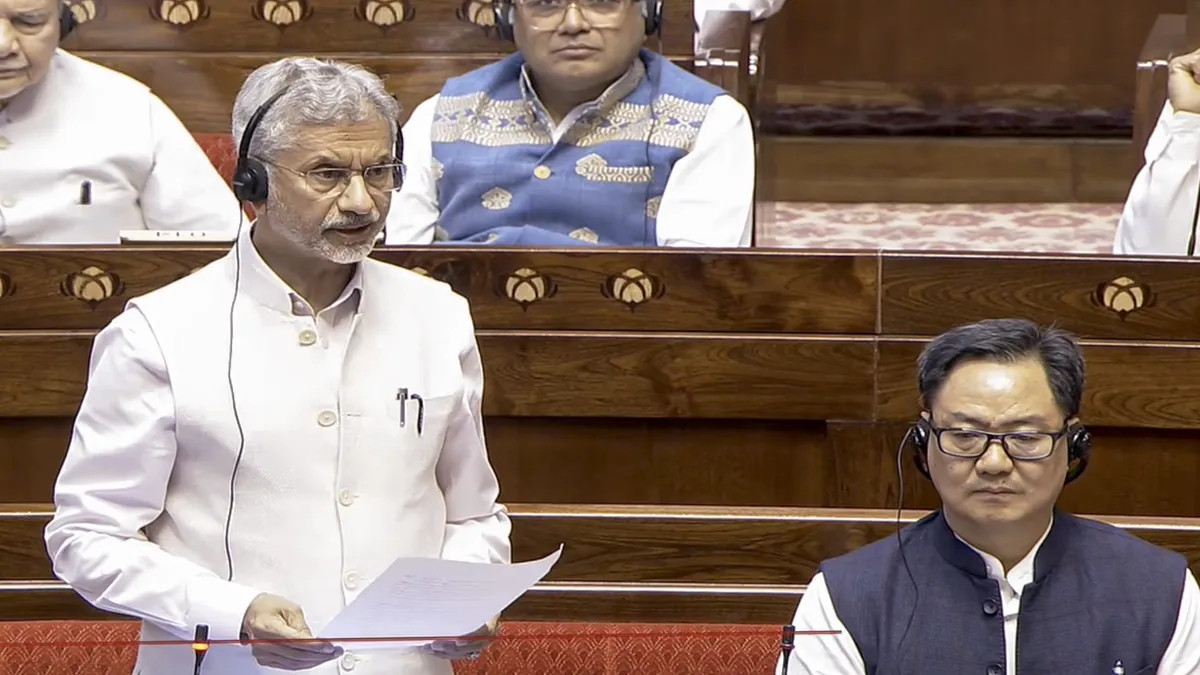
External Affairs Minister (EAM) Dr S Jaishankar addressed the Rajya Sabha amid opposition sloganeering, providing a comprehensive update on the West Asia conflict that erupted on February 28, with US-Israeli strikes killing Iran's Supreme Leader Ayatollah Ali Khamenei, followed by Tehran's retaliation against American bases, Israeli assets and Gulf states. He described the escalating violence- marked by high-level casualties, infrastructure devastation and spillover effects halting normal life- as a profound concern for India, given its proximity, nearly one crore citizens in Gulf nations, thousands of students and workers in Iran and reliance on the region for energy security from key oil and gas suppliers.
Jaishankar reiterated India's February 28 statement urging restraint, civilian safety, dialogue, diplomacy and respect for all states' sovereignty, with a follow-up call on March 3 emphasising de-escalation amid supply chain disruptions and instability.
Swift evacuations and diplomatic engagements
Jaishankar highlighted extraordinary evacuation efforts, with nearly 67,000 Indians crossing borders by the previous day, supported by round-the-clock embassy operations in high-alert mode. In Tehran, the embassy relocated students to safer areas, aided business travelers to exit via Armenia, and issued advisories starting January 5- escalating on January 14, February 14 and February 23- urging non-essential exits; the Directorate General of Shipping similarly warned seafarers.
He noted a humanitarian gesture allowing Iran's warship Lavan to dock at Kochi, earning thanks from Iran's foreign minister despite leadership contact challenges, while the Prime Minister and Cabinet Committee on Security (meeting March 1) closely monitor developments, coordinating ministries for citizen safety.
Tragic losses and ongoing stakes
The minister somberly reported two Indian mariners killed in merchant shipping incidents and one missing, expressing the House's shared sorrow over lives lost. Amid intensified conflict spreading destruction, Jaishankar stressed continuous government assessments, personal outreach to counterparts and contacts with fishermen from Iraq, underscoring India's stakes in regional stability for economic and human reasons.
He affirmed commitment to the Indian community, with missions facilitating returns and standing ready, as the Prime Minister oversees responses to this neighbouring crisis threatening peace, energy flows and diaspora well-being.
Jaishankar's Rajya Sabha statement on West Asia conflict
EAM Dr S Jaishankar delivered a detailed suo motu statement in the Rajya Sabha, outlining India's response to the West Asia crisis that ignited on February 28, 2026, with US-Israeli strikes on Iran, leading to Iranian retaliation against Gulf states and heavy casualties, including Iran's leadership. He reaffirmed India's immediate call for restraint, dialogue and respect for sovereignty, while noting the Cabinet Committee on Security's March 1 meeting under the Prime Minister to safeguard Indians abroad and address economic ripple effects.
Escalation and India's early diplomatic stance
The conflict rapidly intensified, spreading destruction across nations and grinding normal life to a halt, prompting India's March 3 reiteration of de-escalation pleas. Jaishankar emphasised West Asia's critical stakes for India- home to nearly one crore expatriates in the Gulf, thousands of students and workers in Iran, and vital energy supplies fueling $200 billion in annual trade- along with disruptions to shipping where two Indian mariners died and one remains missing.
Preemptive advisories and safety measures
Since tensions simmered post the 2025 war, India issued travel warnings starting January 5, escalating on January 14 and February 14-23, urging exits from Iran; shipping alerts barred unnecessary seafarer deployments. Embassies across the region, from Israel to Oman, echoed these, with a dedicated MEA control room aiding families; fishermen in Iran received outreach, reflecting proactive crisis anticipation.
Evacuation triumphs amid chaos
Post-outbreak, Tehran's embassy relocated students and pilgrims to safety, routed business travelers via Armenia, and maintained 24/7 operations; a Quick Response Team for seafarers was activated March 2. Over 67,000 Indians crossed borders by Sunday, bolstered by 15 inbound flights on March 7, 49 on March 8, and 50 scheduled today- diplomats easing transit at Gulf hubs like Dubai and Doha for urgent returns.
High-level diplomacy and humanitarian gestures
The Prime Minister engaged Gulf leaders and Israel's PM for expatriate assurances; Jaishankar consulted counterparts, including Iran's Foreign Minister Araghchi twice despite challenges. A humanitarian nod allowed Iran's IRIS Lavan to dock in Kochi on March 4, earning Tehran's gratitude, while energy diplomacy shields consumers from market volatility.
Guiding principles for India's path forward
Jaishankar concluded with three pillars- prioritising peace through diplomacy and civilian safety; securing the Indian diaspora via regional partnerships; and safeguarding national interests like energy and trade. He expressed confidence in the House's backing for this balanced approach amid ongoing monitoring.
