
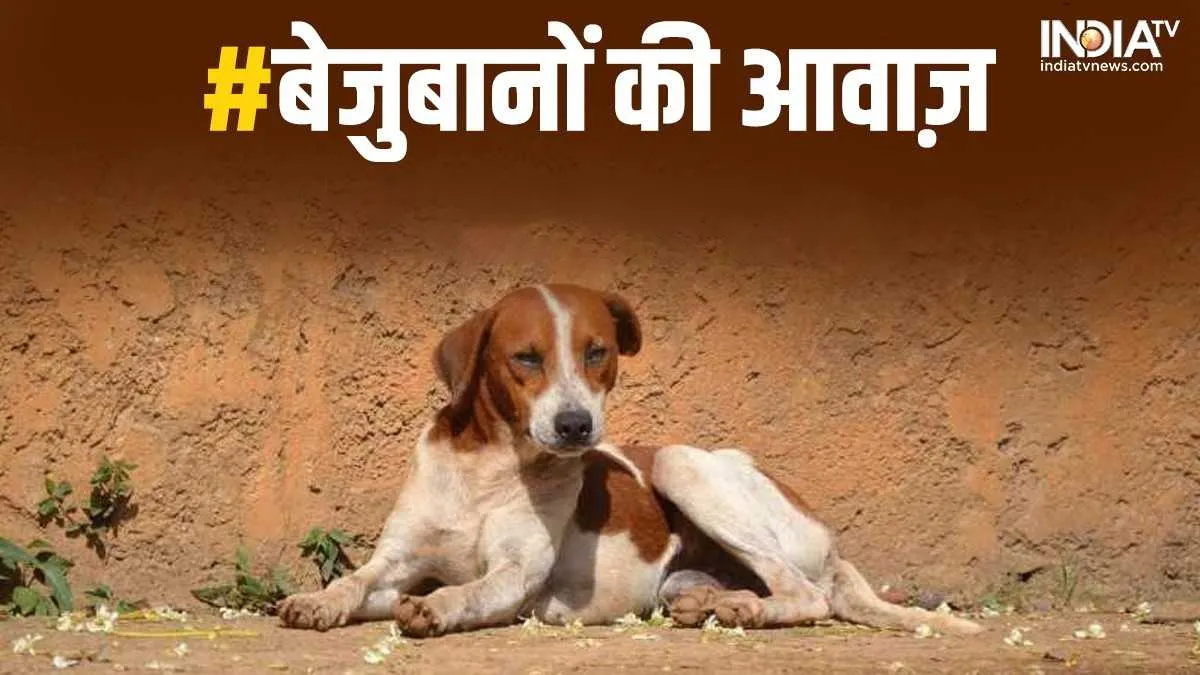
The Supreme Court on Monday directed the municipal bodies of Delhi, Gurugram, Noida, and Ghaziabad to remove stray dogs from city streets and keep them in shelters. The order has triggered an important debate: removing or eliminating stray dogs may not be a real, long-term solution. The question now is, what is the way forward? On one hand, there is concern for human safety; on the other, for the lives of voiceless animals.
To find a balanced path, India TV launched a public campaign asking viewers to suggest solutions that are both humane and practical. We cannot simply leave the dogs on the streets, but we also cannot let them die. Where should they be kept? How should they be cared for? Citizens from across the country are responding in large numbers, sharing thoughtful suggestions and proposals.
Among all responses, one of the recommendations or solutions was large-scale sterilisation of stray dogs. Many believe it is the simplest, most cost-effective, and long-lasting method to control the population.
The ABC rules, 2023While there is no mandatory law for sterilising pet dogs, there is a structured programme for strays under the Animal Birth Control (ABC) Rules, 2023, framed under the Prevention of Cruelty to Animals Act, 1960. Under this system, local municipal bodies and animal welfare organisations (AWOs) capture stray dogs, sterilise them, administer rabies vaccinations, and then release them back into the same area after a short recovery period.
Does sterilisation work?Sterilised dogs tend to be calmer and less aggressive, reducing the risk of conflicts with humans. The procedure also lowers the risk of certain cancers and diseases, while gradually curbing street-dog populations by preventing breeding. Over time, this method not only addresses overpopulation but also supports public safety and animal welfare.
What are people saying?- Shravan Thakur, one of the users, said the only solution to the problem is sterilisation. "The government should focus on building sterilisation centres and conducting mass-level sterilisation drives." He also said that shelters would require huge amounts of funding, while sterilisation centres would be a far more cost-effective solution. "Government veterinarians are already available and can be deployed for this task," he added.
- Koushiki Sharma, another user from Jammu and Kashmir, also endorsed sterilisation of dogs and said, "India's own Animal Birth Control (ABC) rules demonstrate that vaccination, sterilisation, and community care are the proven and effective methods, and they can work."
- Dr Rajeev Jain of Samvedana Charitable Trust said the proven solution for street dogs all over the world, which is long-term, scientific, permanent, cost-effective and kind, is sterilisation and vaccination of street dogs. "Delhi has been running this programme since 2002, and it showed promising results. However, over the years, the necessary resources, technology, transparency, and medical improvements that could have fully resolved the street dog issue were never implemented," he added.
- Sisira Kumar Das requested not to relocate street dogs unnecessarily, as it goes against nature and divine intention. He also suggested that to manage the population of dogs, 90% of male dogs should be sterilised.
- Bhavyam Kumar said the more ethical and effective solution to this issue would be a large-scale sterilisation campaign, ensuring that the dog population stabilises and naturally declines over time.
- "Stray dogs also protect communities quietly and faithfully. Capturing and confining them is not humane it takes away their rightful home in nature. The solution should be vaccination, sterilisation, and public awareness, not punishment," Akanksha Verma said.
- Prayagraj's Pankaj Tripathi said, "The stray dogs on the streets of Delhi cannot be eliminated overnight. Sterilisation is the best solution to prevent their population from increasing rapidly so that new dogs will stop being born and their aggression will decrease slowly."
- Naveen Bhutani of Gurugram also supported sterilisation and said, "Street dogs should be sterilised and vaccinated against rabies. A special tag or microchip should be placed in the ear of every dog so that it can be identified and the same dog is not caught again. Dogs should be released in the same area after sterilisation so that the chances of a new dog coming there are reduced."
- "There is a need to launch a campaign to sterilise street dogs. At present, many veterinary doctors draw salaries in the lakhs while remaining confined to their air-conditioned offices. They should be given targets to carry out sterilisation," said another user, Neeraj Nishad.
- Jodhpur's Ruchika Sobti said, "The government should build dedicated sterilisation centres. Instead of spending crores on inhumane removal drives, the focus should be on sterilising and vaccinating street dogs. If every dog is sterilised, their population will naturally decline within two years. The Netherlands successfully solved the same issue using this formula."
On August 11, a bench of Justices JB Pardiwala and R Mahadevan, taking suo motu cognisance of rising stray dog attacks and rabies cases, directed that all stray dogs in Delhi-NCR be removed from streets within eight weeks. The court ordered the creation of shelters for at least 5,000 dogs, with sterilisation and vaccination, and made it clear that once relocated, the animals should not be released back into public spaces.
The bench warned of strict action against individuals or organisations obstructing the process and said, "Infants and young children, not at any cost, should fall prey to rabies. No sentiments should be involved. It’s not the time to talk but act."
Share your ideas and suggestions with us:
WhatsApp: 93505 93505
Email: idea@indiatvnews.com
