
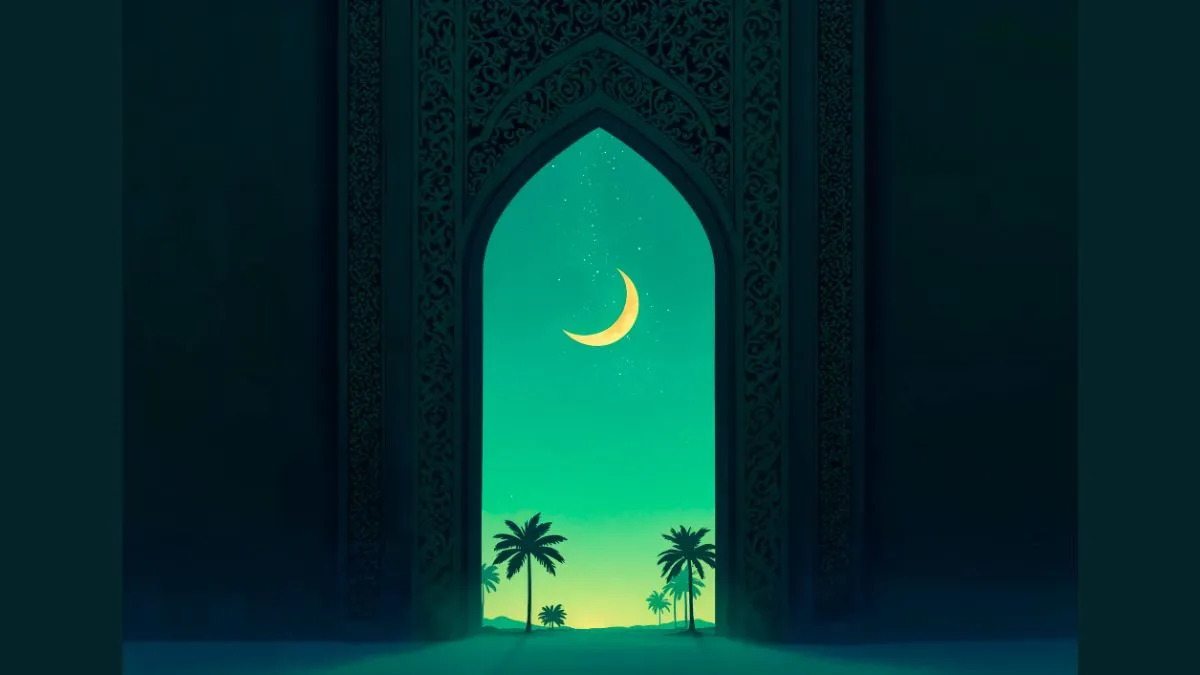
Ramadan, also called Ramzan, Ramzaan or Ramazan, depending on where you are in the world, marks the ninth month of the Islamic lunar calendar. It moves every year, because the Hijri calendar follows the Moon, not the Sun. For Muslims globally, this month carries a different pace. Daily routines shift. Nights get longer. Mornings begin earlier than usual.
It begins not with a fixed date announcement but with the sighting of the crescent moon. That first thin curve in the sky quietly signals the start of fasting, prayer and inward reflection. From that evening onward, the month unfolds through discipline, devotion and a strong sense of community.
Ramadan 2026 date and moon sighting expectations
In 2026, Ramadan is expected to begin on the evening of Tuesday, February 17, depending on crescent moon visibility after sunset.
- If the moon is sighted on February 17, the first fast will be observed on February 18.
- The month is expected to conclude around Wednesday, March 18, 2026.
- Eid al-Fitr will likely be celebrated the following evening, Thursday, March 19, 2026.
As is usually the case, India may begin fasting a day after Saudi Arabia, where the moon is often sighted earlier.
Sehri to Iftar: How the daily fast unfolds
Fasting, or Roza, sits at the centre of Ramadan observance. But it is not just about food.
- The day begins before dawn with Sehri, the pre-fast meal.
- From sunrise until sunset, no food or drink is consumed.
- The fast is broken at sunset during Iftar, often starting with dates and water.
Alongside physical fasting, many also focus on restraint in speech, behaviour and intention. A quieter inner discipline that runs parallel to the physical one.
Why Ramadan holds deep religious significance
Ramadan is also believed to be the month in which the Quran was first revealed to Prophet Muhammad, over 1,400 years ago.
This revelation is linked to Laylat al-Qadr, or the Night of Power, which falls on one of the odd-numbered nights in the final ten days. It is considered the most spiritually charged night of the year, marked by extended prayers and reflection.
Traditions, charity and Ramadan greetings
The month is widely seen as a period of purification and renewal. Charity increases. Community meals become more frequent. Even everyday interactions tend to soften a little.
Common greetings exchanged through the month include:
- Ramadan Mubarak — wishing someone a blessed Ramadan
- Ramadan Kareem — wishing someone a generous and abundant Ramadan
The month closes with Eid al-Fitr, the festival marking the end of fasting. Celebrated with prayers, food and gatherings that carry a mix of joy and gratitude.
