
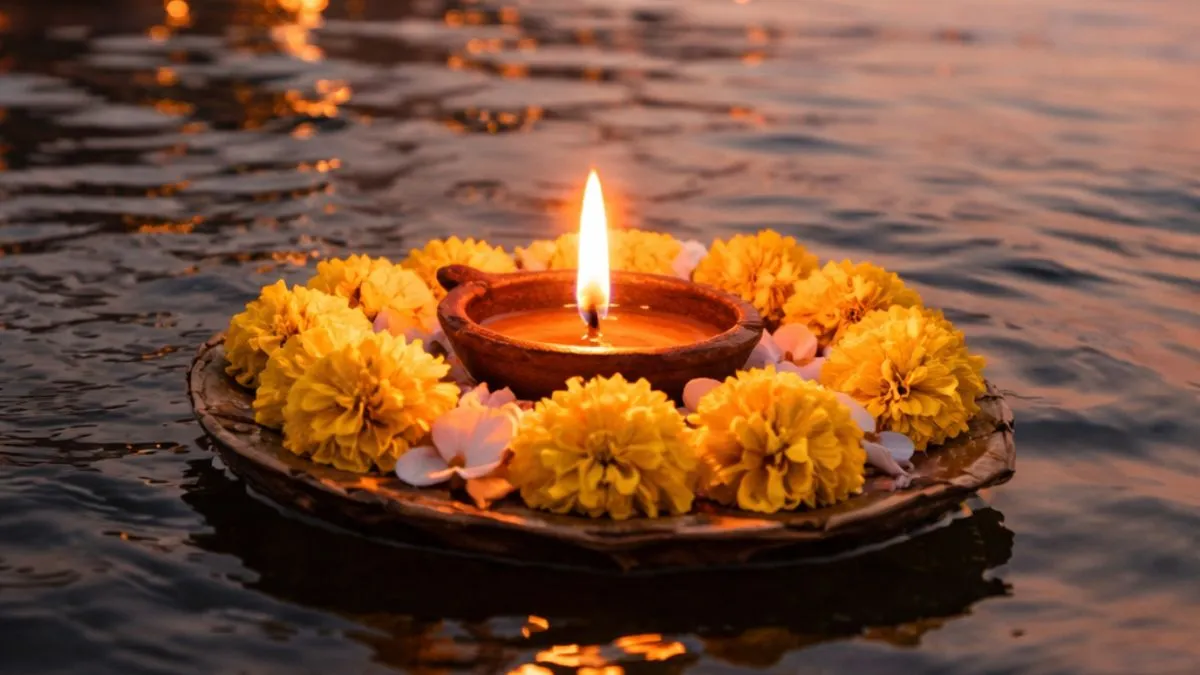
Mauni Amavasya is one of the major festivals of Hinduism. Falling in the month of Magh, Mauni Amavasya is also known as Maghi or Magh Amavasya. On this day, people take holy dips in sacred rivers, observe fasts, perform rituals for their ancestors, and give donations after bathing. Religious acts performed on this day are believed to bring auspicious results. This year, Mauni Amavasya falls on January 18. Let us share with you the vrat (fasting) story associated with Mauni Amavasya.
Mauni Amavasya Vrat Katha
According to the mythological story of Mauni Amavasya, there once lived a Brahmin named Devswami in a town called Kanchipuri along with his family. His wife’s name was Dhanvati. They had seven sons and a daughter named Gunwati. When all the children came of age, Devswami decided to first arrange his daughter’s marriage. He handed Gunwati’s horoscope to his youngest son and asked him to consult a learned astrologer.
The youngest son took his sister’s horoscope to a knowledgeable astrologer, who predicted that Gunwati’s husband would die immediately after marriage. Distressed by this prediction, Devswami sought the advice of a saint. The saint told him that on an island called Singhal lived a devoted woman named Soma Dhobin. If she came to their home before Gunwati’s marriage, performed worship, and blessed Gunwati, the dosha (inauspicious effect) would be removed. Hearing this, Devswami sent his daughter and youngest son to Singhal Island.
During their journey, Gunwati and her brother stopped to rest near a peepal tree by the sea. A vulture family lived on this tree. At that time, only the vulture’s chicks were in the nest. The chicks overheard the siblings talking and learned that they were travelling to Singhal Island and were unsure of the route. In the evening, when the vulture returned with food, the chicks told it everything. Moved by their plight, the vulture fed the children and decided to help them. With the vulture’s help, the brother and sister reached Singhal Island.
Gunwati and her brother secretly began living near Soma Dhobin’s house. To earn her blessings, Gunwati would clean and plaster Soma’s courtyard every morning, though Soma was unaware of who was doing it. One day, Soma asked her daughters-in-law who cleaned the courtyard early each morning. Seeking praise, they falsely claimed it was them. Soma knew this was not true, so she stayed awake all night to find out. At dawn, she saw a young maiden plastering the courtyard. She approached Gunwati and asked why she was doing it. Gunwati then narrated her entire story. Touched, Soma Dhobin said she would accompany her to protect her married life.
Soma Dhobin then went with the siblings to Gunwati’s home and performed worship there. However, fate could not be completely avoided, and after the marriage, Gunwati’s husband died. Soma Dhobin then donated her accumulated merit (punya) to Gunwati, after which her husband came back to life. Due to the loss of her merit, Soma’s own husband and son passed away.
Before leaving her home, Soma had instructed her daughters-in-law to preserve the bodies of her husband and son until she returned. They followed her instructions. On her way back to Singhal Island, Soma sat under a banyan (peepal) tree, worshipped Lord Vishnu, and circumambulated the tree 108 times. This earned her fresh merit. When she returned home, the power of her merit brought her husband and son back to life.
Disclaimer: The information provided here is based on religious beliefs and popular traditions. There is no scientific evidence to support it. India TV does not vouch for the accuracy of any of the information.
ALSO READ: Mauni Amavasya 2026: Powerful remedies to remove Pitru Dosha on Magh Amavasya
