
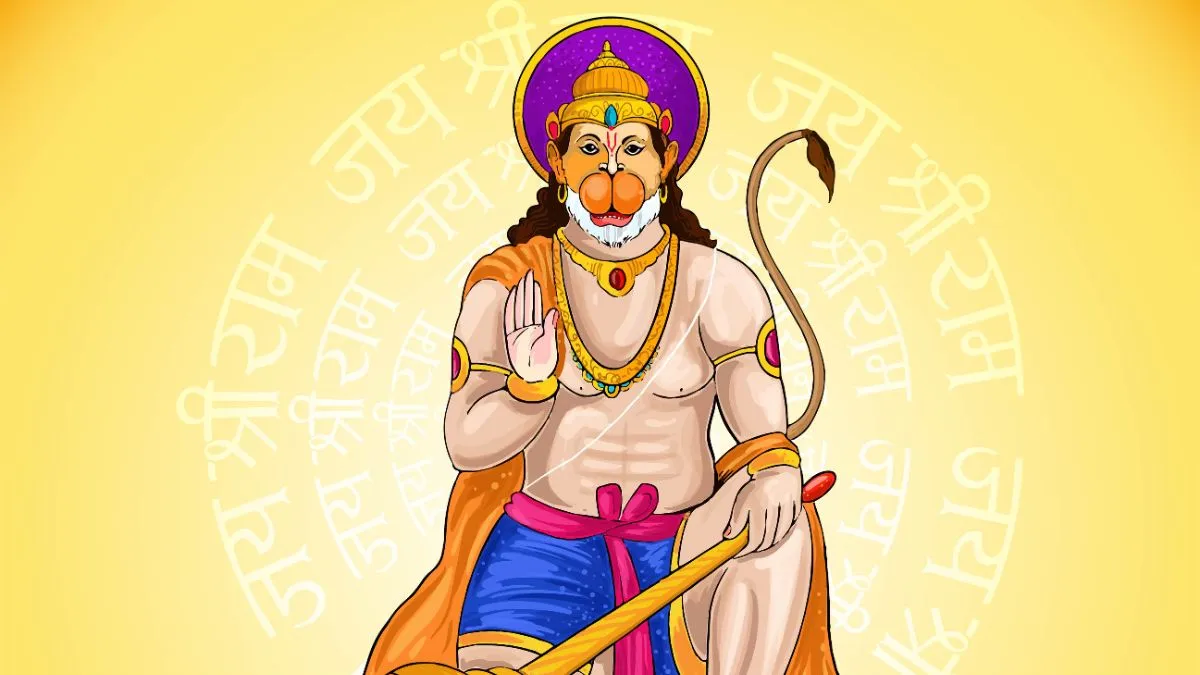
Not many religious texts are as popular and widely read as the Hanuman Chalisa. Whether it is for morning prayers, moments of fear, or contemplation, somehow this text appears to be both powerful and personal. However, there is an interesting anecdote to the simplicity of this text.
The Hanuman Chalisa was composed by Tulsidas, who was both a poet-saint and an ardent follower of Lord Ram. Tulsidas is also known for his other work, ‘Ramcharitmanas,’ which is an adaptation of the epic ‘Ramayana’ in such a manner that it is easily understood by the common man. Tulsidas was in an era where all religious texts were written in Sanskrit, which was not understood by all. Tulsidas was a transition to bring religion closer to all.
Significance of Hanuman Chalisa
Hanuman Chalisa is a song that praises Hanuman, who is the epitome of strength, courage, and devotion. It is believed that Tulsidas composed Hanuman Chalisa to express his bhakti, or devotion, and to offer an opportunity for all to attain devotion. The song is composed of 40 verses, or chalisa, which praise Hanuman and offer strength, courage, and a clear mind.
There are also traditional reports that suggest that Tulsi wrote the Chalisa at a critical time in his life and found solace in devotion.
Why Awadhi and not Sanskrit?
This is where the story gets really interesting. Instead of writing in Sanskrit, as most devotional texts were then, Tulsi Dasa decided to write his Hanuman Chalisa in Awadhi, a dialect commonly used in North India. His reason for doing so was as follows: At that time, Sanskrit was the language used for all religious and scholastic purposes. But most people were unable to understand Sanskrit. Tulsi Dasa wanted his devotion to be accessible to all. His words were meant to be understood and chanted by anyone.
This is because it is part of a larger movement in which the bhaktas of India were using their dialects to popularise spirituality.
The power of simplicity
The Hanuman Chalisa is not only significant in the content it conveys; it is significant in the way it can be remembered. It is simple in rhythm, structure, and vocabulary. It is not only a part of the religion; it is part of the everyday life of the people. It is recited while travelling, while giving examinations, or in fear.
It is still one of the most widely recited hymns in India today. The reason is the simplicity it conveys, the depth it conveys, and the need it conveys in the hearts of the people: the need to believe in something bigger. In writing the Hanuman Chalisa in Awadhi instead of Sanskrit, Tulsidas did not simply write a hymn; he created devotion that was personal, simple, and eternal.
Disclaimer: The information provided here is based on religious beliefs and popular traditions. There is no scientific evidence to support it. India TV does not vouch for the accuracy of any of the information.
