
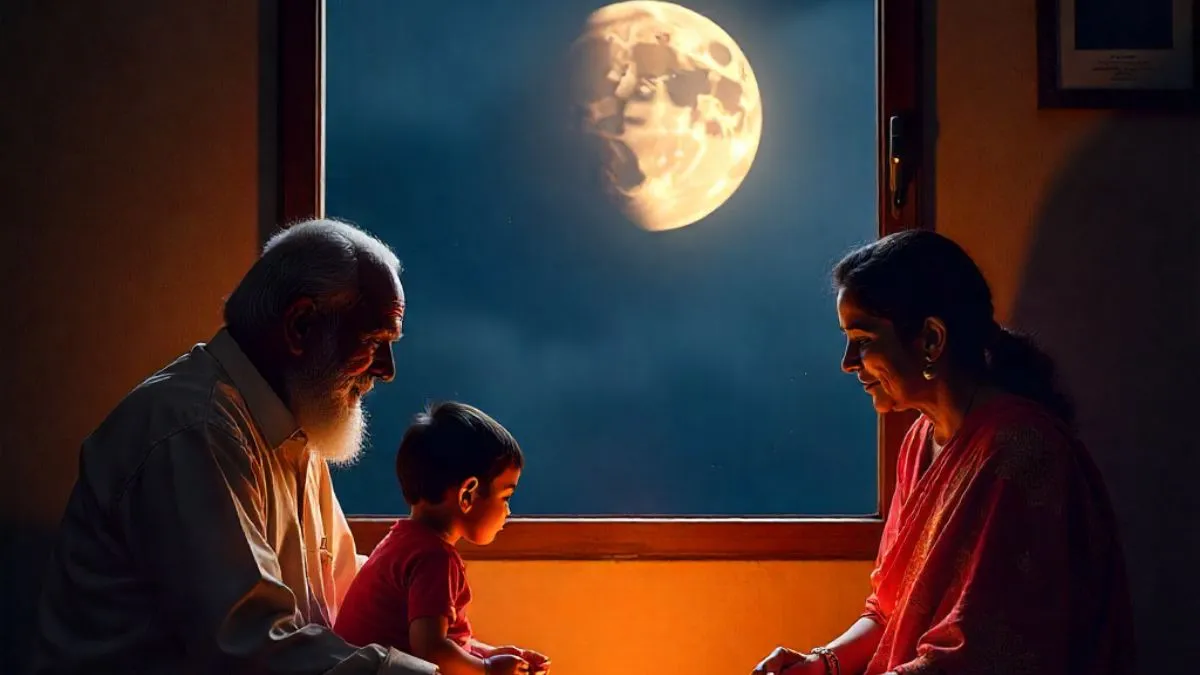
The lunar eclipse on September 7, 2025, is being widely discussed not just for its celestial beauty but also for the rituals and restrictions tied to it. According to Indian tradition, a lunar eclipse (Chandra Grahan) carries along with it a Sutak period during which eating, cooking or doing any rituals is considered to be inauspicious.
But what about those who are most vulnerable: children, elderly people and those unwell? Astrologers, including experts from Kashi, explain that while Sutak usually begins nine hours before the eclipse, these groups are allowed a much shorter window of restrictions. This ensures their health and well-being are not compromised.
Also read: Chandra Grahan on September 7, 2025: Big challenges ahead for 3 zodiac signs
What is Sutak during Chandra Grahan?
Sutak is a time before and during the eclipse when cosmic energies are believed to be unstable. Most households avoid daily rituals, cooking, and eating during this phase.
Sutak rules for children, the elderly and the sick
For children, senior citizens and people with illnesses, the Sutak restrictions are shortened to about three hours before the eclipse instead of the usual nine. This is done so they don’t face unnecessary discomfort.
Also read: Chandra Grahan 2025 Sutak timings today: Check city-wise start and end time
What should they avoid?
- Avoid eating or cooking during this period.
- Refrain from using sharp objects like knives or needles.
- Skip activities like oil massages or brushing teeth during Sutak.
What should be done after the eclipse?
- Take a bath and change into clean clothes.
- Discard food cooked before the eclipse or purify it by placing Tulsi leaves in it.
- Donate food, clothes or essentials to the needy, which is considered especially auspicious.
Why this matters
Astrologers emphasise that these practices are rooted in cultural beliefs, not medical science. The shorter Sutak period for vulnerable groups ensures traditions are honoured while protecting health and comfort.
The Chandra Grahan of 7 September 2025 will be observed with deep religious significance across India. In many households, the Sutak rules are extremely binding, except for children, the old and the sick, showing how tradition and practicality can really balance themselves well.
When the eclipse happens, it is time for a reflection-deserved pause, prayer, and reassessment. A person who performs rituals either for spiritual purposes or who just loves gazing at that cosmic event would certainly be reminded only of how delicate that link is between the celestial rhythms and human life.
(Disclaimer: The information provided here is based on religious beliefs and traditional practices. There is no scientific evidence to support these claims. India TV does not confirm the authenticity of any such information.
