
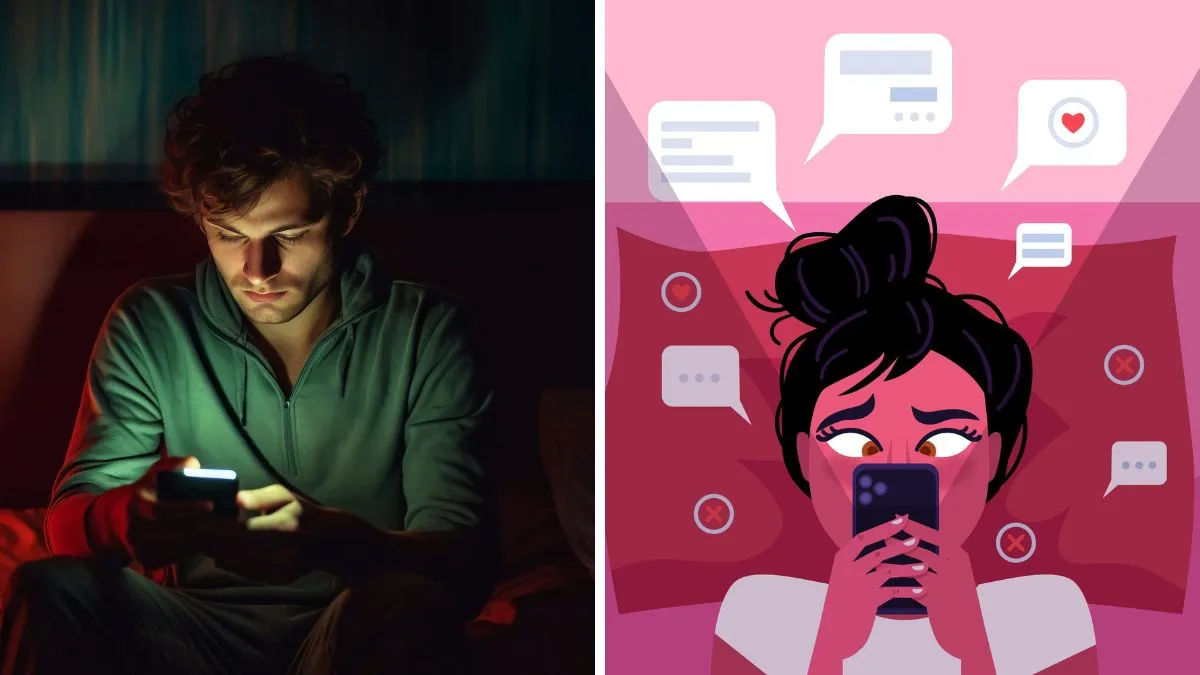
It’s a familiar scene. You’re in bed, lights off, fully aware that you should be asleep. And yet, your thumb keeps moving. One reel, one post, one more scroll. Most people blame the phone.
But what if the phone isn’t the problem at all? “Late-night scrolling is often misunderstood as a lack of discipline or poor sleep hygiene. In reality, it’s the nervous system struggling to regulate itself,” says Dr Chandni Tugnait, psychotherapist and founder of Gateway of Healing.
Why your body isn’t switching off
Sleep is not just about closing your eyes. It’s a physiological shift. Your body moves between two key states. The sympathetic system, which is responsible for alertness and stress, and the parasympathetic system, which allows rest and recovery. “The body cannot move into deep rest unless it feels safe enough to switch into a parasympathetic state,” explains Dr Tugnait. But modern routines don’t make it easy.
Long work hours, constant notifications, emotional stress, and overstimulation keep the nervous system activated well into the night. So when you finally get into bed, your body doesn’t recognise it as a signal to rest.
Why scrolling feels like relief
This is where the phone comes in. “When the nervous system is dysregulated, it seeks stimulation instead of stillness. Scrolling becomes a coping mechanism, not a habit,” says Dr Tugnait.
It gives your brain something to focus on. It distracts from internal discomfort. It creates a sense of temporary relief.
But that relief is short-lived. Because the very things that make scrolling engaging, constant novelty, emotional triggers, and unpredictability, also keep your brain alert.
The cycle that keeps you awake
The problem isn’t just the habit. It’s the loop. You feel wired- you scroll to calm down - scrolling keeps you wired - you struggle to sleep - the cycle repeats. “The blue light, emotional content, and reward-based design of social media delay the body’s natural wind-down process,” Dr Tugnait notes.
So even when you feel tired, your system is still on alert.
Why willpower isn’t enough
Telling yourself to “just put the phone away” rarely works. Because the urge isn’t coming from laziness. It’s coming from a body that hasn’t settled yet. “The solution is not control, it’s regulation. Once the nervous system feels safe, the need for stimulation naturally reduces,” says Dr Tugnait.
What actually helps your body switch off
Instead of focusing only on the phone, focus on what your body needs before sleep. Simple shifts can help:
Slow, extended exhales to signal safety
- Lowering sensory input by dimming lights and reducing noise
- Creating physical comfort through warmth or a relaxed environment
- Stepping away from anything that feels urgent or emotionally activating
These are not hacks. They are signals. Signals that tell your body it’s safe to rest.
Late-night scrolling is easy to blame. But it’s rarely the root cause. Sometimes, it’s just the body doing what it can to cope with a system that hasn’t slowed down yet. And when you address that, not the phone, but the state behind it, sleep begins to come more naturally.
Also read: Checking your phone at 6 AM? Here’s what it does to your brain
