
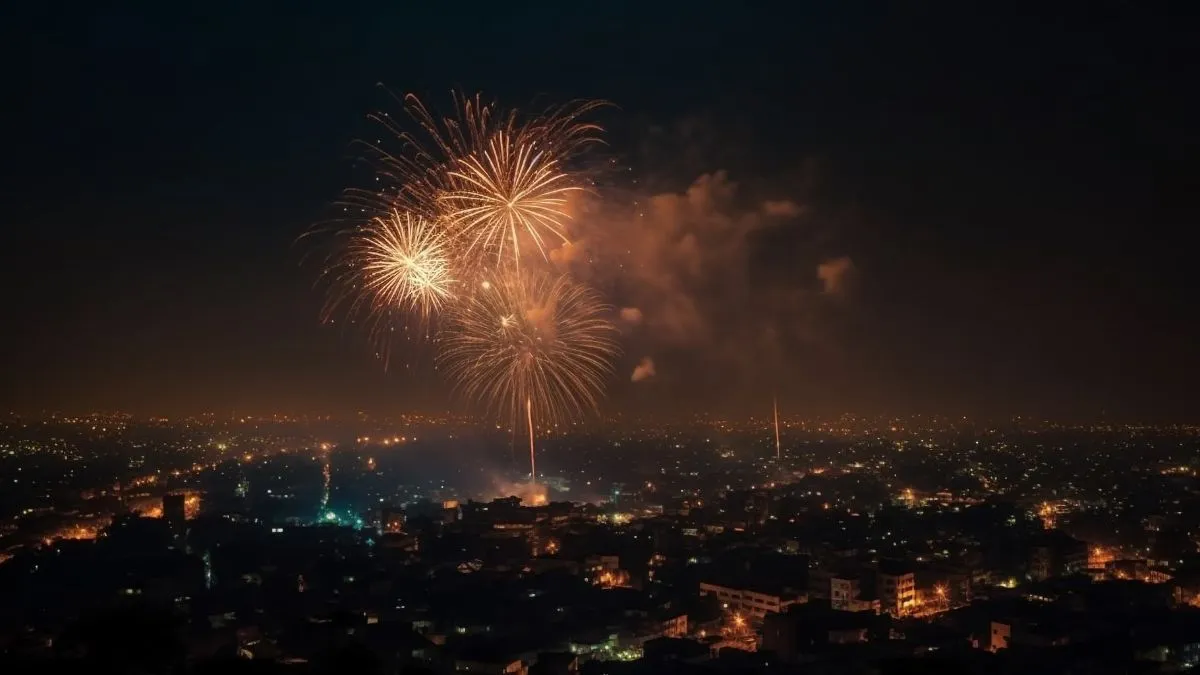
Kiribati gets there first. While most of the world is still brushing its teeth on December 31, this small Pacific island nation quietly steps into 2026.
No countdown heard by billions. No global pause. Just the calendar flipping early, because geography and a time zone say so.
Why the New Year takes 26 hours to reach everyone
The New Year does not arrive in a single moment. It travels. Slowly. Patiently. Earth is split into time zones, each roughly 15 degrees of longitude wide. As the planet turns, midnight slides westward, one zone at a time. That is why New Year’s Eve is not an instant. It is a relay. From the first fireworks in the Pacific to the final countdown near the Americas, the shift from one year to the next stretches across 26 hours. For more than a full day, somewhere on Earth, people are still waiting. Somewhere else, they are already done celebrating. Time, it turns out, is staggered.
Who enters the New Year first and who enters last
The honour of being first belongs to Kiribati. More precisely, its Line Islands, which sit in the world’s earliest time zone, UTC+14. They enter 2026 while much of the world is still in December 30. Not late. Just early. At the other end are uninhabited US Pacific islands like Baker and Howland, which sit in UTC−12. They are the last to let the old year go. Almost a full day later. Between these two points, the rest of the planet takes its turn. Asia. Europe. Africa. The Americas. Each hour passes the moment along.
How the International Date Line decides the date
The quiet referee here is the International Date Line. It is an invisible boundary in the Pacific Ocean that decides what day it is. Cross it one way and you gain a day. Cross it the other and you lose one. It zigzags instead of running straight, bending around countries so they do not live in two different dates at once. Kiribati shifted itself across this line in the 1990s. The idea was simple. One country. One calendar day. It worked. And it changed how the nation greets every New Year.
ALSO READ: 2026 begins with a supermoon: When and how to watch it in India
