
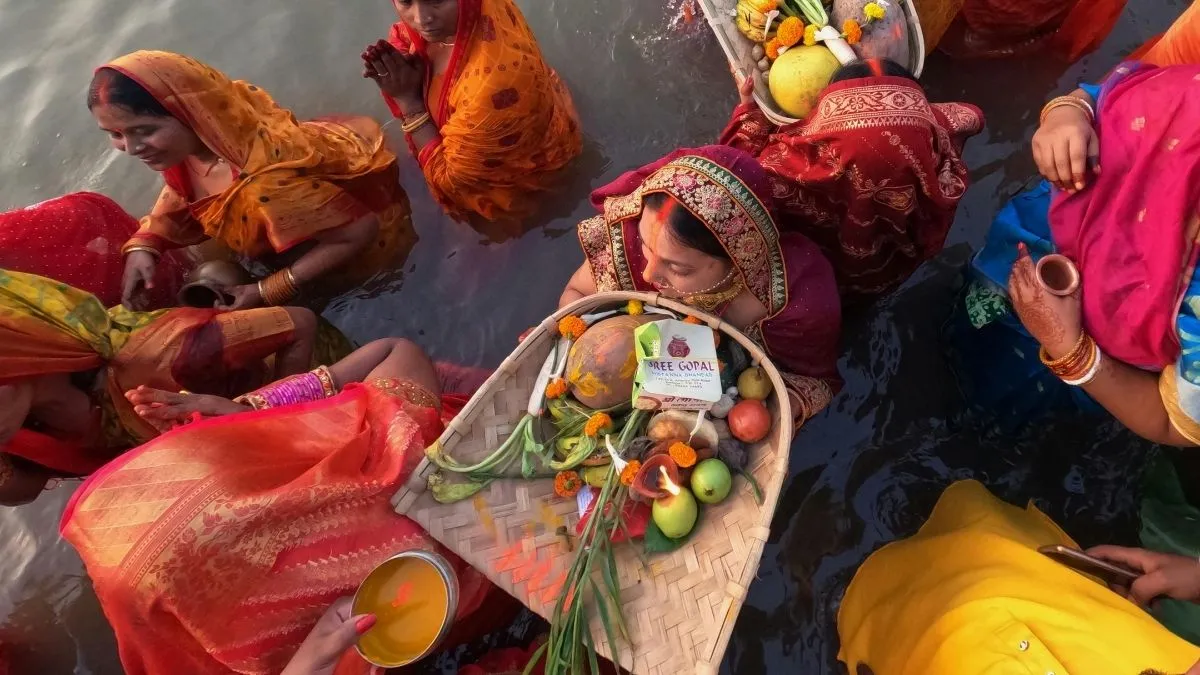
On the second day of Chhath Puja, homes throughout Bihar, Uttar Pradesh, and much of Nepal are filled with the warm scent of gur ki kheer and roti. This holy meal, or Kharna prasad, is not only food! It's an emotive connection between worship and sustenance.
After a day of fasting on an empty stomach, devotees break their fast at sunset with this simple offering. Every bite is infused with peace, gratitude, and harmony with the divine rhythm of life — ordinary ingredients raised to a spiritual experience.
What makes Kharna prasad special
Kharna represents cleansing of the body, the mind, and the intention. The prasad made on this day is simple yet deep: gur ki kheer (jaggery-cooked rice pudding), roti cooked on a clay chulha, and fruits. There is no salt, onion, or garlic; each ingredient symbolises simplicity, purity, and thankfulness.
This offering is not just for the worshipers but also to neighbors, friends, and relatives. It's a time when the food goes beyond flavor and becomes an expression of devotion and oneness.
Kharna Prasad ingredients and preparation guide

What you need to make gur ki kheer and roti
- Full-fat milk: 1 litre
- Short-grain rice (washed): ⅓ cup / ~60 g
- Jaggery, grated: ¾–1 cup / 90–120 g (to taste)
- Water (for jaggery syrup): 4–5 tbsp
- Optional (if permissible in your family tradition): 2–3 green cardamom pods, some chopped nuts, 1 tsp ghee
- For roti (no salt, no oil in dough)
- Whole-wheat flour (atta): 1½ cups / ~200 g
- Water: ~120–150 ml (as needed)
- Ghee for brushing (optional, if your tradition permits)
Preparation for Gur ki kheer (25–35 minutes, plus 5 minutes resting)
Step 1:
- Reduce the milk
- Bring 1 litre milk to a gentle boil, then reduce heat.
- Add the drained rice (and cardamom if using).
- Simmer on low, stirring every 1–2 minutes to prevent sticking.
- Cook 18–22 minutes until rice is soft and the milk has thickened.
Texture cue: You want a pourable but creamy consistency; it will thicken a bit more as it cools.
Step 2:
- Make the jaggery syrup (2–3 minutes)
- In a small pan, melt grated jaggery with 4–5 tbsp water.
- Bring just to a brief boil; skim any scum. Turn off heat.
Why this matters: Direct jaggery in boiling milk can cause curdling. Syrup first, then add to slightly cooled kheer.
Step 3:
- Sweeten without curdling
- Take the kheer off the heat and let it cool for 3–4 minutes (aim for hot but not vigorously boiling).
- Stir in the warm jaggery syrup gradually, tasting for sweetness.
- Rest 5 minutes. If your tradition allows, finish with 1 tsp ghee.
Troubleshooting: If you see tiny curds, don’t panic. Cool the kheer and whisk briefly; the texture usually smooths out.
Make the roti (20–25 minutes total)
Step 1:
- Dough (5 minutes + 10 minutes rest)
- In a bowl, add 1½ cups atta. Add water gradually and knead into a soft, smooth dough (no salt, no oil).
- Rest 10 minutes, covered with a damp cloth.
Step 2: Roll
- Divide into 8 equal balls.
- Dust lightly with flour and roll to 5–6 inches, medium-thin.
Step 3: Cook
- Heat tawa on medium. Cook each roti until bubbles appear; flip.
- Press gently with a cloth to help puff; cook until light brown spots form.
- Brush with a little ghee only if your household custom permits.
The spiritual meaning behind the offering
Every component of Kharna prasad holds symbolic meaning:
- Rice represents purity and life.
- Milk signifies nourishment and continuity.
- Jaggery stands for sweetness and gratitude.
- Roti symbolises sustenance and effort.
Together, they create a wholesome offering, one that embodies balance, humility, and thankfulness.
Kids eagerly await the sweet kheer, elders bless the young and homes are filled with silent joy. It’s not so much about the ritual as it is about the gathering, a reminder that simplicity, when tethered to faith, is deeply beautiful. More than the ritual itself, Kharna prasad stands as a lasting lesson in equilibrium, of how faith and food, nature and nurture, all coalesce in harmony. It is a reminder that spirituality is not in excess, but in intent.