
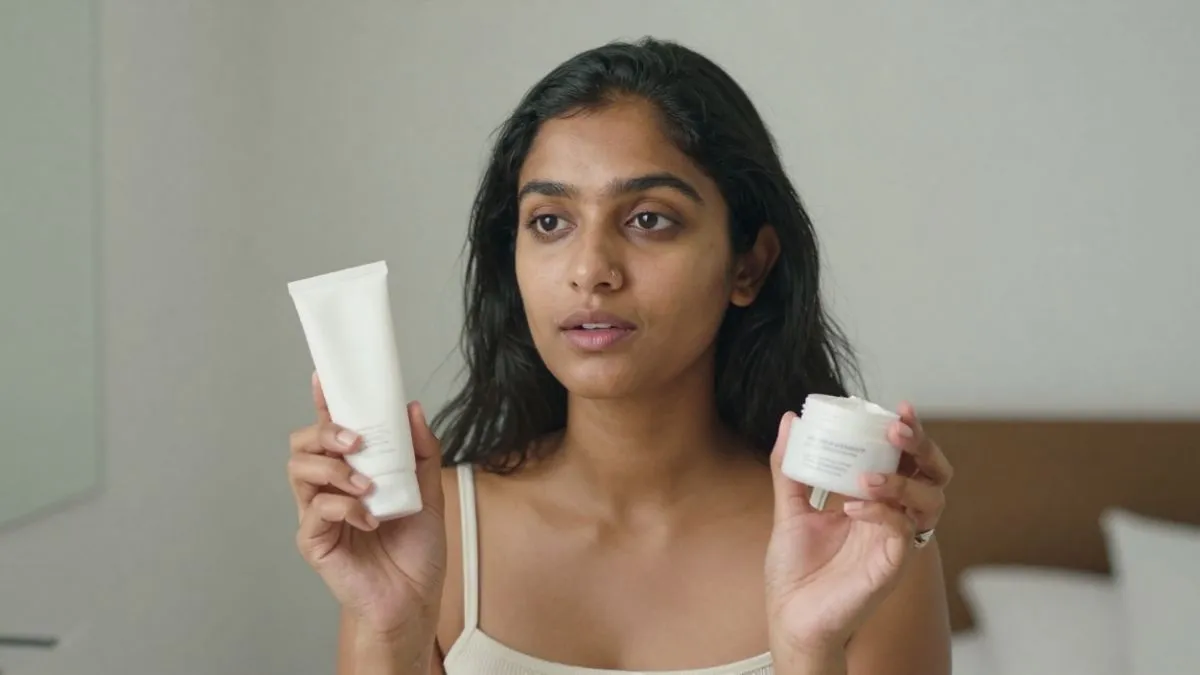
Choosing a moisturiser can get overwhelming and confusing! Gels, lotions, creams, balms, ointments, the options are endless, and the labels rarely make things clearer. But according to dermatologists, the answer isn’t hidden in fancy ingredients or price tags. It’s about texture.
In a recent Instagram reel, Dr Linda Xing, Dermatologist and Skin Surgeon, breaks it down simply: the right moisturiser depends on how thick it is, and how well that thickness matches your skin type and environment.
Why moisturiser texture actually matters
One of the biggest skincare myths is that moisturisers “add” water to the skin. In reality, most moisturisers work by preventing water loss. “The thicker the product, the better it is at locking in moisture,” Dr Xing explains in the reel. That’s why texture, not just ingredients, plays such a critical role in skin health.
Moisturisers, from thinnest to thickest
Dr Xing categorises moisturisers based on how occlusive they are, starting from the lightest:
- Gels
- Lotions
- Creams
- Balms
- Ointments
As you move down the list, products become heavier and more effective at sealing moisture into the skin.
How to choose what’s right for your skin
Unlike sticking to one moisturiser per year, Dr Xing proposes varying the texture depending on the skin type and environmental conditions. For oily and acne breakouts, lighter products such as gels and creams will suffice. These moisturize without overtightening pores and without an oily texture. In dry or eczema-susceptible skin, a cream or balm can be a better choice because they offer better waterproof barrier protection.
Changes in the seasons also have their importance. One can go one weight lighter in the summer to prevent heaviness and breakouts. In the winter, the skin tends to dehydrate easily, so going one weight heavier will help.
If your skin barrier is irritated or damaged, due to over-exfoliation, active ingredients, or procedures, Dr Xing advises going one level thicker than normal. Balms or ointments can help calm inflammation and support repair.
There’s no single “best” moisturiser, only the best match for your skin at a given time. Texture should change with seasons, skin concerns, and barrier health. Skincare doesn’t have to be complicated. Sometimes, choosing smarter simply means going thicker or thinner when your skin asks for it.
Also read: Winter skincare routine for Northern India: Beat dryness, dullness and cracked skin
