
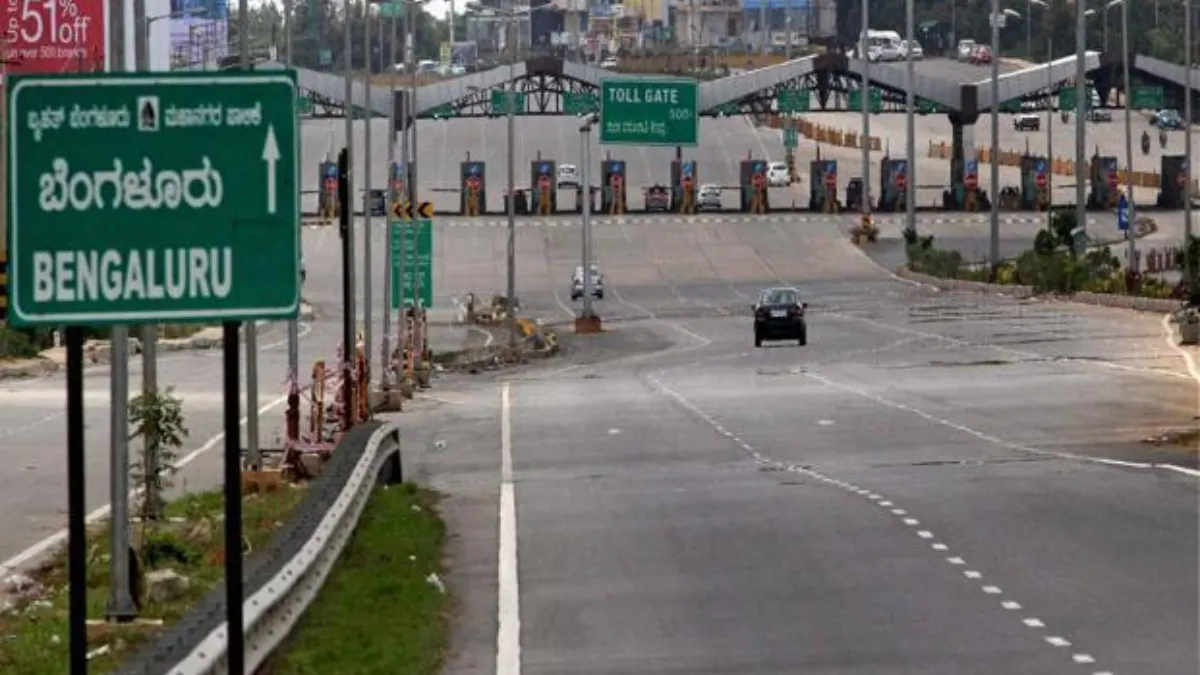
The Greater Bengaluru Governance Act, 2024, which permits the establishment of up to seven municipal corporations to govern the city, will officially come into force on May 15, the Karnataka government announced on Wednesday. However, until the new governance structure is fully implemented, all existing functionaries will retain the same powers and responsibilities as defined under the Bruhat Bengaluru Mahanagara Palike (BBMP) Act, 2020.
According to the sources, until the proposed multiple municipal corporations are established under the Greater Bengaluru Governance Act, the BBMP will continue to function under the oversight of the GBA, which is expected to be formed soon.
What did the Karnataka government say?
"A notification has been issued by the State Government on May 14 notifying May 15 as appoint date of Greater Bengaluru Governance Act, 2024 as per the provisions of Section 1(3) of the same Act. A notification will be issued on May 15 notifying current Bruhat Bengaluru Mahanagara Palike Area as the Greater Bengaluru Areas as per the provisions of Section 1(2) read with Section 3 of the Greater Bengaluru Governance Act, 2024," the Urban Development Department said in a release.
"Further, by exercising the powers conferred under Section 7(5) read with Section 360 of the Greater Bengaluru Governance Act, 2024 the powers and duties conferred under the BBMP Act, 2020 shall continued to be exercised by the respective functionaries until completion of the process under the provisions of the Greater Bengaluru Governance Act, 2024," it said.
The Greater Bengaluru Governance Bill that was passed by both houses of the state legislature recently despite opposition from the BJP, proposes restructuring the Bruhat Bengaluru Mahanagara Palike (BBMP) by splitting it into a maximum of seven city corporations in the Greater Bengaluru Area.
GBA to be headed by CM
The Act also mandates the establishment of the Greater Bengaluru Authority (GBA) to oversee coordination and supervision efforts. The Mayor and Deputy Mayor will each serve a term of 30 months.
The GBA will be chaired by the Chief Minister in an ex-officio capacity, with the Bengaluru development minister serving as the ex-officio vice-chairperson.
What are the functions of the GBA?
The GBA will be responsible for managing financial allocations, approving tax structures, and overseeing the budgets of all municipal corporations. It will also coordinate major infrastructure initiatives, ensure the integration of various public agencies, and supervise key areas such as urban planning, service delivery, and the implementation of technology-based solutions like Geographic Information Systems (GIS) and intelligent transport systems.
- Financial allocations
- Approve tax rates
- Oversee budgets for all corporations
- Coordinate infrastructure projects
- Integrate public agencies
- Supervise urban planning, service delivery, and technology-driven solutions like GIS and intelligent transport systems
How will it change city's governance model?
It aims to improve urban governance by empowering ward committees, enhancing political accountability, and ensuring a decentralised, participative, and efficient system for citizen welfare.
- The Greater Bengaluru Region will be split into multiple city corporations, with a maximum of seven corporations, each comprising up to 150 wards.
- The Greater Bengaluru Authority (GBA) will oversee and coordinate the activities of these city corporations.
- The governance structure under the Greater Bengaluru Governance (GBG) Act is a three-tier system: the GBA, City Corporations, and Ward Committees.
- Each corporation will be divided into wards, each managed by a Ward Committee.
- A city corporation must have a population exceeding 10 lakh, a population density of over 5,000 per sq km, and local administration revenue of more than Rs. 300 crore in the last census year.
- The government will officially designate zones within each city corporation.
- City corporations have the power to collect property taxes.
- Property tax rates will be set by the government in consultation with the GBA.
- The term length for mayors and deputy mayors is set at 30 months.
- Ward Committees will be responsible for ensuring tax collection.
- The state government will appoint a Joint Commissioner for each zone to manage civic administration, oversee Ward Committees, and carry out tasks assigned by the Commissioner or Mayor.
(With PTI inputs)
Also Read: Traffic jams, waterlogging in Bengaluru after heavy rains: IMD predicts more showers till May 16
Also Read: Karnataka: Missing Padma Shri awardee scientist Dr Subbanna Ayyappan found dead in Cauvery River
