
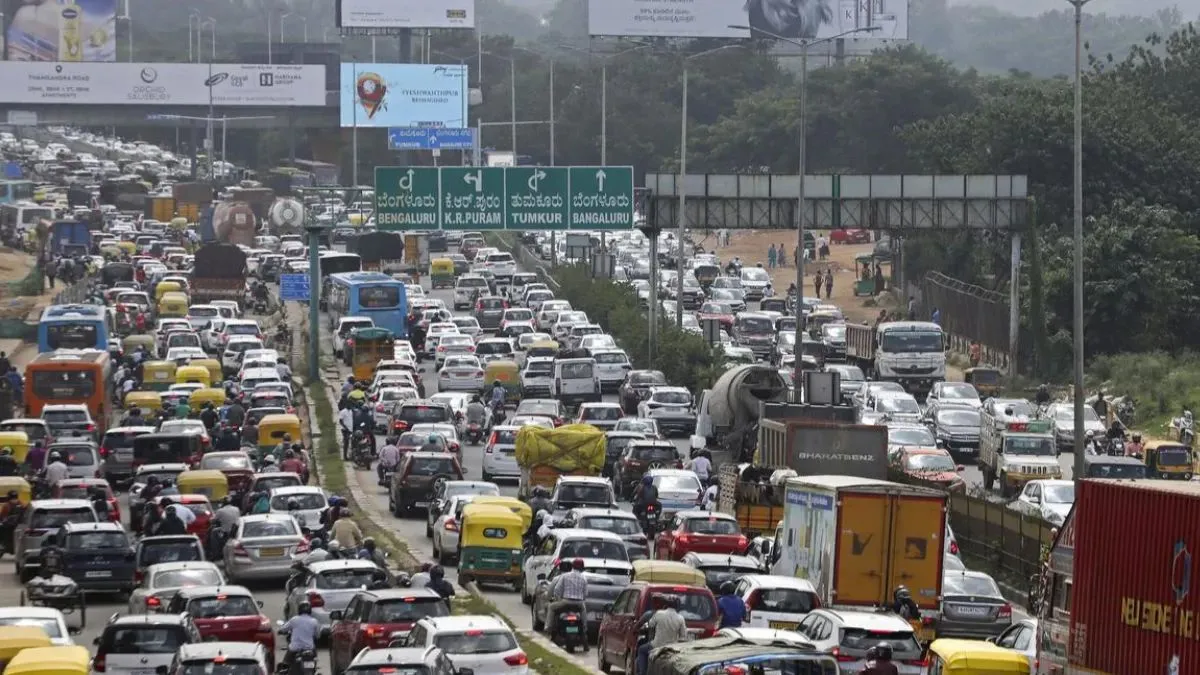
In a move aimed at enhancing urban mobility and reducing traffic congestion, the Bengaluru Traffic Police has implemented an update to its Adaptive Traffic Control System (ATCS), introducing countdown timers at traffic signals to improve efficiency and driver response.
The newly introduced system, known as the Bengaluru Adaptive Traffic Control System (BATCS), leverages real-time traffic data to optimise signal timings across the city. The initiative is part of a broader effort to build a smarter and more responsive transport infrastructure in India's technology hub.
Announcing the update on the social media platform X, the Bengaluru Traffic Police said, “Bengaluru takes a significant step towards smarter mobility. The Bengaluru Adaptive Traffic Control System (BATCS) uses real-time data to streamline signal timings, reduce delays, and improve commuter experience. An efficient city starts with intelligent mobility.”
What does the new feature mean for commuters?
In a video released along with the announcement, traffic authorities highlighted the new feature that displays countdown timers ahead of the green signal. This enhancement applies even in vehicle-actuated or manual modes, making it universally beneficial across traffic scenarios.
“New update at ATSC signals,” the video stated. “Now showing count down before green signal, even in vehicle actuated or manual mode,” it added. The addition of countdown timers at ATSC signals will benefit commuters by reducing hesitation at intersections, enabling smoother traffic flow and allowing drivers to prepare for green signals more effectively.
The addition of countdown displays is designed to help drivers anticipate signal changes, reducing hesitation and improving the flow of traffic. As the video added, “Helps drivers prepare and move smoothly,” and “Smarter signals, smoother Bengaluru.”
BJP leader calls initiative “counter productive”
BJP leader and former Bengaluru Police Commissioner Bhaskar Rao expressed concern that the new AI-powered traffic signals in Bengaluru appeared to be counterproductive, citing longer waiting times and ongoing manual interventions. He remarked that journey times were increasing rather than improving.
Rao also drew a parallel with the experience of Smart Electrical Meters, which he said similarly required manual intervention. Questioning the government’s approach, he asked who was responsible for these "exciting interventions" using IT. He further urged the IT Minister to address persistent issues such as frequent "server down" problems in Revenue and Sub-Registrar offices.
