
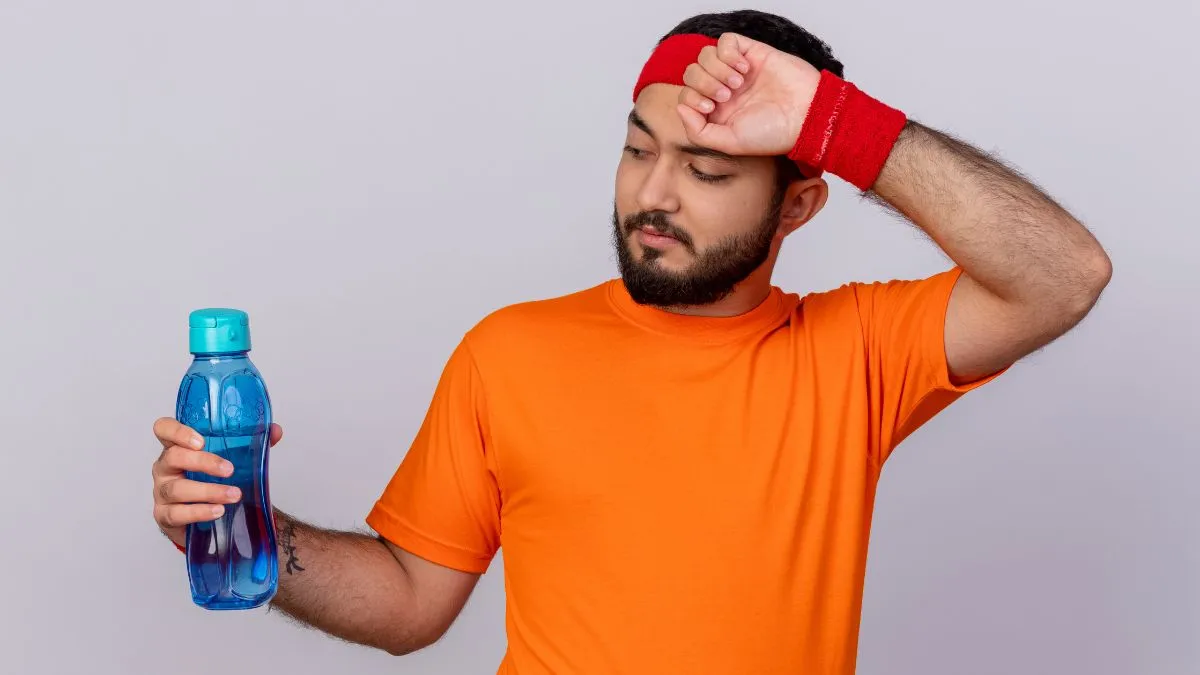
We all know that dehydration can lead to a headache or fatigue, but there is so much more to the issue. A recent research suggests dehydration might also make us more vulnerable to stress - and not in a small way. Dehydration can truly make your everyday life hard!
In a study published in the Journal of Applied Physiology, researchers found that people who drank less than 1.5 litres of fluid daily had stress hormone spikes over 50% higher than those who stayed well hydrated. Those few extra sips of water might actually offer a powerful buffer against everyday stressors more than you might expect.
Also read: Want to stay away from dehydration? Follow these Ayurvedic remedies to keep your body cool
The study at a glance
Scientists at Liverpool John Moores University compared two groups: one that consistently drank less than 1.5 litres a day (low-fluid group), and another that met the recommended intake—around 2 litres for women and 2.5 litres for men. After a week of following their usual routines, participants faced a staged stress test (mock job interview and mental math). Despite similar feelings of anxiety and heart rate reactions, the dehydrated group had a cortisol surge more than 50% higher.
Why does dehydration amplify stress?
It all ties back to a hormone called vasopressin, which the body releases when dehydrated to conserve water. But vasopressin also triggers the brain’s stress centres, leading to higher cortisol — the primary stress hormone.
What this really means for you
If you're preparing for a presentation or deadline, dehydration may make your body overreact – not your nerves, but your physiology. New research reveals dehydration can raise stress hormone cortisol by 50%. Learn how hydration helps your body handle pressure better. Even when thirst isn't apparent, your mind may be flooded with messages that heighten stress.
A simple routine, such as having a water bottle close at hand, may keep your body calmer, stronger, and more able to meet the day ahead.
Also read: Flaky skin to dull complexion: 5 signs that may indicate dehydration
Basic hydration routines for enhanced stress handling
- Drink small amounts of water regularly during the day — particularly prior to stressful activities
- Take urine colour as your hydration indicator: light yellow typically indicates you are hydrated
- Add water-intensive foods such as fruits and vegetables to your beverages
- Change consumption when exercising, in a warm environment, or when experiencing fluid loss (e.g., sweating or illness)
- Create reminders if hydration slips during hectic workdays or while travelling
This research provides a positively tangible takeaway: hydration isn't solely a matter of bodily health; it has a direct impact on how your body manages stress. In an era where constant pressure is the new normal, hydration can be one of your most useful, untapped tools of resilience.
Disclaimer: Tips and suggestions mentioned in the article are for general information purposes only and should not be construed as professional medical advice. Always consult your doctor or a dietician before starting any fitness programme or making any changes to your diet.
