
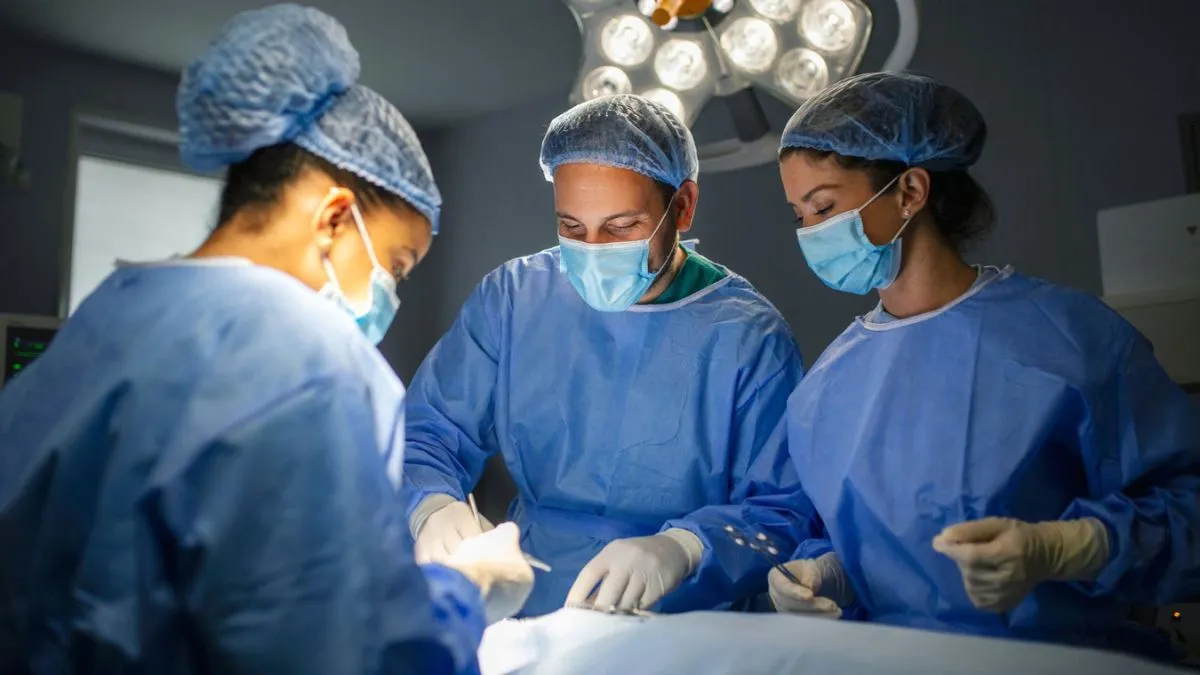
Doctors at Delhi’s RML Hospital have carried out what they describe as a global first, performing a minimally invasive heart surgery on a 31-year-old woman with a rare anatomical condition, PTI reported. The procedure avoided cutting the chest bone, which is typically required in such cases.
The patient, a resident of Rajasthan, was diagnosed with Situs Inversus, a congenital condition where the internal organs are arranged in a mirror image of their usual positions. In her case, the heart was on the right side, the liver on the left, while the spleen and stomach were also reversed from their normal placement.
Rare condition and complex diagnosis
Situs Inversus on its own does not usually affect how organs function. The challenge in this case was the added presence of a congenital heart defect. Doctors found that the patient had a partial Atrioventricular (AV) canal defect, a condition where a hole in the heart leads to mixing of oxygenated and deoxygenated blood.
“Situs Inversus itself is a very rare condition. As such, it does not affect organ functioning; it’s just that they are misplaced. Having a partial AV canal defect with Situs Inversus makes the case rarer,” the medical team noted.
Minimally invasive heart surgery without chest bone incision
Instead of opting for conventional open-heart surgery, which involves cutting the chest bone, the team performed the procedure through a small incision. The surgery was carried out via a 4 cm cosmetic cut below the patient’s left breast.
“Performing the surgery through a small cosmetic incision without cutting the chest bone made it the first in the world,” said Dr Narender Singh Jhajhria, director, professor and head of the cardiothoracic and vascular surgery department at RML Hospital.
During the operation, the patient was placed on a cardiopulmonary bypass machine to maintain circulation. The AV canal defect was repaired using a patch taken from the patient’s pericardium, the membrane surrounding the heart. Surgeons used carefully placed sutures while ensuring that the heart valves and conduction system were not damaged.
Surgery outcome and government scheme coverage
The surgery was conducted on March 30 and was covered under the government’s Ayushman Bharat Pradhan Mantri Jan Arogya Yojana scheme. The patient recovered well and was discharged on Friday.
The hospital described the case as a rare combination of anatomical and cardiac conditions managed through a minimally invasive approach.
ALSO READ: Heart is deliberately stopped during surgery? Cardiothoracic surgeon shares three surprising facts
