
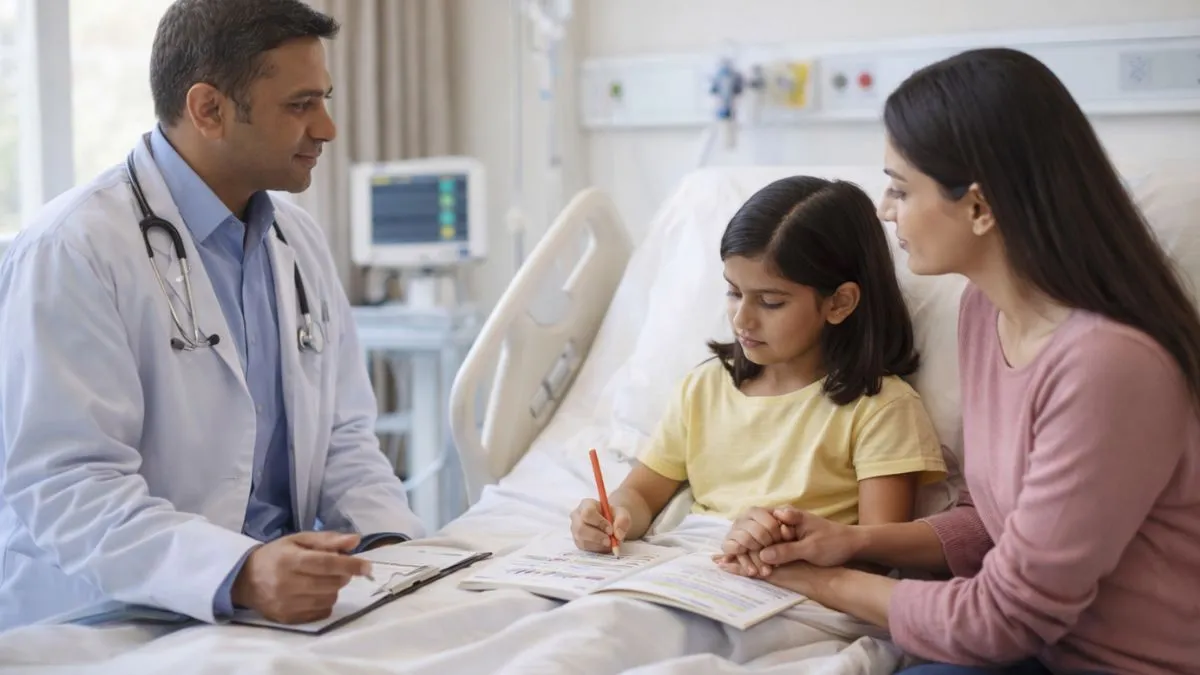
Children with cancer treatment are not just fighting the disease; they are fighting fear, disruption, and uncertainty. The impact of cancer treatment is not just on the children’s physical condition. Treatment affects emotional wellbeing, daily routines, friendships and a child’s sense of safety.
Dr Sachin Sekhar Biswal, Consultant – Medical Oncology at Manipal Hospital, Bhubaneshwar, says healing is never just about medication. “The process of healing requires more than just medication. It depends on the space we establish for the child,” he explains. Supporting a child with cancer treatment involves more than just the medical condition.
Ways to support children undergoing cancer treatment
1. Use honest, age-appropriate communication
Children are often more perceptive than adults realise. Avoiding conversations can increase fear and confusion. Doctors advise the use of simple and honest language suitable for the child’s stage of development. This makes the child feel more secure and promotes trust.
2. Maintain familiar routines
Cancer treatment affects the routine of a child’s daily activities, school schedule, playtime, and sleep patterns. Establishing a routine for a child makes him feel more secure. Establishing a routine for a child makes him feel more secure. Medical studies show that children who follow a routine cope better with the pressure of treatment.
3. Prioritise emotional support alongside medical care
Fear, anger, sadness, and withdrawal are common reactions for children undergoing cancer treatment. Emotional care is not optional. Counselling and play therapy help children deal with complex emotions. Encouraging children to express their emotions makes them more resilient.
4. Encourage play and creative expression
Play is not a distraction from the healing process but is actually a part of it. Creative activities reduce stress hormones and give children moments of normalcy. Through art, games or storytelling, children reclaim small pieces of childhood that illness temporarily interrupts.
5. Manage side effects proactively
Symptoms such as nausea, fatigue, hair loss and pain can be deeply distressing. Doctors advise early reporting of symptoms so they can be managed effectively. Proper symptom control improves appetite, sleep, activity levels and emotional engagement. Small physical comforts often have significant psychological benefits.
6. Support the caregivers, too
Children absorb adult emotions. When parents are overwhelmed, children can pick up on this. Physicians advise parents to seek support from counselling, support groups, or trusted friends. A relaxed and supported parent can provide a secure environment for the child.
7. Build realistic and hopeful expectations
Physicians advise that a sense of hope must be based on reality. Physicians advise that parents can celebrate milestones, a cycle of treatment, or a step towards better health to keep them motivated and not disillusioned.
Caring for a child who is undergoing cancer treatment involves more than just medication and hospital sessions. It involves listening to the child, being empathetic, and giving the child a lot of reassurance.
When emotional care is combined with treatment, children have a better experience of the therapy and develop the ability to bounce back. Healing, in the true sense of the word, is a collaborative process among doctors, families, and the space we create around the child.
Disclaimer: Tips and suggestions mentioned in the article are for general information purposes only and should not be construed as professional medical advice. Always consult your doctor or a dietician before starting any fitness programme or making any changes to your diet
