
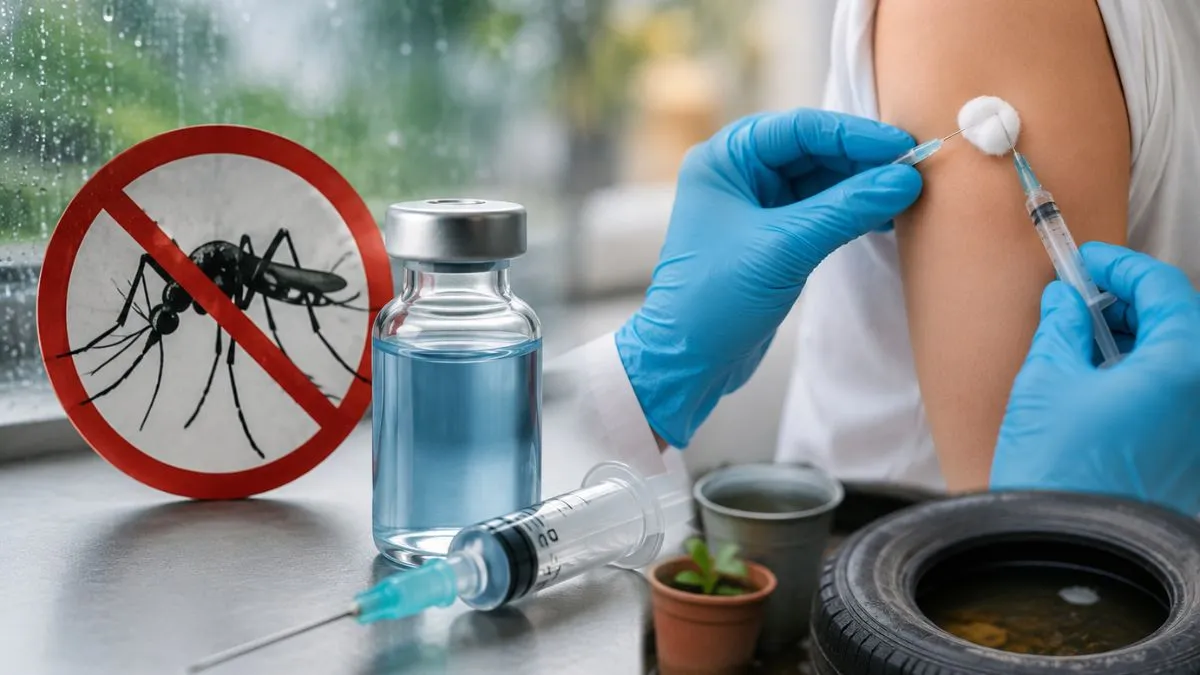
India has certainly moved ahead in the battle against dengue with the development of QDENGA, the very first vaccine in India for the prevention of dengue. This development has brought a ray of hope as dengue cases keep rising every year, especially during and after the monsoon.
Even though this vaccine provides protection, doctors have clearly mentioned that it cannot replace mosquito control and timely treatment. Speaking about this, Dr Neetu Jain, Senior Consultant, Department of Pulmonary, Critical Care & Sleep Medicine, PSRI Hospital, New Delhi, said that people should be aware of the pros and cons of the vaccine.
What is QDENGA and how does it work?
QDENGA is designed to protect against all four types of the dengue virus. This is important because recovering from one type of dengue does not provide complete protection against the other three, meaning a person can get dengue more than once.
The vaccine is administered in two doses, usually three months apart. Dr Jain says it is important to complete both doses as recommended to achieve the intended level of protection.
Does the vaccine provide complete protection?
No. According to Dr Jain, the vaccine does not offer 100 per cent protection against dengue.
A vaccinated person can still become infected, although the chances of developing severe dengue may be lower. This means preventive measures should continue even after vaccination.
People should continue to:
- Prevent water from collecting in coolers, flowerpots, tyres and other containers.
- Use mosquito repellents.
- Wear full-sleeved clothing.
- Keep doors and windows properly screened to reduce mosquito entry.
Can the vaccine treat dengue?
The vaccine is meant only for prevention and cannot treat someone who already has dengue.
Dr Jain advises anyone experiencing high fever, severe body ache, vomiting, abdominal pain, bleeding, unusual weakness, breathing difficulty or extreme drowsiness to seek medical attention immediately.
She also cautions against ignoring symptoms simply because a person has been vaccinated.
Should everyone get vaccinated immediately?
Not necessarily.
Dr Jain explains that the government and health authorities will decide which age groups and regions should be prioritised based on dengue burden, local transmission, vaccine availability and safety considerations.
Instead of opting for vaccination on their own, people should consult a doctor to understand whether the vaccine is appropriate for them.
Who should avoid the dengue vaccine?
Since QDENGA is a live vaccine, it may not be suitable for everyone.
Dr Jain advises that the following groups should consult their doctor before getting vaccinated:
- Pregnant women
- Breastfeeding mothers
- People with weakened immunity
- Those receiving immune-suppressing treatment
- Anyone with a history of severe allergic reactions to vaccines
Vaccination is only one part of dengue prevention
Dr Jain says the approval of India's first dengue vaccine is an encouraging development, but it should not create a false sense of security. "The best protection will come from combining vaccination with mosquito control, early diagnosis, proper medical care and greater public awareness," she says. If introduced carefully and administered to the right population, the vaccine has the potential to reduce severe dengue cases and ease the burden on hospitals during the peak dengue season.
Disclaimer: Tips and suggestions mentioned in the article are for general information purposes only and should not be construed as professional medical advice.
