
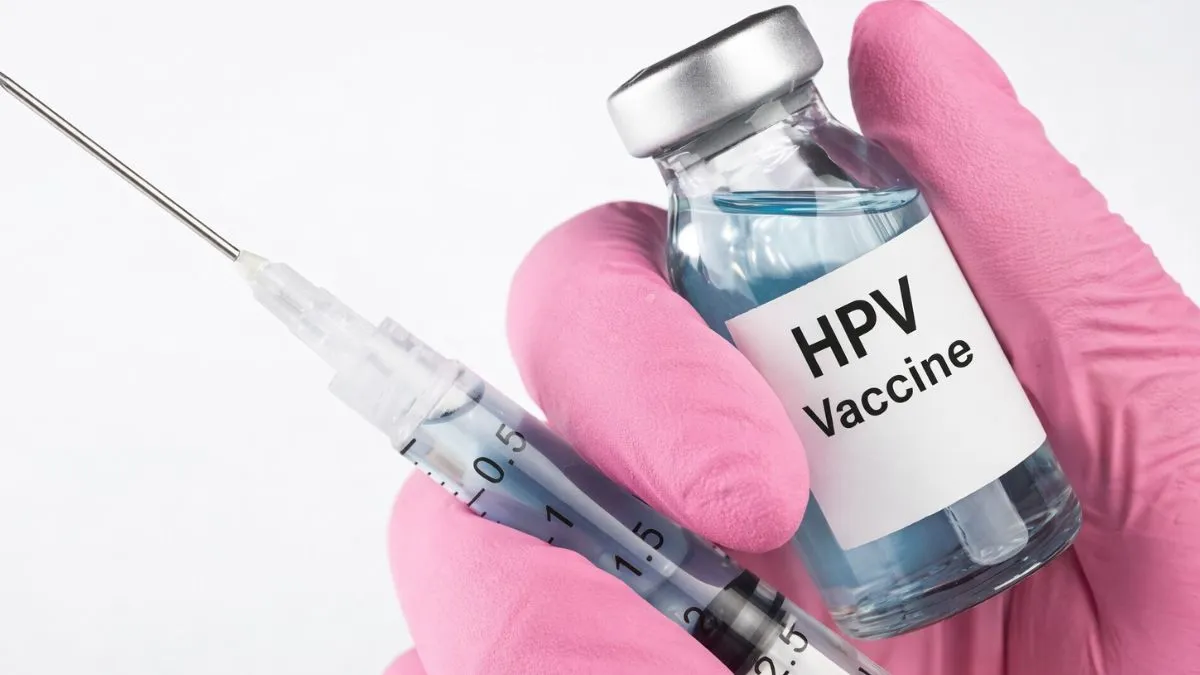
India’s public health playbook has been steadily widening its preventive care lens. Vaccination drives, once centred mostly around childhood diseases, are now expanding into long-term cancer prevention as well. The latest push sits firmly in that space.
The government is preparing to roll out a nationwide HPV vaccination campaign targeting adolescent girls. Quietly ambitious. Logistically detailed. And aimed at reducing cervical cancer risk before it even begins.
Nationwide HPV vaccination drive for 14-year-old girls
Under the programme, all girls aged 14 years across the country will receive a single dose of the Gardasil-4 vaccine at designated government health facilities.
These include:
- Ayushman Arogya Mandir – Primary Health Centres
- Community Health Centres
- Sub-District Hospitals
- District Hospitals
- Government Medical Colleges and Hospitals
Each vaccination site will be equipped with a Cold Chain Point (CCP) to ensure safe vaccine storage, along with a dedicated medical officer to monitor and manage any AEFI (Adverse Events Following Immunisation). The approach is structured but accessible. Built to reach scale without overwhelming routine health systems.
Consent and voluntary participation guidelines
Officials have clarified that the HPV vaccination will remain voluntary.
Key participation norms include:
- Mandatory parental or guardian consent before vaccination
- Eligibility limited to girls aged 14 within the target cohort
- Awareness and counselling support at facility level
The consent layer is intended to ensure informed participation rather than compulsory enrolment.
Vaccination schedule and availability window
The campaign will initially run in an intensified mode before shifting into routine immunisation cycles.
Implementation plan:
- Active campaign duration: Three months
- Vaccine availability: Daily at designated facilities during campaign phase
- Post-campaign: Available on routine immunisation days at the same centres
This staggered model is designed to maximise early coverage while ensuring continued access for those who miss the first window.
Vaccine supply and state preparedness
The Ministry of Health and Family Welfare has already moved into the distribution phase.
Preparedness measures include:
- Training of officials across all States and Union Territories
- Advance supply of HPV vaccine doses based on target population data
- Instructions issued for last-mile distribution to cold chain points
States and UT administrations have been tasked with ensuring adequate stock flow to each vaccination centre under their jurisdiction.
National launch event details
The formal launch of the HPV Vaccination Campaign has been scheduled for February 28, 2026, at 11:30 AM.
Launch highlights:
- Event venue: Ajmer, Rajasthan
- Campaign inauguration by the Prime Minister
- Nationwide virtual participation by States and Union Territories
- Presence of Chief Ministers, Administrators and State Health Ministers
- Coordination through NIC virtual link connectivity
The central launch will function as both a ceremonial start and an operational signal for simultaneous state-level rollouts.
Why HPV vaccination matters
HPV, or Human Papillomavirus, is one of the leading causes of cervical cancer. Vaccination during adolescence, before potential exposure, significantly lowers lifetime risk. Public health experts view this campaign as preventive rather than reactive. A long-horizon intervention. One that may take years to reflect in cancer incidence data, but begins protecting immediately. In practical terms, it marks a shift. From treating disease to pre-empting it. Quiet work. But foundational.
