
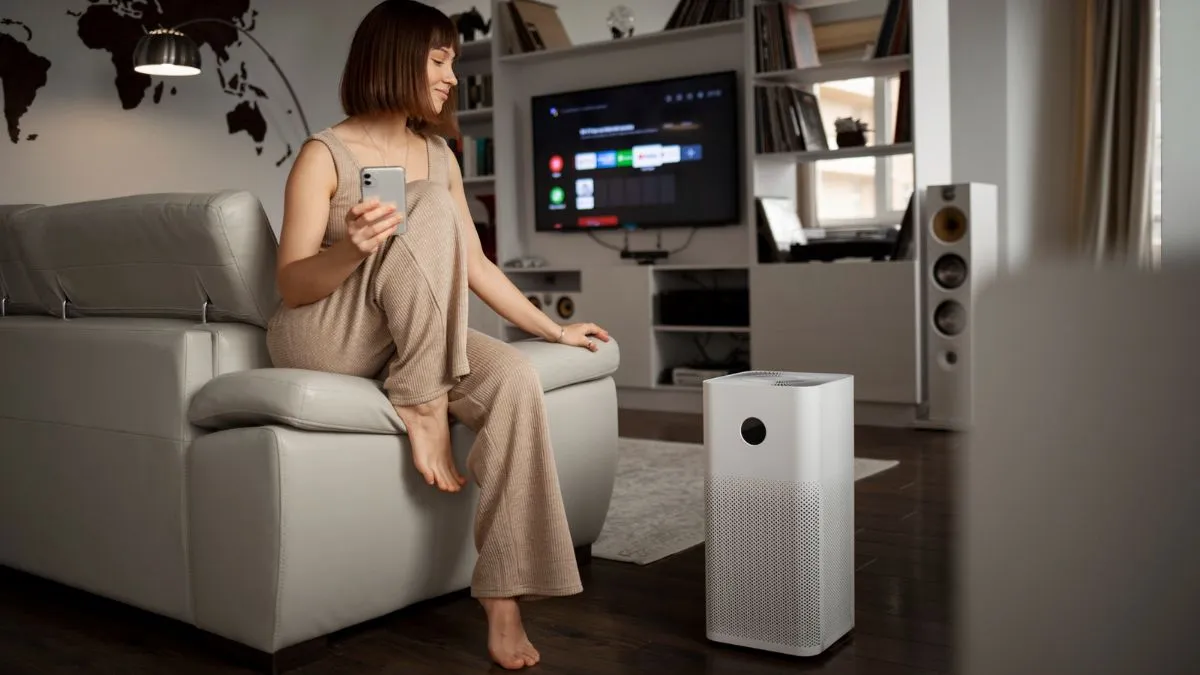
Lung cancer is the leading cause of cancer deaths across the world, and several factors contribute to this. One of them is air pollution. Air pollution is one of the leading environmental risk factors for lung cancer, especially due to prolonged exposure to fine particulate matter (PM2.5), nitrogen dioxide, and other toxic pollutants.
The World Health Organisation (WHO) classifies these particles as carcinogenic, and several studies also show that even non-smokers in highly polluted cities face a significantly higher risk of developing lung cancer. Since most people spend the majority of their time indoors, the quality of indoor air plays a crucial role in long-term lung health. Read on as Dr Ramana Gogi, Principal Consultant, Medical Oncology at CK Birla Hospital, Gurugram, explains whether air purifiers really protect you from lung cancer.
How Do Air Purifiers Work Against Indoor Air Pollution?
Air purifiers, particularly those equipped with HEPA (High-Efficiency Particulate Air) filters, are designed to capture up to 99% of airborne pollutants such as PM2.5, dust, pollen, and smoke. Many advanced models also use activated carbon filters to absorb volatile organic compounds (VOCs), which are linked to respiratory irritation and may contribute to cancer risk. Research indicates that consistent use of air purifiers can lower indoor PM2.5 levels by 50–80%, directly reducing exposure to carcinogenic pollutants and easing the burden on the lungs.
Can Air Purifiers Really Reduce Lung Cancer Risk?
Dr Gogi said, “While this reduction is promising, it’s important to note that air purifiers do not completely eliminate the risk of lung cancer. Outdoor exposure, occupational hazards, second-hand smoke, and genetic predispositions are also significant factors.”
Also, the effectiveness of an air purifier depends on the size of the room, the quality of the filter, and whether the device is used continuously. Poor-quality purifiers or those that generate ozone can even cause respiratory irritation instead of protecting against it.
Limitations of Air Purifiers
Air purifiers can be an effective tool in lowering exposure to cancer-causing pollutants indoors, making them a valuable addition for people living in highly polluted areas or those at higher risk of respiratory diseases. However, they should be seen as part of a comprehensive prevention strategy that also includes avoiding smoking, monitoring the Air Quality Index (AQI), ensuring proper ventilation when outdoor air is clean, and wearing protective masks during severe pollution episodes. Together, these measures can help reduce overall lung cancer risk more effectively than relying on air purifiers alone.
ALSO READ: Lung cancer symptoms: 5 signs of the fatal condition, other than persistent cough
