
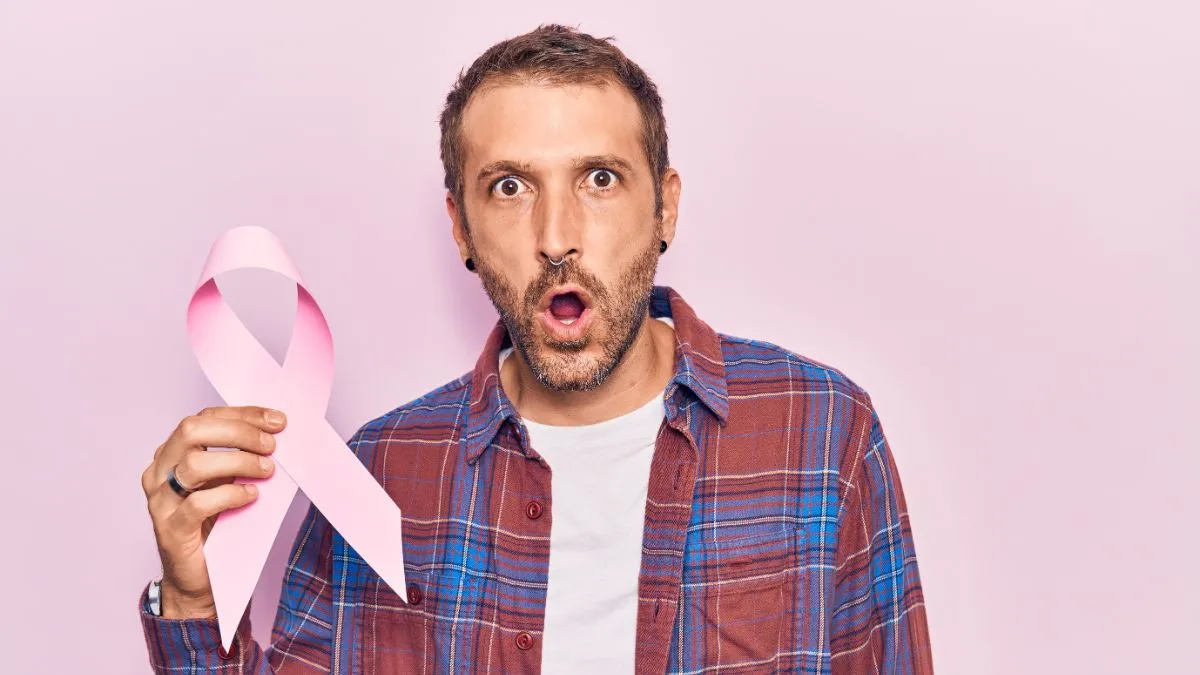
When you think of breast cancer, the image that comes to mind is almost always female. But this perception is dangerously incomplete, because men, too, can develop breast cancer, even though awareness about it remains shockingly low. Most men don’t realise that they have breast tissue capable of turning cancerous, leading to late diagnosis and higher mortality.
To understand the signs, risks, and why awareness matters now more than ever, we spoke to Dr Chirag Bhandari, Men’s Sexual Health Expert and Andrologist, and Founder of the Institute of Andrology and Sexual Health (IASH). He explains that while male breast cancer accounts for less than 1% of all cases, ignorance and stigma around it make it a silent but serious threat.
Awareness gap: the invisible cancer men don’t talk about
Dr Chirag Bhandari points out, “Breast cancer in men, though rare, is very real.” It accounts for less than 1% of all breast cancer cases worldwide, and in India, awareness remains worryingly low.
“In a survey conducted in New Delhi, only 19% of men knew that breast cancer can occur in males. The remaining 81% believed it was exclusively a woman’s disease,” says Dr Bhandari. “This lack of awareness means men often overlook or dismiss early warning signs until it’s too late.”
What early symptoms to watch out for
Just like women, men have small amounts of breast tissue, and this tissue can develop cancerous changes. The early red flags include:
- A lump or swelling in the breast region
- Pain or tenderness in the chest area
- Retraction or inversion of the nipple
- Nipple discharge (clear, bloody, or milky)
- Skin changes, thickening, or dimpling over the chest
“These signs should never be ignored,” warns Dr Bhandari. “Unfortunately, because breast cancer in men is uncommon, the symptoms are often brushed off as muscle strain or fat lumps, leading to delayed diagnosis.”
Who is at risk
While male breast cancer can occur in anyone, certain risk factors increase vulnerability. “It usually affects men in their 50s or 60s,” Dr Bhandari explains. “Those with a family history of breast cancer, particularly BRCA2 gene mutations, or a history of radiation exposure or hormonal therapy, face a higher risk.”
Other contributing factors include liver disease, obesity, and conditions that cause hormonal imbalances, such as Klinefelter syndrome.
Diagnosis and treatment
Early diagnosis remains the most crucial factor for survival. “If detected at an early stage, outcomes are good,” says Dr Bhandari. “But in most cases, men present late, when the disease has already spread.”
The diagnostic process involves ultrasound, mammography, and biopsy. Treatment, similar to that in women, depends on the type and stage of the cancer, ranging from surgery and radiation to chemotherapy and hormone therapy.
A call for awareness and action
Dr Bhandari stresses that awareness can save lives. “Men need to know that having a lump or discharge from the nipple is not something to ignore or be embarrassed about. Consult a doctor early. Breast cancer is not a gendered disease; it’s a health issue that deserves timely attention.”
Breast cancer in men may be rare, but its consequences are grave when missed. Regular self-checks, awareness about family history, and prompt medical evaluation are key to survival. Silence and stigma have no place when it comes to health.
Also read: Breast cancer can be prevented by undergoing these tests to detect symptoms at an early stage
Disclaimer: Tips and suggestions mentioned in the article are for general information purposes only and should not be construed as professional medical advice. Always consult your doctor or a dietician before starting any fitness programme or making any changes to your diet
