
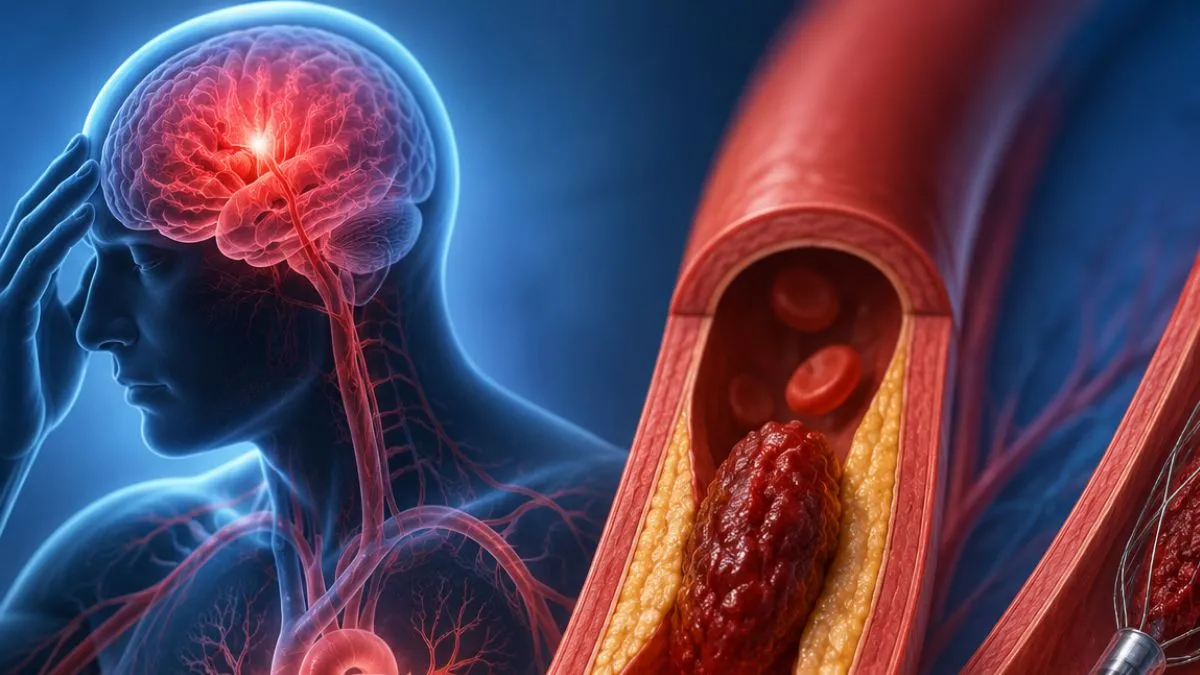
Most people associate blocked blood vessels with major surgery, long hospital stays, or irreversible damage. But doctors say advances in interventional radiology and emergency vascular care are changing how many serious clots are treated, especially when patients reach the hospital quickly enough.
One of the most important procedures gaining attention is mechanical thrombectomy, a minimally invasive technique used to physically remove dangerous blood clots from blood vessels. And in some cases, it can dramatically reduce permanent damage.
What exactly happens when a blood vessel gets blocked?
A blood clot in a vessel is an occurrence whereby a clot disrupts smooth blood flow in the vessels. Blood should be flowing freely through the vessels, delivering oxygen and other nutrients throughout the body, but if a clot arises, then blood circulation becomes impossible, leading to an emergency.
As stated by Dr T Seetam Kumar, Consultant Neuro & Vascular Interventional Radiology of Manipal Hospital, Bhubaneswar, a clot may occur in different regions of the body.
The conditions that increase clot risk
According to medical professionals, various health and behavioural causes that may lead to the development of blood clots include:
- Diabetes, which is not under control
- High levels of cholesterol
- Metabolic diseases
- Diseases affecting the blood
- Consumption of alcohol, drugs, or smoking
- Use of hormones, such as those found in birth control pills
Why blocked blood vessels can become life-threatening quickly
The symptoms and the severity vary according to the location of the blockage.
In the brain
A blood clot can lead to a stroke, presenting symptoms such as:
- Face drooping
- Weakness on one side of the body
- Trouble speaking
- Blurred vision
- Losing balance
The acronym “BE FAST” is often used by physicians to detect the symptoms of a stroke.
In the legs or arms
- Artery blockage can result in pain, trouble walking, and dark colouring of fingers and toes.
In the veins
- Deep Vein Thrombosis (DVT), which typically occurs in the legs, can be life-threatening when the blood clot moves to the lungs.
In the lungs
- A clot reaching the lungs can cause pulmonary thromboembolism (PTE), which may become fatal without urgent treatment.
The non-surgical treatment that many patients are unaware of
While medications are still commonly used to dissolve clots, not all blockages respond to drugs alone. In severe cases, doctors may perform a mechanical thrombectomy, an advanced minimally invasive procedure where specialised devices are inserted through blood vessels to physically remove the clot.
These devices may include:
- Stent retrievers
- Aspiration catheters
The procedure avoids large surgical incisions and is especially useful in major vessel blockages affecting the brain or limbs.
Why timing matters more than anything else
Doctors repeatedly stress one thing: speed saves tissue. The earlier a clot is treated, the higher the chances of restoring blood flow and preventing permanent organ damage.
In stroke cases, especially, even short delays can significantly affect recovery outcomes.
Blocked blood vessels are medical emergencies, not symptoms to “wait and watch”. But with faster diagnosis, clot-dissolving medications, and minimally invasive treatments like mechanical thrombectomy, doctors say recovery outcomes today are improving significantly, especially when patients seek help early.
