
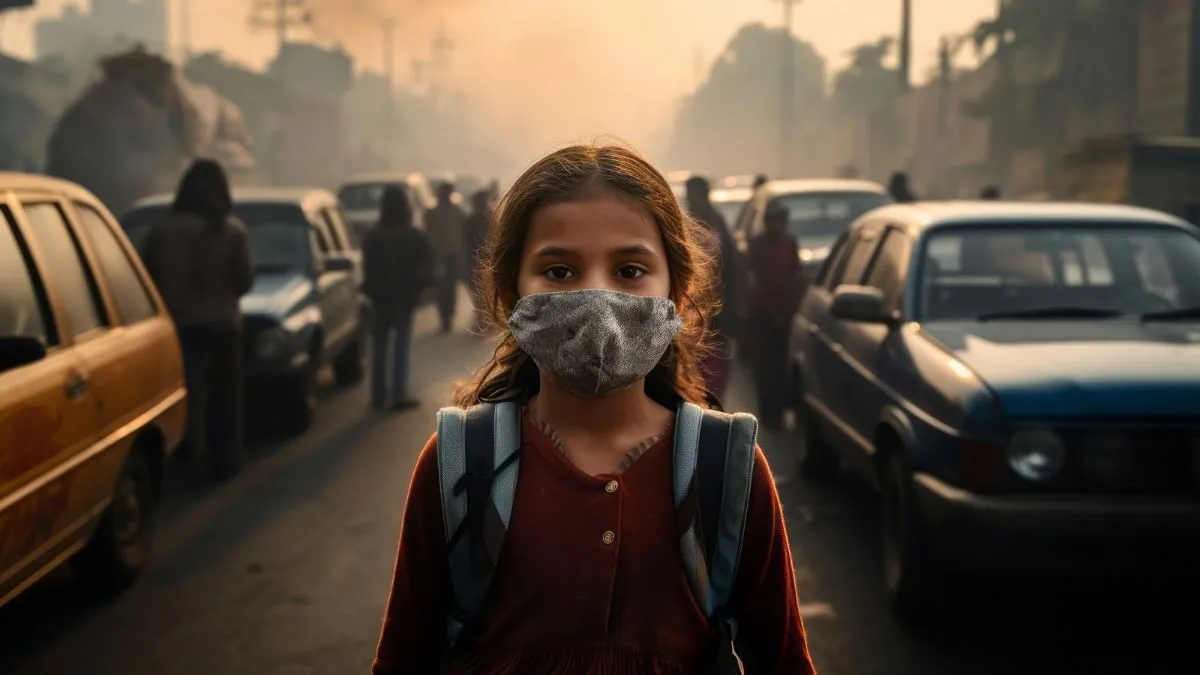
Air pollution is usually framed as a daily nuisance. Watery eyes. Throat irritation. A cough that hangs around. Easy to brush off. But when exposure happens very early in life, the consequences can be far more lasting. Pregnancy, infancy and early childhood are periods when the body is still under construction. Lungs, brain, immune system and blood vessels are all developing at speed.
Pollution during this phase can quietly disrupt that process. The effects may not always be immediate, but they can surface much later, shaping a child’s health in ways that are hard to reverse.
To understand how and why this happens, we got in touch with Dr Pradeep Suryawanshi, Director, Neonatology and Paediatrics, Sahyadri Hospitals MomStory, Pune, and Dr Jai Mullerpattan, Consultant Pulmonologist, P. D. Hinduja Hospital and Medical Research Centre, Mumbai. Both doctors spoke about how early exposure to polluted air can influence health well beyond childhood.
What counts as air pollution for child health
“Air pollution is often discussed as a day-to-day inconvenience, watery eyes, throat irritation, cough,” says Dr Pradeep Suryawanshi. “But when exposure happens very early in life, the impact can be far more enduring.”
He explains that the pollutants most strongly linked with child health outcomes include “PM2.5 and nitrogen dioxide (NO₂). PM2.5 refers to extremely fine particles, so small they can travel deep into the lungs.” NO₂, he adds, “is commonly associated with traffic emissions and tends to irritate the airways.”
Dr Suryawanshi also points out that there are “other harmful components such as ozone and certain chemicals released from burning fuels.” What really matters is not just what the pollutant is, but “how often and how long a child is exposed.”
Why early life is a critical window of vulnerability
“Children are biologically more vulnerable to pollution than adults,” Dr Suryawanshi explains. “They breathe faster and take in more air per kilogram of body weight, which means they can receive a higher dose of pollutants from the same environment.”
He adds that “their airways are narrower, so even mild swelling can cause noticeable breathing difficulty.” Most importantly, “their organs are still forming and maturing.”
Dr Jai Mullerpattan echoes this concern, saying, “Rapid development of lungs, brains, and immune systems in children makes them more susceptible to the toxic effects of pollution.” He also highlights that “children breathe faster and inhale more pollutants relative to their body size.”
Exposure can begin before birth
Exposure does not begin after delivery. As Dr Suryawanshi explains, “During pregnancy, the placenta is responsible for supplying oxygen and nutrients to the developing baby. Pollution can stress this system.”
He notes that “pollution exposure during pregnancy is associated with higher risk of preterm birth and low birth weight.” These outcomes matter beyond birth. “Babies born early or small may begin life with lower reserves, especially in the lungs and the brain,” he says, which can increase vulnerability later.
Dr Mullerpattan adds that “maternal exposure to pollution during pregnancy can impair fetal lung growth and oxygen supply.”
The long shadow on lungs, immunity, and overall development
“The lungs continue developing after birth and grow rapidly through early childhood,” Dr Suryawanshi says. “When polluted air is repeatedly inhaled during these years, it can affect both the structure and function of the lungs.”
He explains that early signs often include “frequent cough, repeated chest infections, or episodes of wheeze.” Over time, pollution exposure shapes long-term lung reserve. “A child with lower baseline lung reserve may struggle more during viral infections, winter pollution spikes, or sports and physical activity.”
On immunity, Dr Mullerpattan explains that “airways have natural protective mechanisms,” but pollution “impairs these defences and irritates the airway lining.” This makes it easier for infections to take hold and harder for children to recover, creating a repeating cycle of illness.
Effects that can persist into adolescence and adulthood
“Early exposure to pollution severely harms child health,” Dr Mullerpattan says. It is linked to “impaired lung and brain development,” and increases risks for “asthma, allergies, lower cognitive function such as ADHD, and even cardiovascular issues.”
He adds that pollution exposure is associated with “reduced lung capacity and increased susceptibility to infections,” as well as “lower IQ, poor academic performance, attention deficits, and learning disabilities.”
Dr Suryawanshi explains why these effects last. “Early exposures can influence how the body sets its baseline for immunity, lung capacity, vascular function, and metabolism.” A child may look healthy, he notes, but “the underlying resilience may be reduced.”
What can be done at policy, community, and family levels
Addressing the issue requires action at multiple levels. Dr Mullerpattan stresses the need for “science-backed clean air policies,” regular air quality monitoring, and prioritising clean energy.
At a community level, he points to the importance of “green spaces” and monitoring pollution around schools and playgrounds. At home, families can reduce exposure by “reducing time in high-pollution areas such as busy roads,” using cleaner indoor fuels, and supporting overall healthy lifestyles.
Disclaimer: Tips and suggestions mentioned in the article are for general information purposes only and should not be construed as professional medical advice.
ALSO READ: Air pollution may trigger heart attacks even in healthy adults, warns cardiologist
