
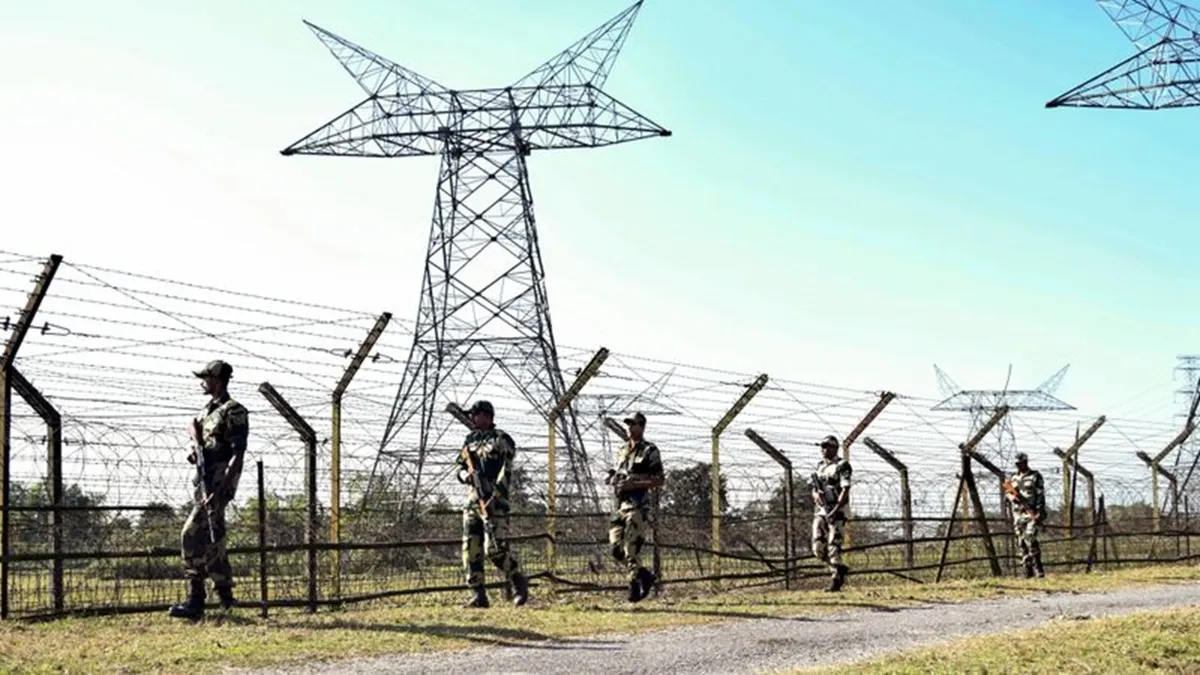
West Bengal Chief Minister Suvendu Adhikari is set to personally hand over land documents for the Siliguri Corridor also known as the Chicken's Neck to the Border Security Force (BSF) on Wednesday. The Centre had been seeking this land for a long time, but the previous Mamata Banerjee government either termed it a federal issue or delayed the matter for political reasons. With the handover now cleared, the central government will strengthen highway and railway infrastructure to improve connectivity between the Northeast and the rest of India. The move will also facilitate faster movement of the armed forces. Here is why securing control of this 120-acre stretch of the Siliguri Corridor was crucial for the Centre.
Suvendu Adhikari fulfilled one of the Centre's key demands within ten days after taking oath as the Chief Minister of West Bengal on May 9. The new state government has cleared the transfer of seven sections of national highways to NHAI and NHIDCL. These include important stretches within the Siliguri Corridor.
Why this 120-acre patch of land is critical
The notified area covers 120 acres and forms an essential part of the Siliguri Corridor. The question that arises is why the Centre had been insisting on control over this corridor. Key highway projects in this region have been stalled for years due to administrative hurdles. Widening roads, repairing damaged stretches and building new infrastructure could not progress. Better highways are essential for the seamless movement of the military and heavy equipment. Strengthening access to Sikkim and the northeastern states is a strategic necessity. The Centre is also planning to expand the railway network in the area.
Plan for an underground rail line in the corridor
Work is underway on a project to build an underground railway corridor through Siliguri so that connectivity remains intact even in emergency situations. Direct supervision of these critical routes by the central government will greatly support the Indian Army's operational preparedness. Transferring the Siliguri Corridor land to the Centre is not just a strategic step. It also helps secure the seven northeastern states by eliminating long-standing concerns.
Railway Minister Ashwini Vaishnaw has already announced a 40-kilometre underground rail line to strengthen connectivity with the northeastern states. This line will pass through the Siliguri Corridor, also known as the Chicken Neck.
Where exactly is the Siliguri Corridor located?
Panitanki lies on the Nepal border to the west of Siliguri and Phulbari falls on the eastern side. The Siliguri Corridor spans the region between these two points and is around 22 kilometres wide. It touches the international borders of Nepal and Bangladesh and extends for nearly 60 kilometres. This narrow strip connects the northeastern states of Arunachal Pradesh, Assam, Manipur, Meghalaya, Mizoram, Nagaland and Tripura. The route to Sikkim also passes through this stretch. The region is connected by road as well as railway lines.
India has never tried to exploit neighbouring territory
During the 1971 war, when the Pakistan Army carried out massacres in Bangladesh, Indian forces advanced deep into the region. India could have claimed parts of Bangladesh at the time but never attempted to misuse the situation. The 22-kilometre-wide corridor that links the Northeast to the rest of India lies between Nepal, Bhutan and Bangladesh. Because of this, adversarial countries often talk about targeting this fragile strip. Nations like Bangladesh and China have long harboured hopes of capturing it to cut off India's northeastern connection. Even during the Delhi riots, Sharjeel Imam had appealed to supporters to block this narrow zone to pressure the government. However, these hostile designs have never succeeded and will not in the future. What was once considered India's vulnerable sliver will now become a region of stability and strength through new infrastructure.
ALSO READ: Bengal CM Suvendu Adhikari gives nod to transfer land to BSF for fencing border with Bangladesh
