
Hours after the UK, Australia and Canada recognised Palestine as a state, Israeli Prime Minister Benjamin Netanyahu reacted strongly and vowed to respond firmly to the decisions of these countries. Netanyahu said the establishment of a Palestinian state “will not happen.” Netanyahu put out an angry statement after Britain and other Western allies said they were unilaterally recognising a Palestinian state in a step seen as a show of displeasure with Israel.
Netanyahu says establishment of Palestine will not happen
“It will not happen. A Palestinian state will not be established west of the Jordan River, ” Netanyahu said and added that he would announce Israel's response after a trip next week to the US, where he is to meet President Donald Trump at the White House.
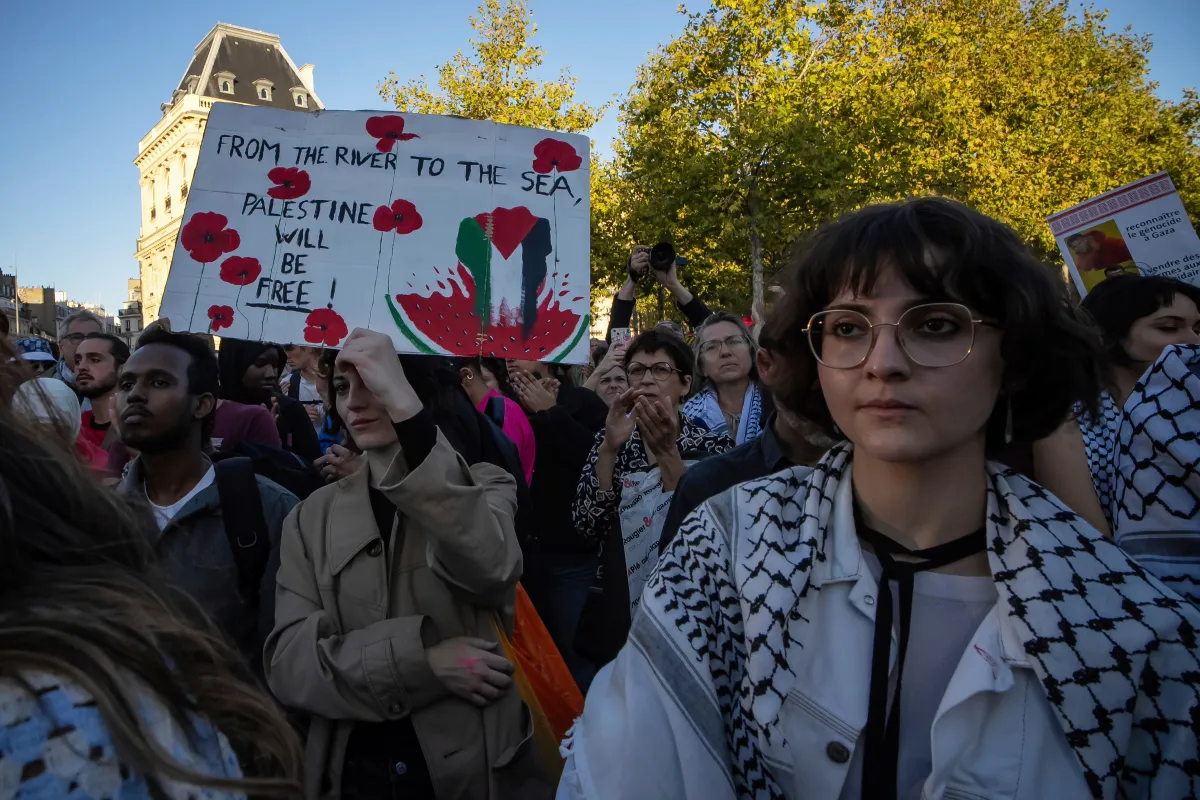
The reaction from Netanyahu comes after Australia, Canada and the UK, in a coordinated effort, recognised the Palestinian State on Sunday, calling for a two-state solution. However, these countries said that Hamas must cease its existence immediately.
"Australia formally recognises the independent and sovereign State of Palestine. In doing so, Australia recognises the legitimate and long held aspirations of the people of Palestine to a state of their own," Australian Prime Minister's Office stated in a statement.
Israeli Foreign Ministry condemns action by these countries
However, the Israeli Ministry of Foreign Affairs condemned the action by these countries, stating that it would jeopardise the security in the region and is contrary to what it sought to achieve.
"Israel categorically rejects the one-sided declaration of the recognition of a Palestinian state made by the United Kingdom and some other countries. This declaration does not promote peace, but on the contrary - further destabilises the region and undermines the chances of achieving a peaceful solution in the future,” the Ministry of Foreign Affairs said in a statement.
How many countries have recognised Palestine?
Out of the total 193 existing UN member states, some 150 now recognise a Palestinian state. Ahead of the UN gathering in New York, Australia, Canada and the United Kingdom become the latest. And that number is expected to increase in the coming days, with several more countries expected to officially announce similar recognition.
Many other countries including France, Belgium, Luxembourg and Malta are expected to extend support for Palestinian state during a summit on the future of the two-state solution chaired by France and Saudi Arabia at United Nations headquarters in New York.
Apart from this, Russia, alongside all Arab countries, almost all African and Latin American countries, and most Asian countries including India and China are already on the list.
Most of the Western nations are adding their names to the near-universal list of Global South countries that already recognise a Palestinian state is a major diplomatic win for the cause of an independent, sovereign and self-governed nation for Palestinians.
Many countries recognise Palestine: What does it mean?
Recognition of Palestine does not mean that a Palestinian state has been created. In fact, the recognition by major world powers is largely symbolic and carries political weight.
It should be noted that Palestine has international recognition, diplomatic missions abroad and teams that compete in sporting competitions, including the Olympics. But because if its long-standing dispute with Israel, Palestine has no internationally agreed boundaries, no capital and no army, a report in BBC said.
Moreover, because of Israel's military occupation in the West Bank, the Palestinian Authority (PA) which was set up in the wake of peace agreements in the 1990s does not have full control of its land or people.
Many countries recognise Palestine: Will it change status quo?
No, it is not possible. Israel rejected it outrightly, as did United States and most Western nations.
While refusing to accept Palestinian statehood, the US and Israel did begin to recognise the PLO as a representative body of the Palestinian people. This was part of the Oslo Accords – a diplomatic process that many believed would outline a road map for an eventual two-state solution.
In 2012, the UN General Assembly voted to upgrade Palestine’s status, elevating it from a “nonmember observer” to a “nonmember observer state”.
In theory, this meant Palestinians now had access to international bodies, like the International Criminal Court and the International Court of Justice.
But any meaningful change in the status of Palestinian sovereignty would need to come through the UN Security Council, not the UN General Assembly.
The US remains opposed to Palestinians gaining statehood independent of the Oslo process. As long as the US has a veto on the Security Council, achieving a truly sovereign Palestinian state will likewise be off the table.
Also Read:
