
The United States' 50 per cent tariff on Indian goods came into effect at 12:01 am EDT (9:31 am IST) today, following the addition of a second 25 per cent duty to the earlier hike imposed this month. The US Department of Homeland Security confirmed that the higher tariff applies to all Indian goods “entered for consumption or withdrawn from warehouse for consumption” on or after this time.
This move marks the culmination of President Donald Trump’s tariff strategy aimed at nations maintaining economic ties with Russia, with India singled out for its purchase of Russian crude oil and military equipment. The decision has drawn sharp criticism from New Delhi, while Moscow has expressed support for India’s right to choose its trade partners.
With this increase, most Indian goods entering the US market will now face a 50 per cent duty, barring some exceptions. The first 25 per cent tariff was implemented on August 7, followed by this latest hike announced earlier this month.
Trump's tirade against India
This escalation is part of President Donald Trump’s tariff campaign against countries maintaining economic ties with Russia, with India targeted for its purchase of Russian crude oil and defence equipment. New Delhi has strongly condemned the move, while Moscow has supported India’s trade autonomy.
With this step, most Indian goods entering the US market now face a 50 per cent duty, with some exceptions. Below is a sector-wise impact assessment.
US tariffs: Most affected Indian business sectors
Textiles and apparel: The US is India’s largest textile buyer, with exports exceeding USD 10.8 billion annually. The sector now faces effective duties of nearly 64 per cent, severely hurting hubs like Tiruppur in Tamil Nadu, which employs over 600,000 workers.
Gems and jewellery: Exports worth USD 9.94 billion to the US will now attract 52.1 per cent duties. Surat, which processes 80 per cent of India’s diamonds, is already reporting order cancellations and job losses.
Shrimp and seafood: India exports around USD 2.4 billion in shrimp to the US, which accounts for half of its seafood trade. With duties now at 60 per cent, Indian suppliers risk losing ground to Ecuador, whose shrimp face only 15 per cent tariffs.
Carpets, furniture, and home textiles: Carpet exports of USD 1.2 billion will now face nearly 53 per cent effective duties, pushing US buyers toward competitors such as Turkey and Vietnam.
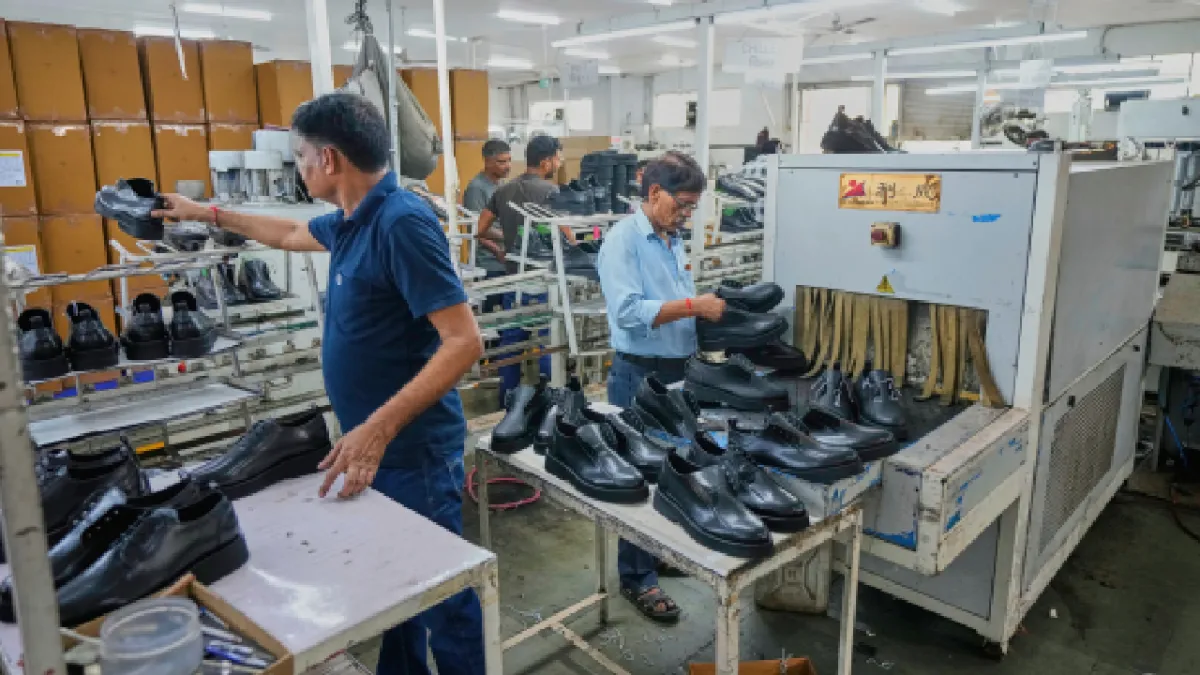
Leather and footwear: The entire sector, a major employer in states like Uttar Pradesh and Tamil Nadu, is now subject to the full 50 per cent tariff, compounding challenges from rising input and freight costs.
Auto components: Indian auto parts exports to the US stood at USD 6.6 billion in 2024. Of this, USD 3.4 billion will face a 25 per cent duty, while the remainder will be hit with 50 per cent tariffs, threatening India’s market share in key components like gearboxes.
Chemicals and organic compounds: Exports worth USD 2.7 billion, much of it SME-driven, will face steep tariffs of over 50 per cent. Countries like Japan and South Korea, which enjoy preferential access, are set to benefit.
Agricultural and processed foods: Basmati rice, tea, spices, and other agri-food products worth USD 6 billion will now face 50 per cent duties, opening opportunities for rivals like Pakistan and Thailand.
Sectors exempted from US tariffs
Pharmaceuticals: Generic drug exports of USD 10.52 billion remain exempt for now, though US pressure on companies to localise manufacturing could rise.
Electronics: Electronic goods exports of USD 14.64 billion, including iPhones assembled in India, are currently excluded under earlier bilateral arrangements.
Petroleum products and others: Exports of petroleum products worth USD 4.1 billion are exempt, along with categories like books, plastics, and some industrial inputs.
Impact on MSMEs
The steep tariffs strike hardest at India's MSMEs, which contribute over 70 per cent of export capacity in textiles, gems, seafood, and chemicals. Concentrated in clusters like Tiruppur, Surat, and Panipat, these firms operate on razor-thin margins and depend heavily on US demand. The 50 per cent duty virtually erases their price competitiveness, threatening widespread job losses and production cuts.
|
Indian exports worth USD 48 billion to be impacted as Trump's 50 per cent tariffs come into effect |
