
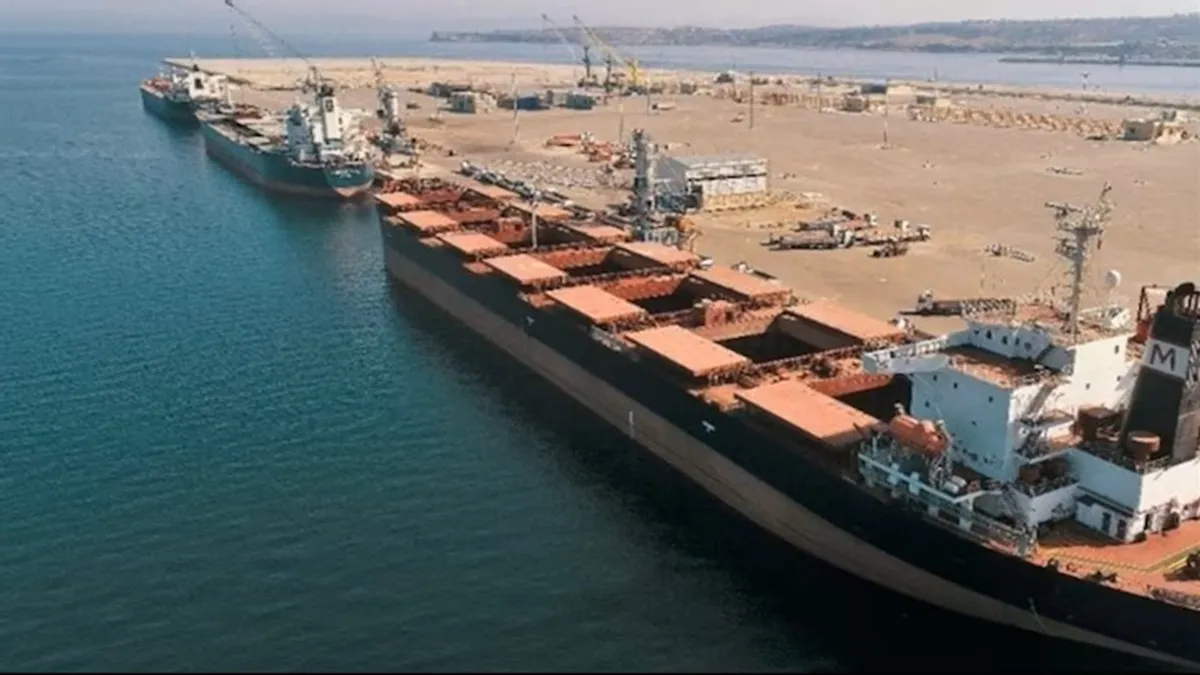
The United States has announced that it will revoke the sanctions waiver on Iran's Chabahar Port from September 29. The move ends a 2018 exception that had allowed India to continue development work at the port despite American restrictions on Tehran. The US State Department said the decision is in line with its "maximum pressure policy" against Iran under the Iran Freedom and Counter-Proliferation Act (IFCA). In its statement, the State Department said, "Once the revocation is effective, persons who operate the Chabahar Port or engage in other activities described in IFCA may expose themselves to sanctions under IFCA." The US also announced action against an international illicit financial network involving entities in Hong Kong and the UAE, accusing them of facilitating Iranian oil sales that benefited Iran's Revolutionary Guard Corps and Ministry of Defence.
US cites destabilising Iranian activities
The US stressed that it will continue to curb Iran's influence. "As long as Iran devotes its illicit revenues to funding attacks on the United States and our allies, supporting terrorism around the world, and pursuing other destabilising actions, we will continue to use all the tools at our disposal to hold the regime accountable," the statement added.
Will US decision impact India?
India had signed a 10-year contract in May 2024 to operate the Shahid Beheshti terminal at Chabahar. It is now expected to face challenges due to the decision, according to a report by news agency PTI. This was India's first project to operate an overseas port. New Delhi had proposed the development of Chabahar way back in 2003 to secure trade routes with Afghanistan and Central Asia bypassing Pakistan. Despite sanctions, India had used the port in recent years to send wheat aid to Afghanistan and pesticides to Iran.
Strategic importance of Chabahar Port
Located in Iran's Sistan-Balochistan province on the Gulf of Oman, Chabahar is the closest Iranian port to India. It is seen as a strategic hub in the International North-South Transport Corridor (INSTC), a 7,200-km-long multi-modal project linking India with Iran, Central Asia, Russia and Europe. India had earlier invested USD 100 million in the project and signed multiple agreements since 2015 to boost its development. The Ministry of External Affairs had allocated Rs 100 crore in the 2024-25 budget for the port underlining its importance for India's connectivity strategy.
(With inputs from PTI)
