
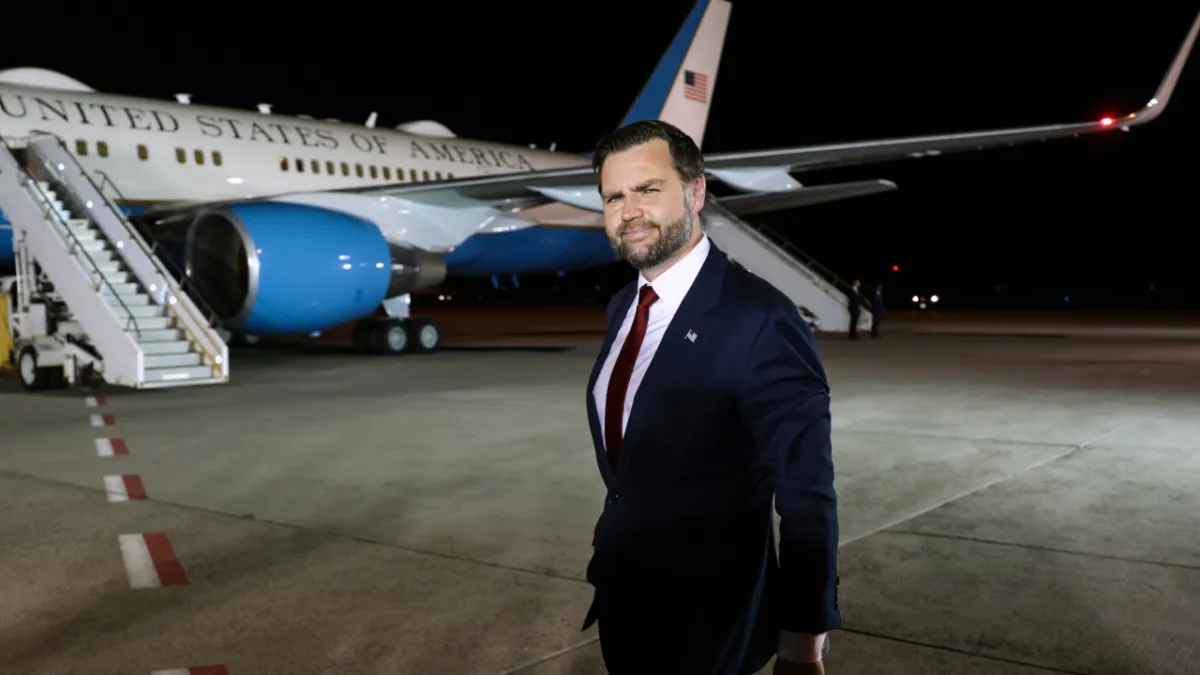
Before February 28, when the US planned Operation Epic Fury to attack Iran after months-long peace talks failed, Vice President JD Vance, perhaps, was the only person in the Donald Trump administration who advised against going into a conflict in the Middle East, warning of consequences.
Cut to six weeks later, he boarded Air Force Two and landed in Pakistan on Saturday, leading the US delegation to finalise the ceasefire talks with Iran, hoping to end the war he once opposed.
The assignment is arguably the most demanding of his vice presidency so far, with significant risks attached. While a successful outcome could reshape regional dynamics, failure may deepen tensions and further unsettle global markets already impacted by the conflict.
A preferred face for Iran
Vance’s mission is fraught with complexity. Any meaningful progress towards a permanent agreement will require balancing the competing expectations of multiple stakeholders who remain deeply distrustful after weeks of hostilities across the Middle East.
According to reports, Iran, which had initially denied sending a delegation and insisted talks could not proceed without a halt to Israel’s strikes in Lebanon, had in fact quietly favoured Vance to lead the US side. Sources cited by Reuters suggest that sections of the Iranian leadership viewed him as a more acceptable interlocutor.
His reputation as one of the more restrained voices within the administration of Donald Trump, particularly his scepticism towards prolonged military engagement, appears to have made him a relatively credible figure in the eyes of Tehran.
Meeting the Iranians
Vance is expected to meet Parliament Speaker Mohammad Bagher Ghalibaf and Foreign Minister Abbas Araghchi, marking one of the highest-level direct engagements between Washington and Tehran since 1979.
He is accompanied by special envoy Steve Witkoff and Jared Kushner, though it remains unclear whether the discussions will be face-to-face. Initial reports indicate that Pakistani officials may mediate early rounds, with delegations seated separately at Islamabad’s Serene Hotel.
The exception factor
The composition of the US delegation reflects an attempt to balance authority with flexibility. While Vance brings political weight and a perceived openness to negotiation, others in the team are viewed with scepticism by Iranian officials.
Tehran reportedly holds Witkoff and Kushner partly responsible for the collapse of earlier talks, believing they favoured military escalation over diplomacy. This lingering distrust is expected to influence the tone and pace of negotiations.
Vance, by contrast, is seen as less aligned with war-driven strategies and more focused on securing an end to the conflict. His earlier reservations about escalation have contributed to an image of a negotiator willing to seek compromise.
Make-or-break ceasefire talks
The talks are taking place against the backdrop of a fragile two-week ceasefire, offering a rare pause in a conflict that has shaken the Middle East and disrupted the global economy.
This limited window presents both an opportunity and a challenge, as negotiators attempt to translate a temporary halt in fighting into a durable agreement.
|
'We're going to open Hormuz with or without Iran fairly soon': Trump ahead of ceasefire talks |
|
Why Lebanon has become a deal-breaker in the fragile US-Iran ceasefire |
