
It's only been 24 hours since the ceasefire between the United States and Iran was announced, but the deal already appears to be on the brink of collapse with hostilities resuming in the Middle East and Tehran again closing the Strait of Hormuz just two days before a final meeting is held in Pakistan for delegation-level talks on April 11.
Reopening the Strait of Hormuz for ships was one of the significant conditions put forth by Donald Trump to agree to a truce. However, things changed drastically in the past few hours with the Iranian military saying the closure is in response to Israel's continued attacks on Lebanon.
This raises the question - why has Lebanon become a flashpoint despite a truce being announced?
Understanding the Lebanon factor
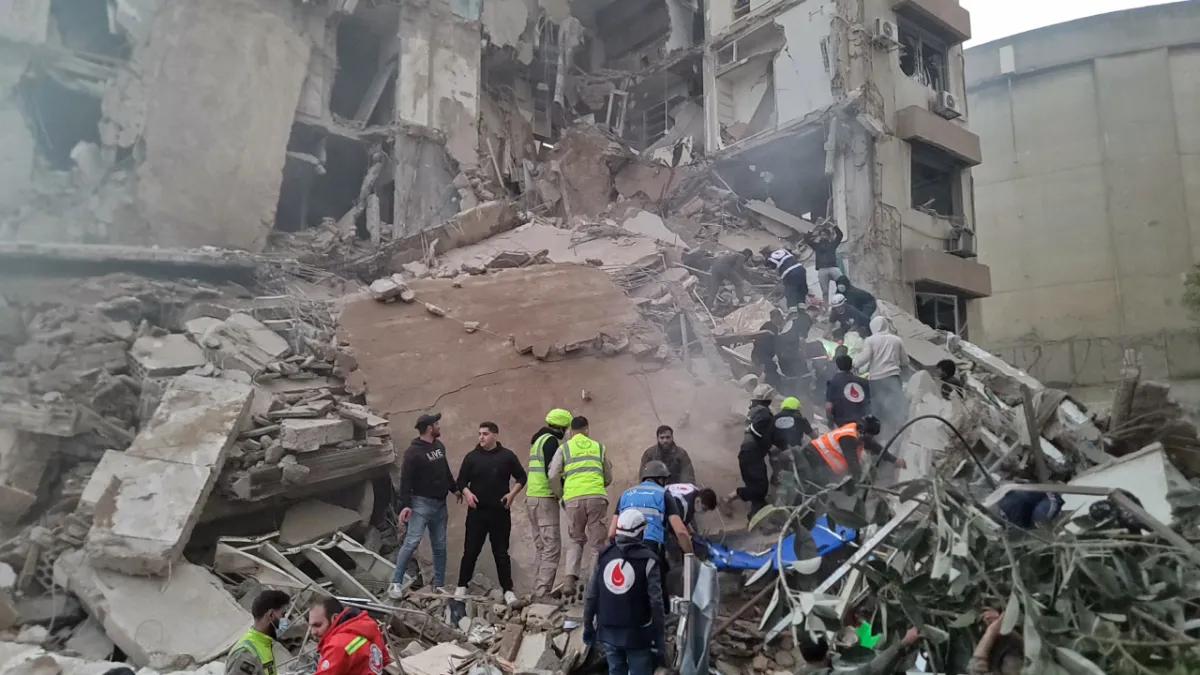
The Israeli Defence Forces (IDF) have launched their biggest-ever airstrikes against Hezbollah targets on Thursday. On Wednesday alone, around 182 people were killed and more than 800 injured in Lebanon as Israel expanded its attacks against the Iran-backed militant group, pounding commercial and residential areas in Beirut.
100 missiles were fired by Israel in just 10 minutes to eliminate Hezbollah leaders in Beirut, southern Lebanon and the Bekaa Valley.
Israel has accused Hezbollah of operating from civilian areas, a claim disputed by residents and local officials, particularly in neighbourhoods where residential buildings were struck without warning.
Hezbollah is an Iran-backed militant outfit in Lebanon which has been involved in a direct conflict with Israel for years.

Iran claims Lebanon part of ceasefire deal, US and Israel deny
The IRGC said Hormuz was closed in retaliation to Israel's attacks, claiming the 10-point proposal it gave to Washington to agree to the ceasefire had the condition of cessation of hostilities against Lebanon.
Iran's Foreign Minister Abbas Araghchi also said that ending the war in Lebanon was part of the ceasefire agreement, but Israeli Prime Minister Benjamin Netanyahu and US President Donald Trump maintained that the truce did not extend to Lebanon.
When the deal was announced, Pakistan’s prime minister, whose country acted as a mediator, said in a social media post that the ceasefire applied “everywhere, including Lebanon and elsewhere”.
In a post on X, Araghchi said the world was witnessing the violence in Lebanon and added that responsibility now lay with the United States to honour its commitments, with global attention focused on its next steps.
US Vice President JD Vance, who will lead the US delegation for ceasefire talks in Islamabad on Saturday, also stressed that Lebanon was never part of the deal and if Iran wants the ceasefire negotiations to fall apart for Lebanon, "it's their choice".
Hormuz remains choked
Only 11 vessels transited the Hormuz Strait on Wednesday, a level broadly unchanged from previous days, according to maritime intelligence firm Windward. Several ships were turned back by the Iranian military on Thursday as well.
The firm added that Iran was requiring shippers to pay tolls of up to USD 1 per barrel for outbound oil.
The largest supertankers are capable of carrying as much as 3 million barrels of crude, highlighting the scale of potential costs for each voyage.