
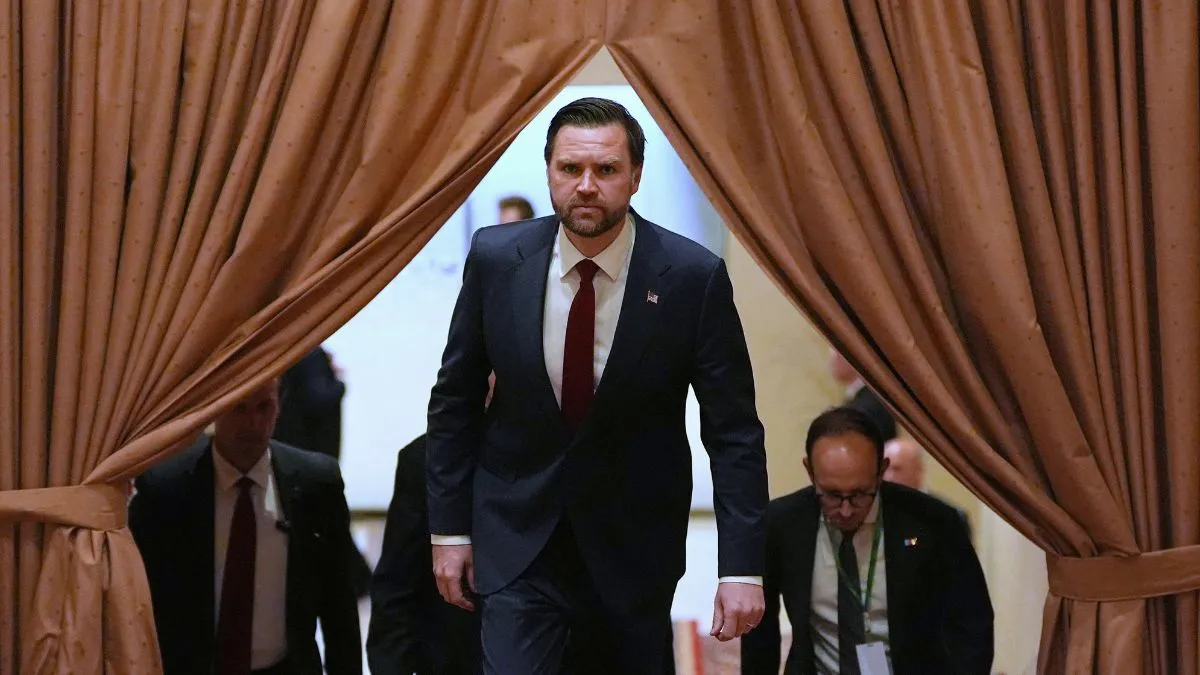
The high-stakes talks between the United States (US) and Iran, which were being held in the Pakistan's capital city of Islamabad, have failed, as the two sides have not accepted each other's demands, said American President JD Vance in an early morning media briefing on Sunday. According to Vance, the US was willing to cooperate with the Iranians and presented its "best offer", but it will never accept the Islamic Republic build a nuclear weapon.
Vance, who left Islamabad immediately after the briefing, said it has been the "core goal" of the US to ensure that Iran does not get a hold nuclear weapons. The failure of talks, though, is "bad news for Iran much more than it's bad news" for the US, the American vice president asserted.
"The simple fact is that we need to see an affirmative commitment that they will not seek a nuclear weapon and they will not seek the tools that will enable them to quickly achieve a nuclear weapon," he said. "We leave here with a very simple proposal, a method of understanding that this is our final and best offer. We'll see if the Iranians accept it."
Iran's nuclear programme: The bone of contention
Going by Vance's statement, it seems that the nuclear programme of Iran is the main contentious point between Tehran and Washington. For years, Iran has maintained that it does not seek nuclear weapons and only wants to develop its nuclear programme for power. However, Iran ramping up its uranium enrichment has left the US and Israel in concern, and it was considered to be the main reason for the 12-day war in June last year.
During the talks, the US reportedly demanded strict commitments from Iran to limit its nuclear programme. However, Iran refused to make those commitments and insisted on retaining control over its nuclear activities.
No consensus over Hormuz
In addition to Iran's nuclear programme, there was no consensus over the Strait of Hormuz, a narrow waterway between the Persian Gulf and the Gulf of Oman through which nearly 20 per cent of the world's crude pass. Iran wants greater authority over Hormuz and wants to collect fees from vessels transiting through it.
On the other hand, US has insisted on free shipping routes. It also proposed joint control plan to Iran, but the Islamic Republic clearly rejected that. Iran, it is worth noting, has also planted mines in Hormuz. Two US Navy ships have reportedly entered Hormuz to clear the mines, but Iran has denied it and said only civilian ships can transit through the waterway through cooperation of its military.
Iran's 'unreasonable' demand charge
With the talks failing in Islamabad, Iran has blamed the "unreasonable demands and unlawful requests" put forth by the US delegation. Vowing to protect its national interest, Iran said "nothing can or should deter" it from pursuing its great historical mission toward its beloved homeland and noble Iranian civilization.
"The success of this diplomatic process depends on the seriousness and good faith of the opposing side, refraining from excessive demands and unlawful requests, and the acceptance of Iran's legitimate rights and interests," Iran's foreign ministry spokesperson Esmaeil Baqaei said in a post on X (formerly Twitter).
Will US, Iran hold more talks?
As of now, there is no clarity on whether the US and Iran will continue to hold more talks in the future; although Pakistan has said that it would continuing pushing both sides for the negotiations. "Pakistan has been and will continue to play its role to facilitate engagement and dialogue between the Islamic Republic of Iran and the United States of America in the days to come," Pakistan's Foreign Minister Ishaq Dar said in a statement.
