
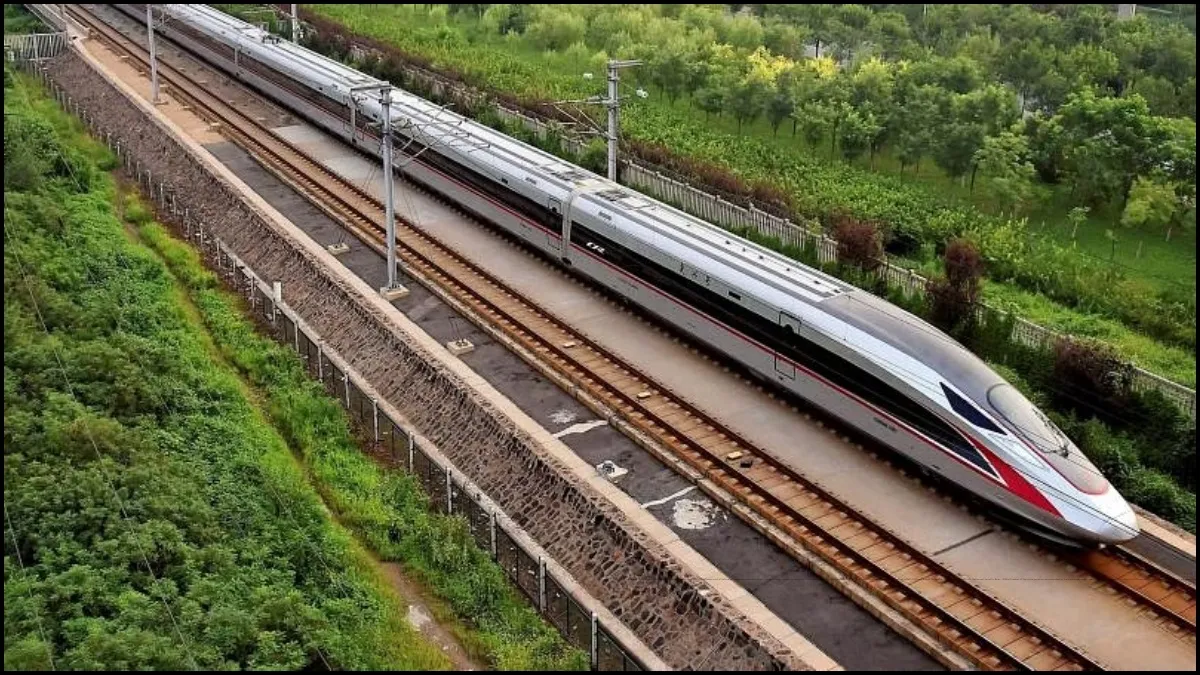
Union Railways Minister Ashwini Vaishnaw on Monday announced that the first bullet train route will pass through Bihar, linking Varanasi to Siliguri with a key stop in Patna. Calling the project a "game changer" for the state, Vaishnaw said the high-speed corridor would boost connectivity, accelerate economic growth and drive regional development. Addressing a press briefing, the Union Minister also revealed that Tamil Nadu will get two new bullet train corridors, supported by a record railway budget allocation of Rs 7,611 crore, which he noted is nine times higher than what was provided during the Congress-led UPA years.
Notably, the Varanasi-Siliguri High-Speed Rail Corridor forms part of the Centre's ambitious plan to build seven new bullet train routes across the country. Passing through major Bihar locations such as Patna and potentially Katihar, the corridor will link Uttar Pradesh with West Bengal while integrating Bihar into India's expanding high-speed rail network. Once operational, it is expected to cut the current 14–18 hour journey between Varanasi and Siliguri to under three hours, with trains running at speeds of 300-350 km per hour.
About the proposed Delhi-Varanasi and Varanasi-Siliguri high-speed corridors, he said these bullet train routes would connect major cities of Uttar Pradesh and create several economic opportunities. "Under the Amrit Bharat Station Scheme, 157 stations are being redeveloped, and four pairs of Amrit Bharat trains have been made operational so far," the railway minister added.
Railway Budget 2026-27
The Union Budget 2026-27 has earmarked a record capital expenditure of Rs 2,93,030 crore for Indian Railways -- the highest ever. As part of its long-term transport vision, the government has approved seven high-speed rail corridors designed as growth connectors for sustainable inter-city travel. Planned routes include Mumbai-Pune, Pune-Hyderabad, Hyderabad-Bengaluru, Hyderabad-Chennai, Chennai-Bengaluru, Delhi-Varanasi and Varanasi-Siliguri. These corridors aim to dramatically cut travel time and enable seamless multimodal passenger movement.
ALSO READ: Railways get record push in Budget 2026 with Rs 2.78 lakh crore allocation
