
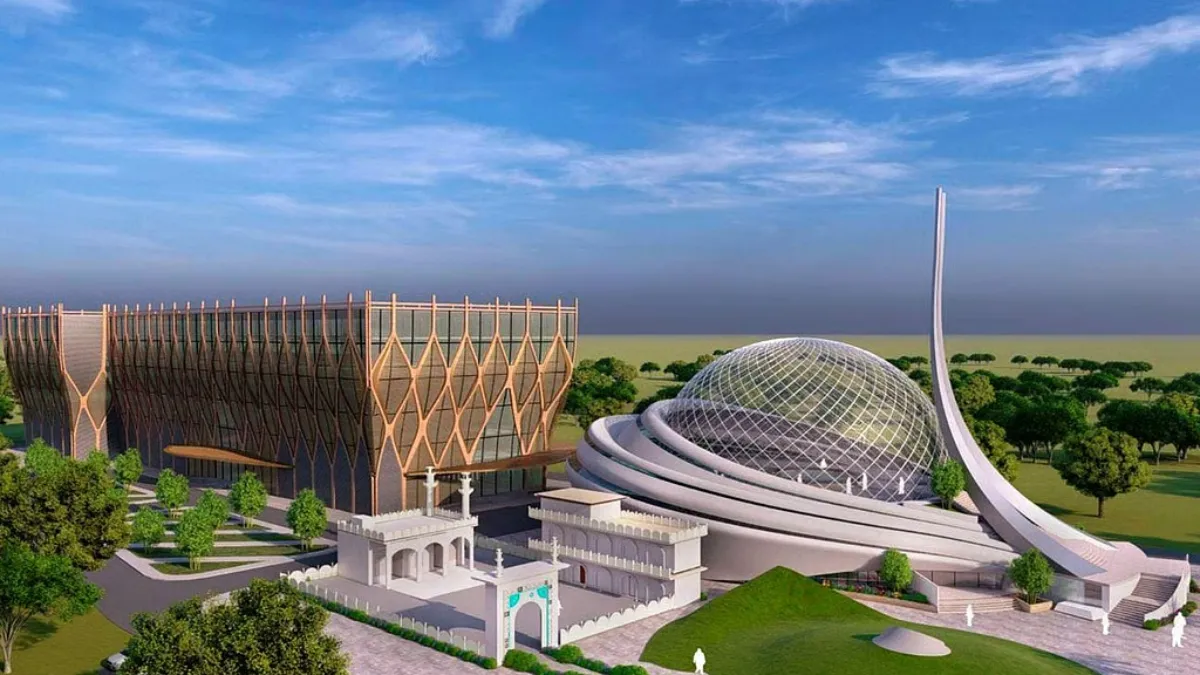
The Ayodhya Development Authority (ADA) has rejected the construction plan submitted for a mosque in Dhannipur village, citing the non-receipt of no-objection certificates (NOCs) from several key government departments. The land for the mosque was allotted to the Sunni Central Waqf Board as per the Supreme Court’s landmark verdict in 2019.
In response to a Right to Information (RTI) query filed by journalist Om Prakash Singh, the ADA revealed through a letter dated September 16 that the mosque trust’s application, submitted on June 23, 2021, was rejected because clearances were not obtained from multiple departments. These include the Public Works Department, Pollution Control Board, Civil Aviation, Irrigation, Revenue, Municipal Corporation, and Fire Services.
The Supreme Court’s historic verdict on November 9, 2019, had directed the Uttar Pradesh government to allot five acres of land to the Sunni Central Waqf Board for the construction of a mosque and related facilities. The land, located in Dhannipur village of Sohawal tehsil, about 25 kilometres from Ayodhya town, was officially handed over on August 3, 2020, by then district magistrate Anuj Kumar Jha.
According to the ADA's RTI response, the mosque trust has paid Rs 4,02,628 in application and scrutiny fees. However, the absence of departmental approvals has stalled the project.
Reacting to the rejection, Athar Husain, secretary of the mosque trust, expressed his dismay: “The Supreme Court mandated the land for the mosque, and the state government allotted the plot. I am speechless about why government departments have not issued no-objections and why the authority has rejected the mosque’s plan.”
Husain added that during a recent site inspection, the fire department raised concerns over the approach road, which should be at least 12 meters wide according to safety norms, especially considering the proposed mosque and hospital building. Currently, the road near the site is about six meters wide and narrows to four meters at the mosque’s main approach. “Apart from the fire department’s objection, I am unaware of the concerns raised by other departments,” he said.
Background
The Ayodhya dispute, a long-standing religious and political conflict, reached a historic milestone when the Supreme Court of India delivered its verdict on November 9, 2019. The court awarded the disputed land in Ayodhya to the Hindu community for the construction of a Ram temple while directing the Uttar Pradesh government to allot five acres of alternate land to the Sunni Central Waqf Board for building a mosque. This ruling aimed to resolve decades of tensions between Hindu and Muslim communities in the region.
Following the verdict, the Uttar Pradesh government allotted a plot in Dhannipur village to the Sunni Central Waqf Board on August 3, 2020, intended for constructing a mosque and associated facilities like a hospital and community centre. Despite the allotment, the mosque trust's efforts to begin construction have faced multiple administrative hurdles, including the current rejection by the Ayodhya Development Authority due to missing clearances from several key departments.
