
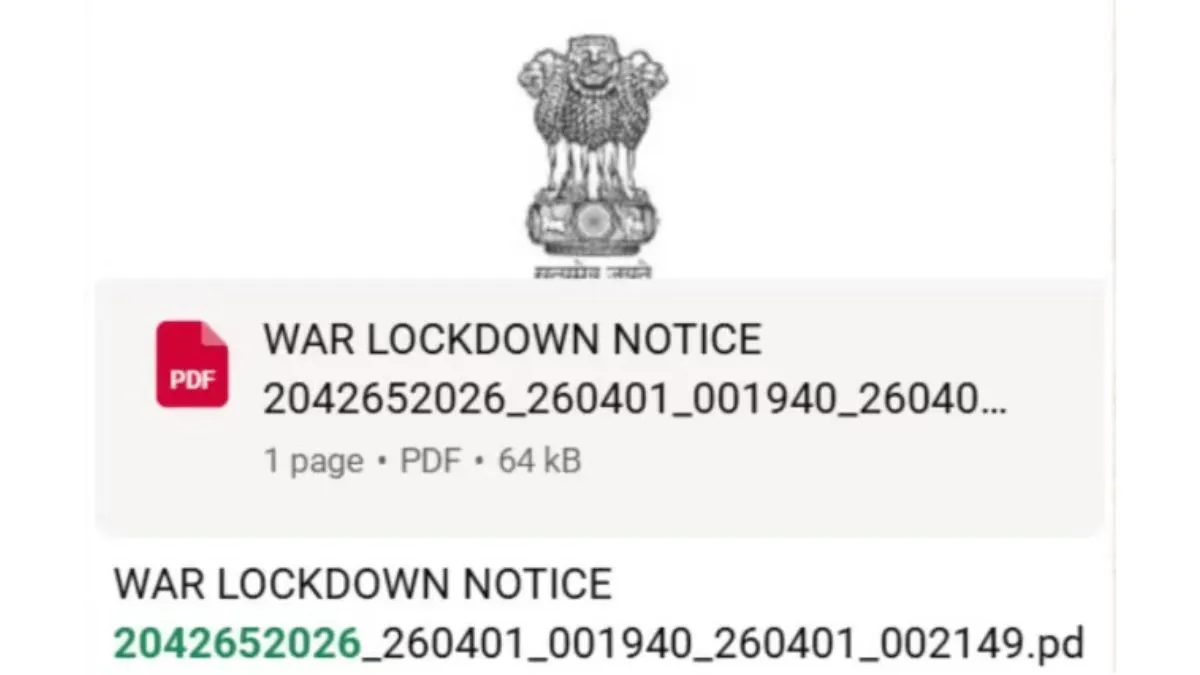
It started like most viral scares do. A message pops up, looks official enough, carries just the right amount of urgency. Within minutes, it is everywhere. That is exactly what happened with the so-called “war lockdown notice” doing the rounds on Tuesday.
People saw it, reacted quickly, and in many cases passed it on without thinking twice. The tone felt serious. The formatting looked convincing. But the moment you actually opened the document, things became clear almost instantly.
What the viral war lockdown notice said
The message was styled to resemble an official advisory. It even carried the Ashok Chakra emblem, which made it feel more legitimate than it really was. The language was direct, slightly alarming, urging people to stay indoors due to a supposed war-related lockdown.
At a glance, it looked real enough. And that was enough for it to spread.
The prank was revealed right after opening
Here is the part many missed before forwarding it. The document did not build up to a reveal. It was immediate.
As soon as you opened it, the message clearly indicated it was an April Fool’s prank, complete with a casual line and an emoji. No long explanation, no hidden twist at the end. Just a quick reveal that could be missed if someone reacted too fast.
Why this spread so quickly
Timing played a big role. April Fools’ Day tends to blur the line between jokes and misinformation. Add to that a format that looks official and a topic that triggers concern, and it becomes very shareable.
A few things worked in its favour
- Formal layout that resembled a government notice
- Use of national symbols to build trust
- Urgent wording that pushed quick reactions
Put together, it was enough to create a sense of panic, even if briefly.
No official update on any lockdown
There has been no confirmation from any government authority about a war-related lockdown. No advisory, no announcement, nothing that matches the viral claim.
That part is straightforward.
Why it is worth pausing before forwarding
This is not the first time something like this has happened, and it will not be the last. Messages that play on fear tend to spread faster than anything else.
Even on a day meant for pranks, things can get confusing quickly. The safest approach is still the simplest one. Pause for a moment, check a reliable source, then decide.
Because once something is shared widely, pulling it back is not really an option.
ALSO READ: Lockdown will not be imposed in India as we saw during Covid: FM Sitharaman refutes rumours
