
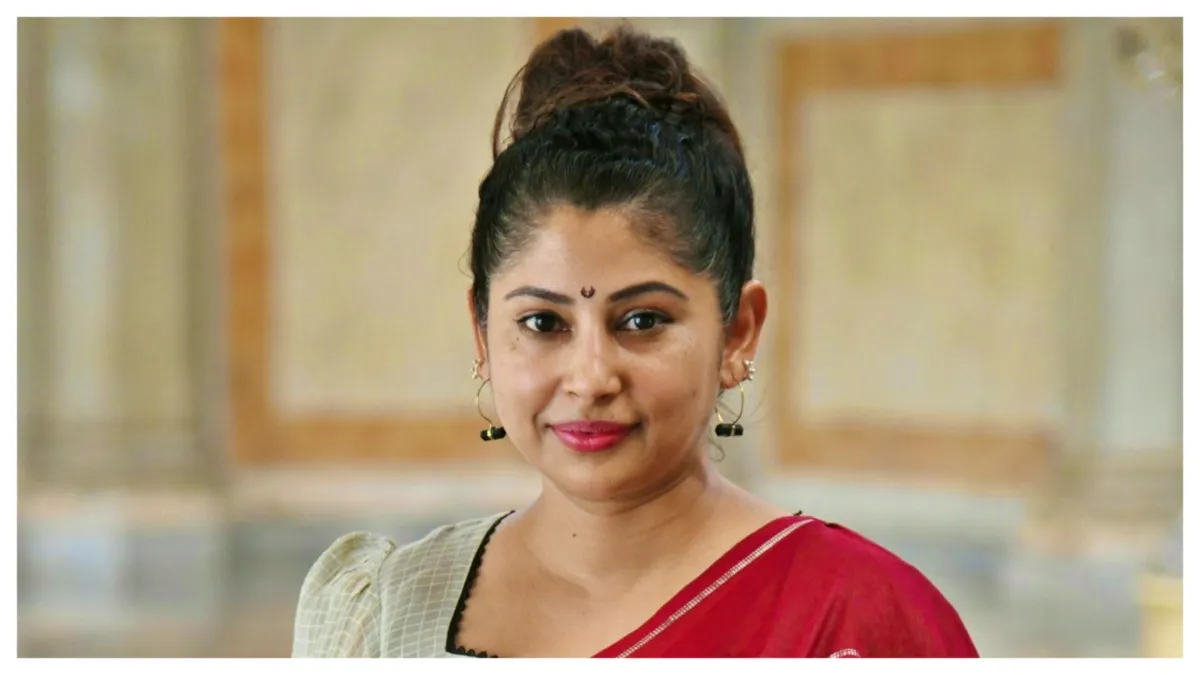
The Cyberabad Police have issued a witness notice to a senior Telangana IAS officer in connection with the circulation of an AI-generated image depicting a controversial 400-acre land parcel in Kancha Gachibowli, adjacent to the University of Hyderabad. The officer, Smita Sabharwal, had reposted the image on March 31, originally shared by another user on social media platform X (formerly Twitter). The digitally altered image showed earthmoving equipment alongside wildlife such as deer and a peacock—imagery that critics say was used to portray the land as ecologically sensitive in the ongoing debate over its use.
According to officials, the notice was issued under Section 179 of the Bharatiya Nagarik Suraksha Sanhita (BNSS) on April 12, not as an accusation but to elicit information as part of a broader investigation into the spread of misleading and potentially provocative content related to the site. “She doesn’t need to visit the police station. A fresh notice will be served for her to record her statement at a location of her choice,” a police official said. Sabharwal reportedly sought clarification after receiving the initial notice.
The police had earlier registered cases against unknown persons over the creation and distribution of edited visuals and unverified information, which were allegedly circulated to incite unrest among students and activist groups. Complainants claimed the doctored content was designed to misrepresent facts and provoke public sentiment, particularly amid protests by the UoH Students' Union.
The Telangana government, which maintains ownership of the 400-acre site, plans to auction the land for urban infrastructure and IT park development. The move has drawn criticism from environmental groups and students, who argue the area holds ecological significance.
The dispute is currently under judicial review, with proceedings ongoing in both the Telangana High Court and the Supreme Court. Sabharwal, a senior officer of the Telangana cadre, currently serves as Principal Secretary for Tourism and Culture.
(With PTI inputs)
