
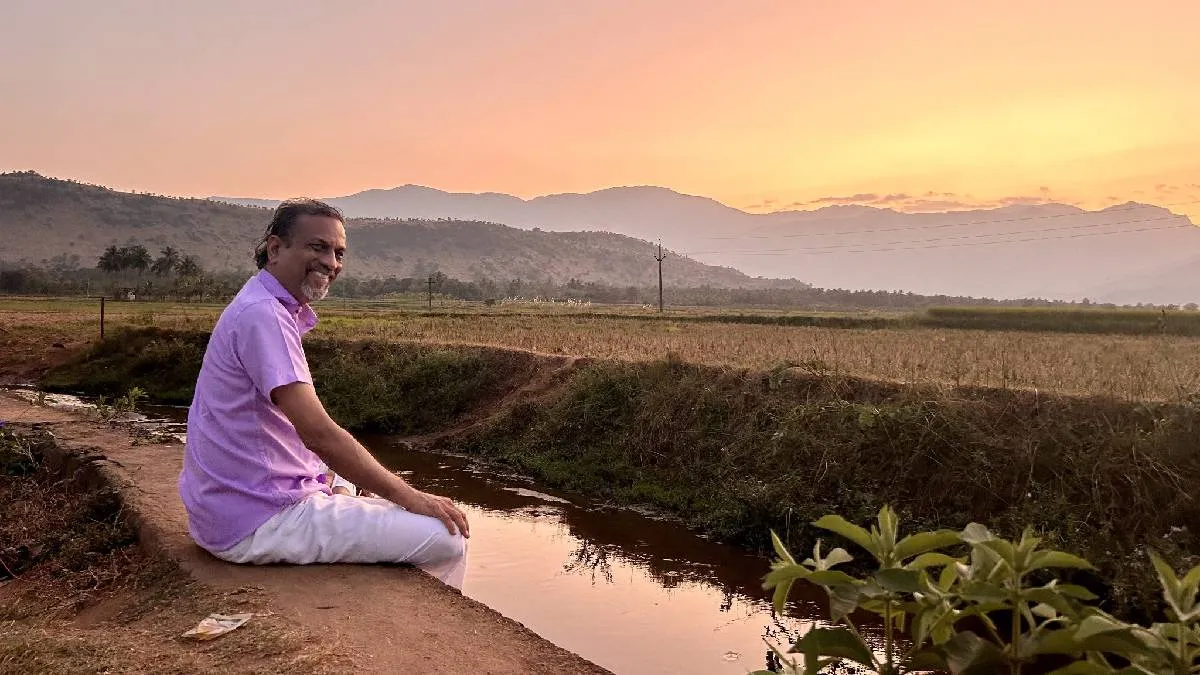
The indigenous instant messaging app Arattai is currently generating significant buzz in India. Equipped with features similar to WhatsApp, it quickly reached the top of the App Store. However, the lifestyle of the man behind this app—Sridhar Vembu, founder of Zoho Corporation—is a compelling story in itself.
Vembu is a billionaire entrepreneur whose net worth is estimated at approximately $5.8 billion (though his family's collective wealth is often cited as even higher, around Rs 50,000 crore). Despite this massive fortune, he lives a simple and down-to-earth life, often seen cycling on village paths rather than driving luxury cars.
From IIT to America
Sridhar Vembu's journey is truly inspiring. He completed his B.Tech in Electrical Engineering from IIT Madras in 1989 and subsequently earned a PhD from Princeton University in the United States. Upon graduation, he began working as a systems design engineer at the American company Qualcomm. However, he grew restless and dreamed of launching his own major venture.

The founding of Zoho
In the 1990s, Vembu, along with his family and friends, started AdventNet, which later evolved into Zoho Corporation. Today, Zoho is regarded as one of India's largest software companies, serving millions of customers worldwide. Zoho reported consolidated revenues of approximately Rs 8,703 crore in 2023–24, with the company’s valuation reaching Rs 1.04 lakh crore.
A billionaire chooses the village
Vembu was ranked 51st on Forbes' 2024 India Top 100 Billionaires list. His wealth has grown rapidly, exceeding $5 billion in 2024, up from $1.6 billion in 2018. Despite this financial success, he deliberately chose rural locations like Tenkasi and Thanjavur in Tamil Nadu as his base, rejecting the grand cities and corporate hubs. He frequently uses a bicycle for local trips, cementing his reputation as a genuinely simple and down-to-earth person, despite his billionaire status.
ALSO READ:
Zoho Arattai review: How India's messenger is different from WhatsApp
Why Zoho named its messaging app Arattai: What does it mean? Explained